These 22 ideas run from 1-hour solo builds to full hallway installations that swallow an afternoon and a helper, with budgets staying mostly at the paper-and-glue level.
What narrows the field is whether your door opens inward or outward, whether you have adjacent wall space, and how much student collaboration your schedule allows.
The gingerbread house option finishes fast with thick acrylic paint catching hallway light like real frosting, but only if you are willing to do the clean-edge work alone.
1. Gingerbread House

Brown paper turns a flat door into a gingerbread house faster than most teachers expect.
Layer the paper so seams read as gingerbread slabs, not mistakes, then paint on white icing patterns with thick acrylic so they catch hallway light like real frosting.
Colored paper peppermints and gumdrops fill gaps cheaply; a hand-lettered "Do Not Eat" sign completes the joke. I’d skip the foam candy options some sellers push.
Construction paper lies flatter, costs less, and survives the inevitable touching. This one suits elementary teachers who want high impact without student help, since the finished look depends on clean edges, not kid contributions.
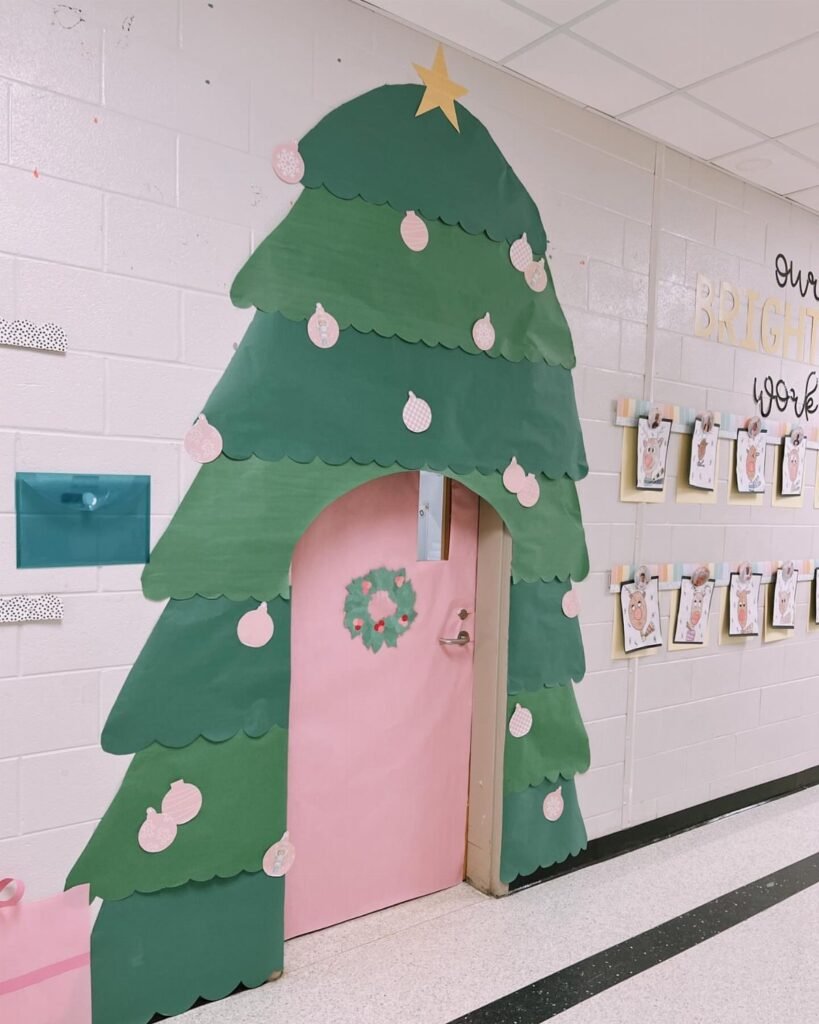
2. Christmas Tree

Green paper handprints stack into a Christmas tree that grows with each class period, which is the real appeal here. A blue background and white snowflakes create depth that plain green alone lacks; I’d budget for both colors upfront.
Paper chain garland and colored ornaments go on last, though the star tops the whole thing. What changes the time is whether you trace and cut hands yourself or delegate to students.
The collaborative version takes 2 class periods but builds buy-in; the solo version finishes in an hour. Middle schoolers who’d roll their eyes at cutesy decor usually tolerate this one because their own hands built it.
3. Snowman Special

Light blue paper and melting snow borders set up a pun that lands with younger kids: "God loves us snow much" works for faith-based schools, though secular alternatives write themselves.
The small snowmen with student faces make this classroom-specific rather than generic winter; printing photos on regular paper, not photo paper, keeps the faces flat enough to glue cleanly. Scarves and buttons from scrap felt add texture without bulk.
I’d plan this for teachers with steady December light, since the pale colors dim in north-facing hallways. The face cutouts do mean extra prep if your class roster shifts mid-month.
4. Christmas Tree Activity
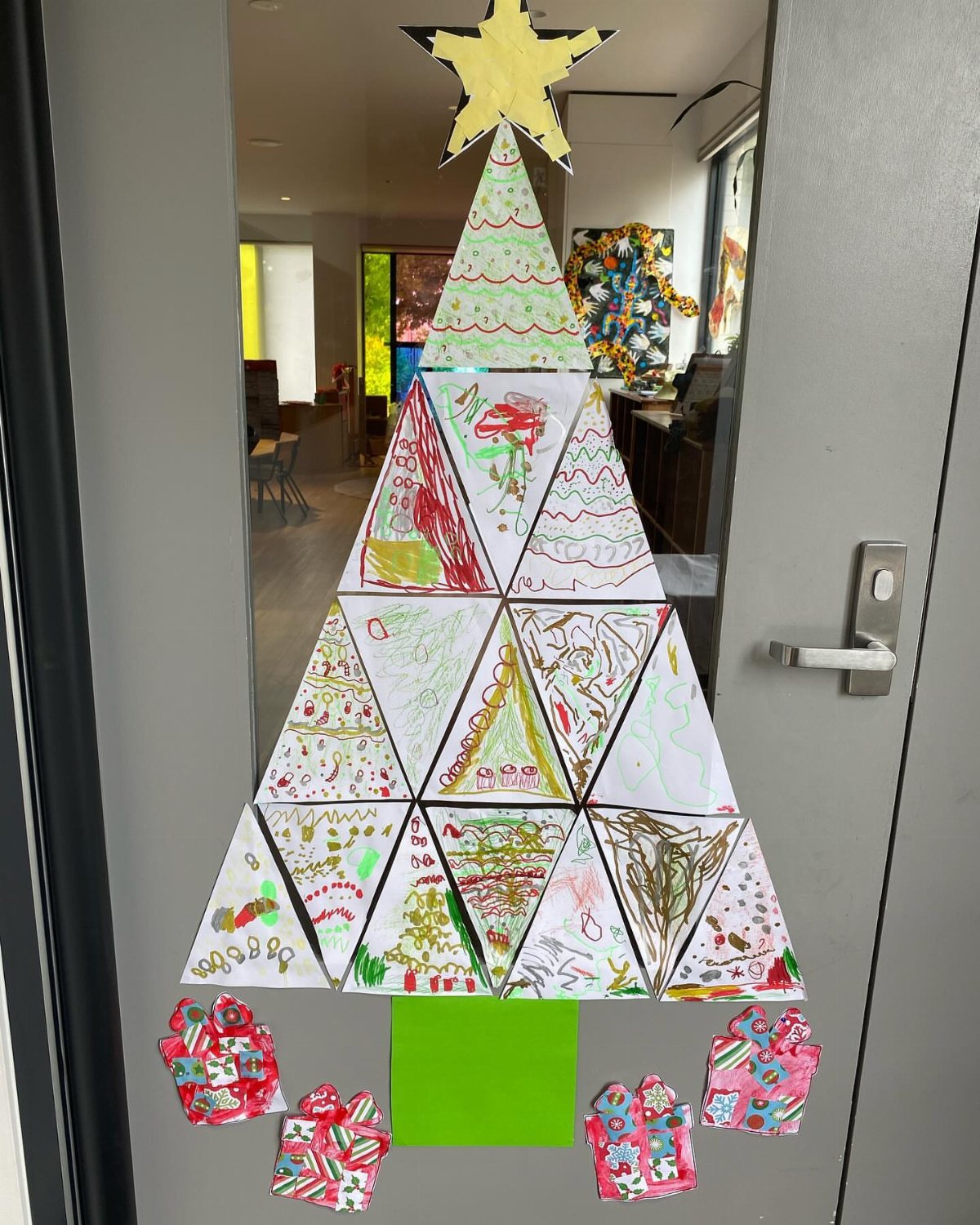
Paper triangles colored by individual students assemble into one tree, which solves the problem of every kid wanting their work visible. The yellow star and gift boxes below frame the collaboration as finished art, not mere accumulation.
What the notes suggest, and I’d follow, is assigning each triangle a specific color family so the final tree reads as designed, not random. Crayon or marker both work; paint warps paper and needs overnight drying.
This suits teachers who need a December lesson plan and door decor in one block period. Your tree’s palette depends on 20+ small artists, which means giving up some control.
5. Santa’s Workshop

Red paper wrapping the door, candy cane pillars, and elf cutouts at the base turn a single door into a workshop entrance, though the real ambition is the surrounding hallway walls with reindeer stables.
Most teachers lack that adjacent space; the door alone still reads if you scale the candy canes oversized and place the "Santa’s Workshop" sign at adult eye level where parents notice.
Green gift boxes at the base hide door kick plates visually. I’d add the fake snow and socks on the handle that one source mentions, since they cost little and signal the theme to anyone approaching from the side.
The full effect needs a free afternoon and a helper for ladder work.
6. Coffee Cup Cutouts

Coffee cups on a classroom door read as cozy in a way snowmen sometimes don’t, which matters for older students who resist overt holiday imagery.
A blue checkered background is a specific choice I’d keep; it suggests a cafe interior better than solid red or green would. Paper bows and brown boots ground the winter theme without competing with the cups.
Actual disposable cups glued on give a 3D effect that flat cutouts alone can’t match. I’d test one first; paper cutouts lie flatter and survive door-slamming better.
The "Cup of Cozy" lettering needs precision, so this favors teachers with a Cricut or steady hand. Budget sits low either way, mostly paper and glue.
7. Santa Suit Door

Red bulletin board paper turns any door into Santa’s suit with a belt of black construction paper strips and a gold paper buckle.
I cut the white beard from two sheets of poster board, fringing the bottom edge with scissors for texture, and use a gold paper plate for the buckle so it catches hallway light.
The belt is black construction paper cut into strips and layered for thickness, with a gold paper buckle cut from scrap.
This one scales to any door size and hides dings better than lighter colors. Kindergarteners will touch the beard; attach it with staples, not tape.
Best for teachers who want high impact without storage headaches. The paper all folds flat into a file folder for next year.
8. Smart Cookies Door

The gingerbread cutouts carry student photos behind their faces, which shifts this from generic door to class roster in costume.
I print the cookies on tan cardstock, leaving a circle in the center for each picture, and scatter red plastic ornaments from the dollar store along the top frame for weight and color against the pink background.
Pink paper reads cheerful where red would shout; it also costs less because schools rarely stock it and teachers unload their extras cheap.
Smart Cookies works for any grade, but the photo gimmick lands hardest with parents. Skip it if your school has media-release restrictions for hallway displays.
9. Snoopy Christmas Door

Red brick paper gives this door its living-room warmth, and the Peanuts license means students recognize every character without prompting. I build around a single Snoopy in the window; surrounding him with too many figures turns the door into clutter.
String lights, if your fire code allows them, plug in at the baseboard and draw the eye to his Santa hat.
The small tree and gift boxes at the bottom edge matter more than they look like they do; without them, the brick floats in space. Brown paper lunch bags stuffed with tissue make quick presents.
A Snoopy door reads nostalgic, which suits older teachers and student teachers trying to signal warmth. The character rights are a non-issue for a single classroom display.
10. Student Photos Christmas Door

Student photos hang inside clear plastic plate snow globes here, a 3D move that catches light and makes parents stop in the hallway.
The globes take prep time: one paper plate face-down, white glitter or tiny styrofoam balls in the center, a second plate glued rim-to-rim, then the photo circle pressed inside before the glue dries.
Plan time for the paint to dry flat before you stand the door back up.
The upside-down Santa and Mrs. Claus cutouts frame the tree without competing with the globes for attention. I keep the background solid blue so the photos read as ornaments on strings, not confetti.
This one demands early December planning. Start the week after Thanksgiving or the drying time will stress you.
11. Festive Archway and Doorway Display

An archway turns a single door into a threshold, which matters in long school hallways where most doors compete for the same glance.
Paper Christmas trees in graduating sizes frame the entry, with the tallest touching the ceiling tile line; anything shorter reads apologetic. The gold bells hang on fishing line so they turn in drafts.
Pom-poms and garland fill the gap between tree and doorframe, but the wreath centers the composition. Without it, the eye wanders.
This idea eats supplies. I budget for a standard doorway, more if the wall extends beyond the frame.
It suits teachers with hallway-facing classrooms and custodians who do not mind temporary mounting putty on cinderblock.
12. Grinch Fireplace Door

The fireplace illusion works because the Grinch’s legs and feet stick out at the wrong angle, turning a flat door into a story.
Cotton balls stretched thin make better snow than the fluffy kind; dense cotton reads as cloud, not drift. I layer them thicker at the base and taper up the brick so the fire looks like it is rising.
The 3D door mat option, with its forced-perspective grate, sits on the floor and completes the joke for students entering the room. It is a separate purchase and not necessary, but it does survive shoe traffic better than paper.
This door rewards the extra hour of cutting. The brick pattern is just red paper with a black marker grid, no template needed.
Best for teachers with a free planning period and a door that opens inward so the legs do not catch.
13. Grinch Hand Ornament Door

Black butcher paper turns any door into a stage for one dramatic green hand. The Grinch’s fingers wrap around a red ornament while a paper tree sits below, and the handwritten quote fills the space without crowding it.
Drawing a hand beats drawing a whole face; the proportions are forgiving and the silhouette reads instantly. Tinsel garlands or craft grass bulk out the tree if you want texture beyond flat paper.
I’d point this one at teachers who want a literary angle without the pressure of a full character portrait. The quote does the teaching; the hand does the visual punch.
14. Olaf Winter Wonderland Door

A black background makes the white snowman pop without any special lighting. Olaf stands center with Anna beside him, snowflakes scattered like they fell there, and the familiar question printed above.
The "Feliz Navidad" addition turns a single-movie reference into something broader, which helps in classrooms with mixed holiday observance.
Construction paper in red, blue, and white layers for the hot-cocoa variation if you want to swap the character for a drink; same color scheme, less licensing worry.
Either version takes roughly 1 hour to cut and tape, with a helper to hold pieces while you position.
Best for teachers whose students are still in the Frozen age bracket; older middle schoolers will groan.
15. Warm Winter Wishes Door

Dark blue paper reads as night sky without any painting, and the scattered winter cutouts let each student claim a piece of the door.
Mittens, mugs, pine trees, a snow globe with a snowman inside, plus small animals, all orbit the central phrase. Nothing here depends on drawing skill; every shape is basic enough to trace from a template.
The density is the point. A sparse version looks accidental, so plan for enough distinct pieces that the door feels full.
Let students color their own cutouts during an indoor recess and the assembly becomes a class activity rather than a solo project after hours.
This one suits teachers who want every child represented without the management of individual photos.
16. Snowy Winter Branches Door

Bright green door paint becomes part of the design instead of something to cover up. Brown branches arc across with white paper snow piled at the joints, silver and white snowflakes filling the gaps.
The window stays clear; the branches frame it like a view.
Cotton balls make the snow three-dimensional if flat paper feels too thin, though they collect dust and fingertip grime by winter break.
White construction paper against blue sky is the alternate version, but the green door here does half the work already. Check your school’s paint policy before assuming the base color stays; some districts require neutral doors for fire safety inspections.
Pick this when your door color is already bold and you want to work with it, not against it.
17. Festive Santa and Reindeer Cutouts Door

Green garland with red ornaments frames a white door vertically, turning the whole thing into a narrow stage.
Santa, reindeer, an elf, gifts, and snowflakes stack in a column rather than spreading wide, which suits older buildings with tall narrow doorways. The cutouts read as a sequence, almost a story.
"Ho Ho Ho" as a separate sign adds another layer if the stack feels too static. Brown paper for reindeer, red for sleigh details, white for trim; the color coding keeps the visual logic clear even from a hallway distance.
Assembly runs faster if you pre-cut, longer if students do the cutting.
I’d skip the garland if your school has scent-sensitive staff; some artificial pine carries a chemical smell that lingers.
18. Teddy Bears and Gift Box Door

Teal vertical stripes turn a wooden door into wrapped paper, and the oversized red bow sells the gift-box illusion. Small teddy bears cluster below a green present cutout, each labeled with a student’s name on a white sign.
The personal naming is what separates this from generic bear displays; every child finds themselves.
Chalky black-and-white with polar bears is the art-gallery alternative if your taste runs cooler, but this version’s warmth fits elementary age better. The bow needs structural support; craft wire or a pipe cleaner core prevents sagging by mid-December.
The stripes go fast; the bear assembly and labeling take the bulk of the time.
Best for teachers who want a class identity statement, not just seasonal decoration.
19. Santa Claus Face Door

Santa’s face at scale turns a flat door into something dimensional without any actual depth.
The red hat crowns the top frame, the white beard spills down the bottom half, and the face itself sits at eye level where kids actually look.
Construction paper handles the whole thing: red for the hat, flesh tone for the cheeks, pink circles for the nose, and layered white strips for the beard texture.
A teacher I follow used cotton batting for the trim and pom, which photographs better but sheds for weeks.
A paper-chain tree on the adjacent wall spreads the work across two surfaces and keeps the door itself from getting too busy. If your hallway allows side-wall decoration, that split is the smarter move.
If not, shrink the beard and let Santa carry a sign instead; a "Santa Claus Is Coming to Town" banner across the bottom third reads from down the hall and costs nothing extra.
This one suits teachers who want immediate recognition from kids walking by and do not mind the upkeep on white materials in a high-touch spot.
20. Hanging Bauble Ornaments Door

Named ornaments turn a generic holiday door into a class roster kids scan for their own names. White circles on green yarn hang in rows above paper pine trees and snowbanks at the bottom edge.
The spacing matters more than the ornament size: plan your rows so the strings do not crowd and the trees below still show.
I would trace a bowl for consistency, cut with a stack of paper and sharp scissors, then write names before hanging; pencil first, marker after, or the bleed ruins the white.
Green yarn or fishing line both work, though yarn reads greener against the blue door and costs less. The trees below are simple triangles with jagged edges in overlapping sizes, which hides any wobbly scissor work.
What changes the result is whether names go on one side only or both. Single-sided means the door reads correctly from the hall; double-sided catches kids entering, but takes twice the circles and more time than most teachers have.
21. Polar Bear and Snowmen Door

Polar bears and snowmen share a color palette that lets you buy white paper in bulk and cut everything from the same stack.
A dark glass door behind them does the heavy lifting: it reads as night sky, which makes the white shapes pop without any background paper at all.
The polar bear face centers the composition, the two snowmen flank it at staggered heights, and snowflakes fill the gaps.
Scarves in blue and pink add the only color beyond white; I would limit myself to 2 accent shades or the calm arctic feeling scatters.
For a class that knows Polar Express, this ties directly to the film without licensing any character art. The bear reads as generic arctic, the snowmen are yours to style, and no administrator flags copyright concerns.
The snowdrift along the bottom is crumpled white paper or batting, glued flat enough that the door still opens.
A teacher with older students could hand this off as a cutting assignment; younger kids need the pieces pre-cut, which shifts the time from class to prep.
22. Narwhal and Penguin Winter Door

A narwhal and penguin share a door better than most animal pairings because both read instantly at a distance, even in paper cutout form.
The narwhal’s tusk gives it a single identifying mark; the penguin’s silhouette is unmistakable from any angle.
A blue paper background serves as the base layer, not the door itself, which means full coverage and no gaps where the original surface shows through.
White tinsel garland drapes the frame like icicles, and a snowy mound at the bottom grounds both figures.
The "Sliding Into Winter" phrase that often accompanies penguin doors works on a banner above, or skip the text and let the animals speak for themselves.
This one trades the immediate Christmas recognition of Santa or trees for a longer season; it stays appropriate through January, which matters in districts that ban religious imagery or in rooms that host winter units after break.
Involving Students in Decoration
Student buy-in changes how a door reads to passersby. Student hands, faces, and coloring all belong in the finished door, but the planning stage matters too.
I’d split a class into groups and let each pitch a theme before voting; the losers still feel heard, and the winner gets volunteers rather than conscripts.
The ugly sweater variation, with each child building one paper sweater to collage together, spreads labor so thin that even a large class finishes in a single period.
Assigning tasks by strength, not by lottery, keeps the finished door from betraying which parts a reluctant student half-completed. One student traces, another cuts, a third positions; the group owns the result.
Budget-Friendly Tips
Construction paper, scissors, and glue remain the backbone because schools already stock them. I’d check the supply closet before any purchase; the pink paper in the Smart Cookies idea above came from another teacher’s castoffs, not a store.
Fundraising for decor strikes me as excessive for a single door, though a class already selling something for a field trip might tag on a small amount.
The real savings are in labor: student-cut shapes cost time, not money, and survive the month as well as anything bought.
Set the budget before choosing between the Snoopy licensed route and the Grinch hand silhouette; one expects you to source character art, the other only asks for green paper.
Maintaining Decorations
A door decoration dies from touch, not time. The gingerbread house icing catches fingers by week 2, and the Santa beard fringing flattens where small hands pat it.
I’d walk the door every Monday morning, replacing tape that has given way and re-stapling the beard before it sags past recovery.
The 3D plate snow globes, if you built them, separate at the rim if the glue was rushed; a line of hot glue run around the seam in late November prevents a mid-December collapse.
Keep a folder of spare cutouts matching the door’s palette; patching reads better than leaving a gap.
Choosing a Theme
A theme narrows your choices before you spend. Most classroom doors fall into one of four buckets: food architecture, character doors, student-as-subject, or winter abstract.
I’d pick based on what my class responds to in November.
Frozen-age kids get Olaf; parents who photograph hallway displays get the plate snow globes; a teacher with no planning period to spare gets the Santa suit, which folds flat and repeats yearly.
The North Pole adventure and Frosty options from the standard list do not appear above, which tells me they read as generic against more specific alternatives.
A cohesive theme also lets you say no to the donation of a glowing plastic Santa that clashes with your paper aesthetic; the discipline saves visual noise and repair time both.