
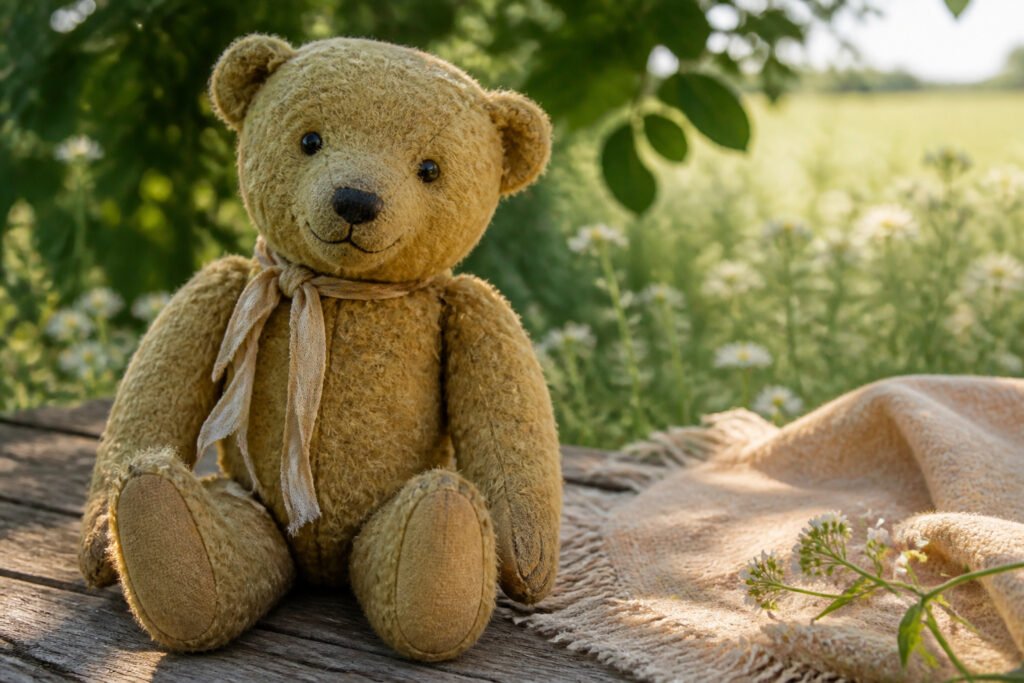
The right teddy bear name depends on whether you want the bear to outlast a single childhood or mark one specific season forever.
Classic names like Teddy or Honey travel across decades because they describe texture and warmth, not the year they were popular, but a seasonal name like Frosty or Flip-Flop will always carry the smell and light of the day it was given.
The 1902 origin still shapes the choice.
1. Classic Names
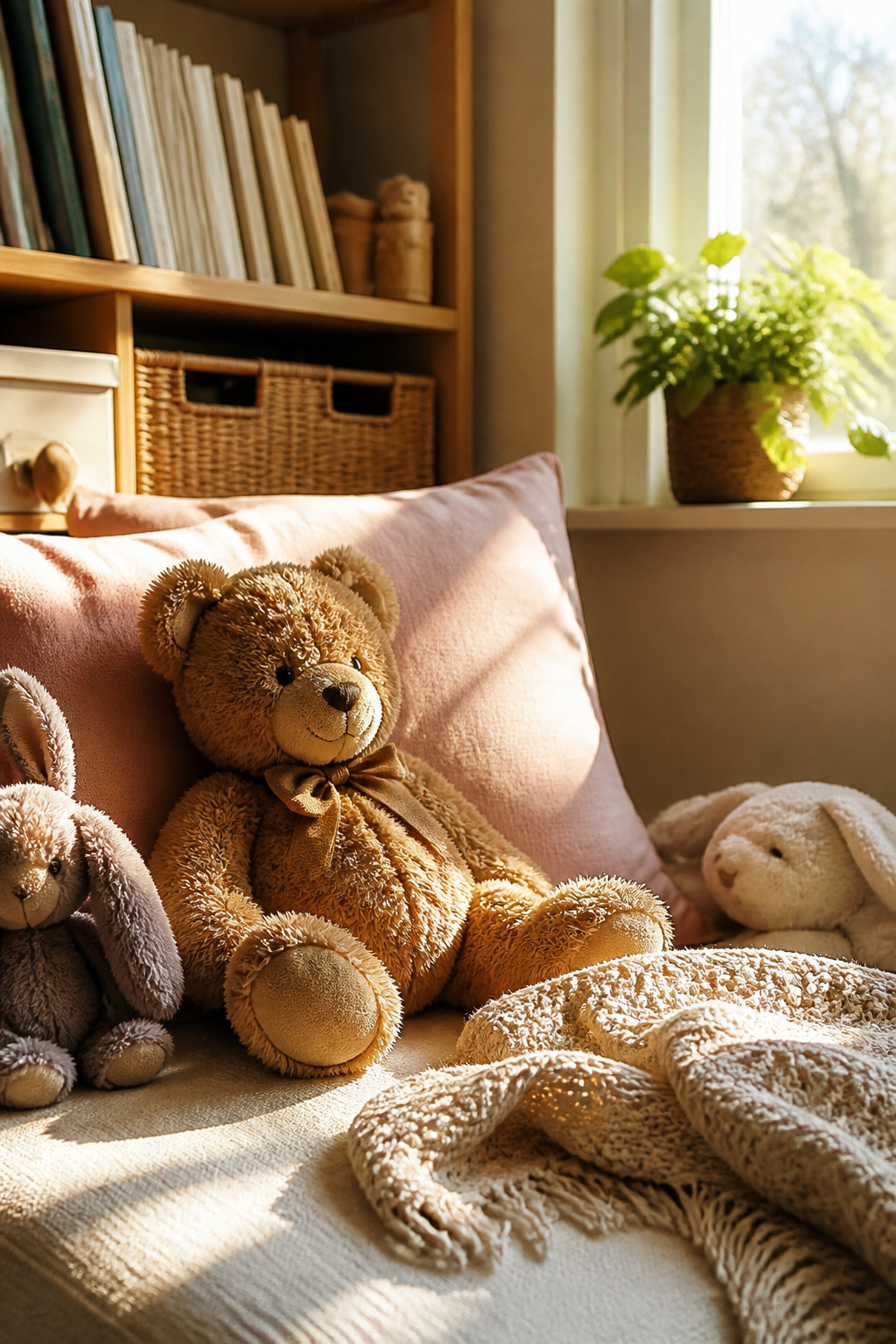
Some names simply refuse to age out, and that staying power matters when you are picking a bear that might sit on a shelf for thirty years before it passes to the next child.
The classic names work because they describe what the bear actually feels like in small arms: soft, warm, close.
- Teddy carries the whole origin story, named from Theodore Roosevelt’s 1902 hunting trip and Morris Michtom’s first stuffed bear. It is the name that taught us what to call every bear after it.
- Honey fits the golden-brown plush and the sweetness a child projects onto it. The color and the tone match without trying too hard.
- Cuddles states the job description outright. No backstory required; a two-year-old understands it immediately.
- Snuggles, Fuzzy, and Mr. Cuddles follow the same rule. They name the sensation of holding the bear, not the bear itself, which is why they still sound right in 2026 and would have in 1965.
The common thread: these names travel across decades because they bypass trend entirely. They describe texture and warmth, not the year they were popular.
2. Food-Inspired Names

A plushie’s soft, round silhouette practically asks for a snack-name match. I noticed this trend started with pets, but plush collectors have taken it further.
Food names now dominate the cozy, huggable lane of teddy bear naming.
- Muffin lands naturally on small, warm-looking bears with that just-baked homeliness
- Cookie suits brown bears especially, the classic chocolate-chip coloring practically naming itself
- Pudding carries that soft, warm, comforting quality you want for something you squeeze at bedtime
- Mochi works for plump, round shapes, nodding to the Japanese rice cake’s same yielding texture
- Biscotti, Waffle, and Donut bring the bakery case to plush form
- Cocoa and Marshmallow split by color, chocolate-brown or white-cream
- Dumpling has become the go-to for chunky, round, huggable bears specifically
The café trend keeps expanding. Latte, Chai, Espresso, and Cappuccino joined the list for 2026, alongside Sorbet and Bubble for brighter personalities.
What started as pet-owner shorthand for "sweet and soft" has become its own plush-toy category, no barking required.
3. Nature-Inspired Names
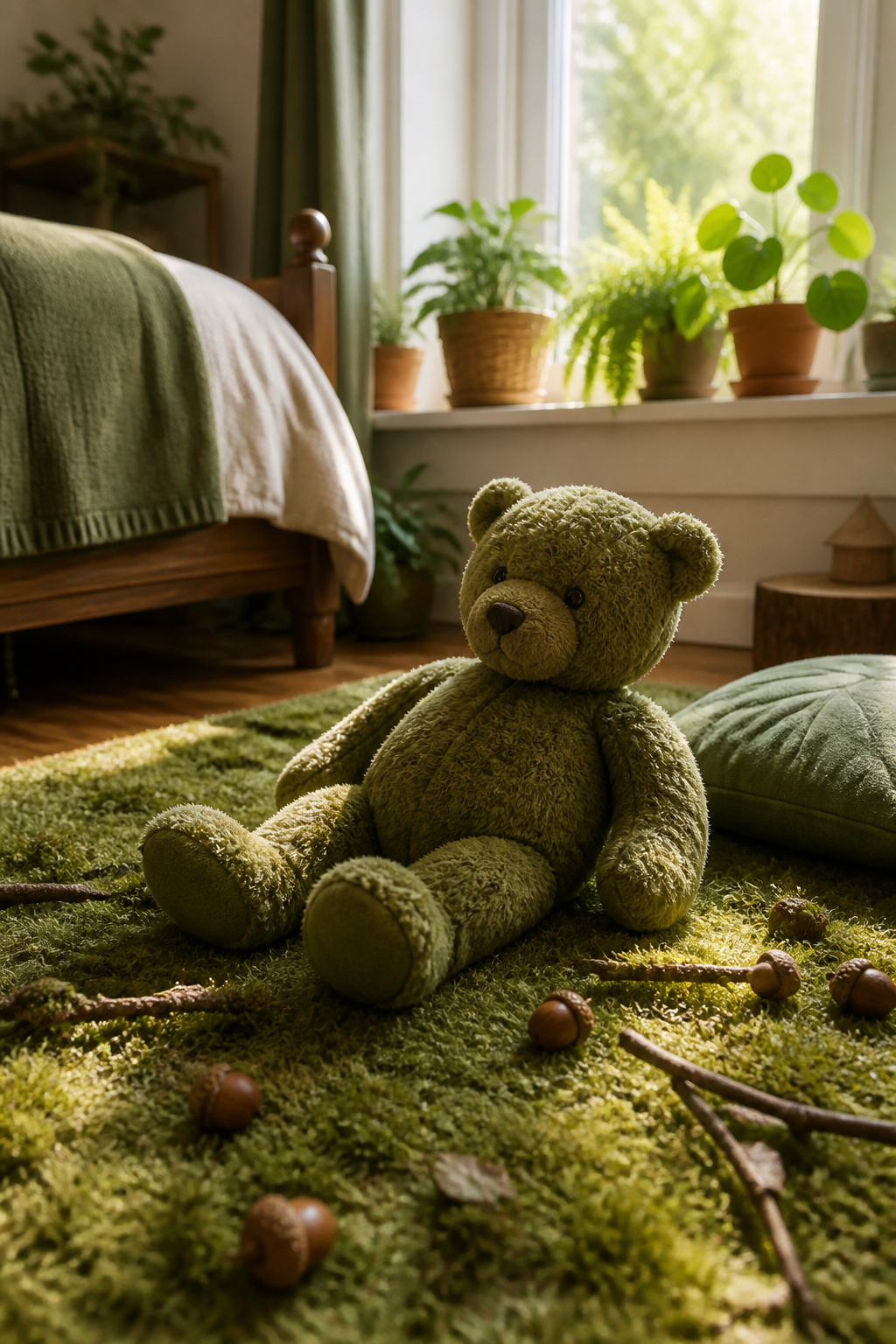
A moss-green bear with a slightly lopsided ear sits on my shelf named Willow, and the name fits the rumpled, just-found-in-the-woods look better than anything formal ever could.
Earth tones and that hand-me-down texture read as outdoorsy before you even pick a label, so the name should follow the same logic.
- Willow works for the long-limbed, floppy kind that drapes over a chair arm like branches.
- River goes to the one with flowing fur, the kind that lies smooth in one direction and resists being styled. It reads gentle, not rushed.
- Clover lands on smaller bears, the lucky-find size, especially any with a hint of greenish brown or a four-leaf print sewn somewhere.
Other names from the same thread: Pebble for compact, quiet ones; Fern for darker, forest-floor coloring; Meadow if the bear feels open and unfussy; Brook when the texture runs soft and natural; Acorn for the distinctly small and rounded.
Pine and Juniper split the woodsy difference, pine reading sturdier, juniper quirkier.
The common read is pairing the name to the bear’s physical presence, not the other way around.
A meadow-colored, just-rumpled bear named River still works, but Willow on a glossy, upright model feels slightly off, like dressing hiking boots for a boardroom.
4. Funny Names
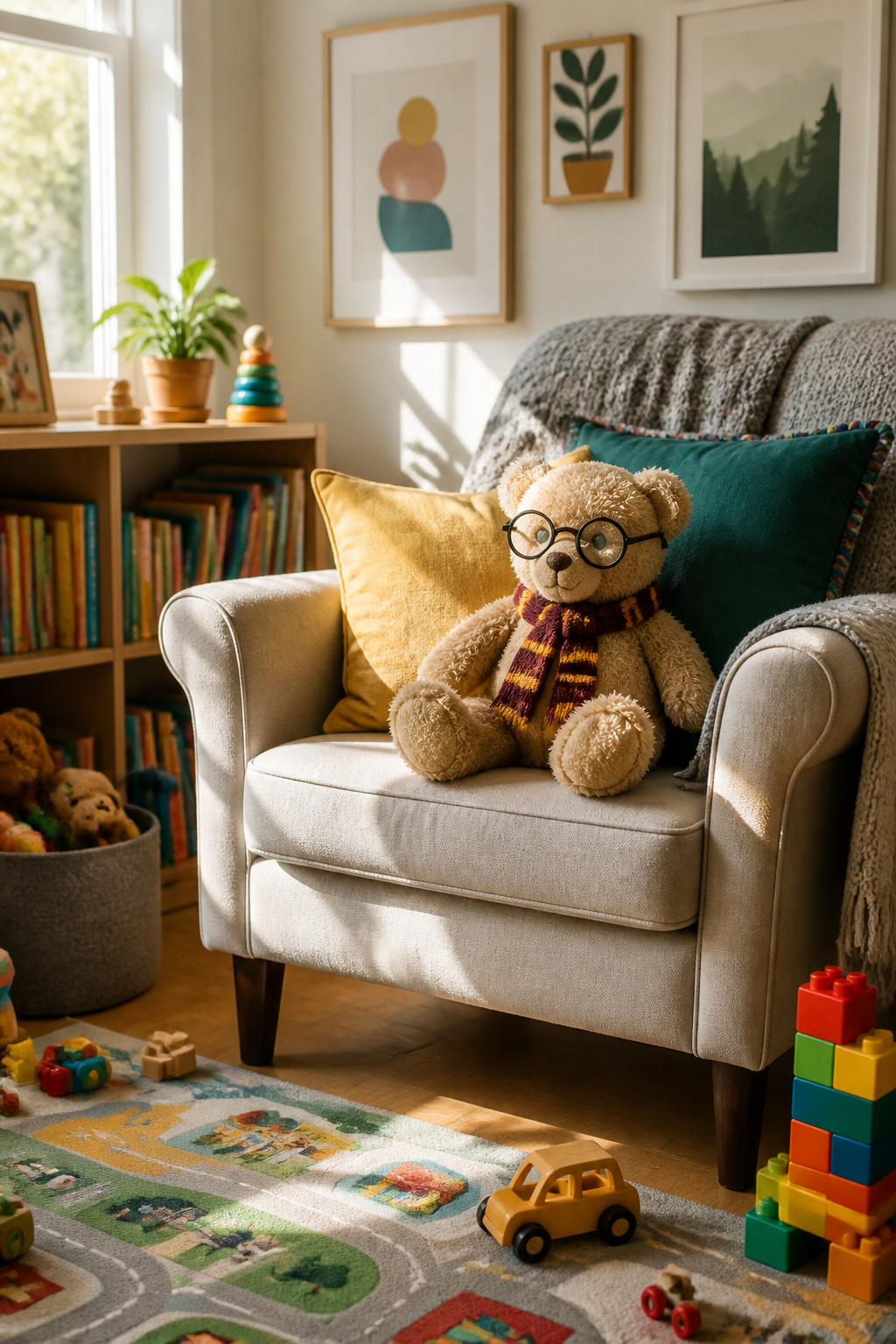
The best funny teddy bear names usually start as a joke and stick around long enough to become permanent.
My daughter’s bear was "Sir Hugs-a-Lot" for about three hours before the nameplate effect wore off and it was just Hugsy by bedtime. The joke names are the ones kids repeat.
- Beary Potter works for any bear with round glasses drawn on with a marker, or none at all. The pun does the heavy lifting.
- Sir Hugs-a-Lot sounds noble until a four-year-old says it three times fast. Then it sounds like the bear’s actual title.
- Stuffing and Hairy Barry both landed on lists I found, and both land because they name what the bear is literally made of.
- Toastlord and Captain Snugglepants are meme-level names that work best when the giver commits fully and never apologizes.
The risk with funny names is outlasting the humor. A name like Chunky or Bloop earns its keep if the kid keeps saying it, not if the adult keeps explaining it.
5. Pop Culture Names

A name from a book or screen comes with the whole story already attached.
That backstory can turn a stuffed animal into a companion a child talks to for years, or it can sit unused while the kid invents their own. The balance shifts with age.
- Winnie the Pooh carries A.A. Milne’s 1926 bear, the Disney version, or both; a preschooler usually meets the red shirt first, while an older child might catch the original melancholy in the Hundred Acre Wood
- Paddington Bear, from Michael Bond’s 1958 A Bear Called Paddington, imports polite manners and a marmalade habit; the name works best when the child is old enough to find the suitcase gimmick funny rather than confusing
- Lotso (Lots-o’-Huggin’ Bear) and Ted land differently depending on what the household watches; one comes from Toy Story 3 as a villain-turned-plot-device, the other from the 2012 Ted film with Mark Wahlberg, and the age gate on those references is real
- Fozzie Bear, Yogi Bear, and Boo-Boo pull from decades of rerun animation; the names read as retro to parents, fresh to kids discovering them on streaming
- Baloo has Kipling’s 1894 original and Disney’s 1967 singing version competing behind it; the name works either way, but the bear in the child’s head may not match the one in yours
6. Seasonal Names
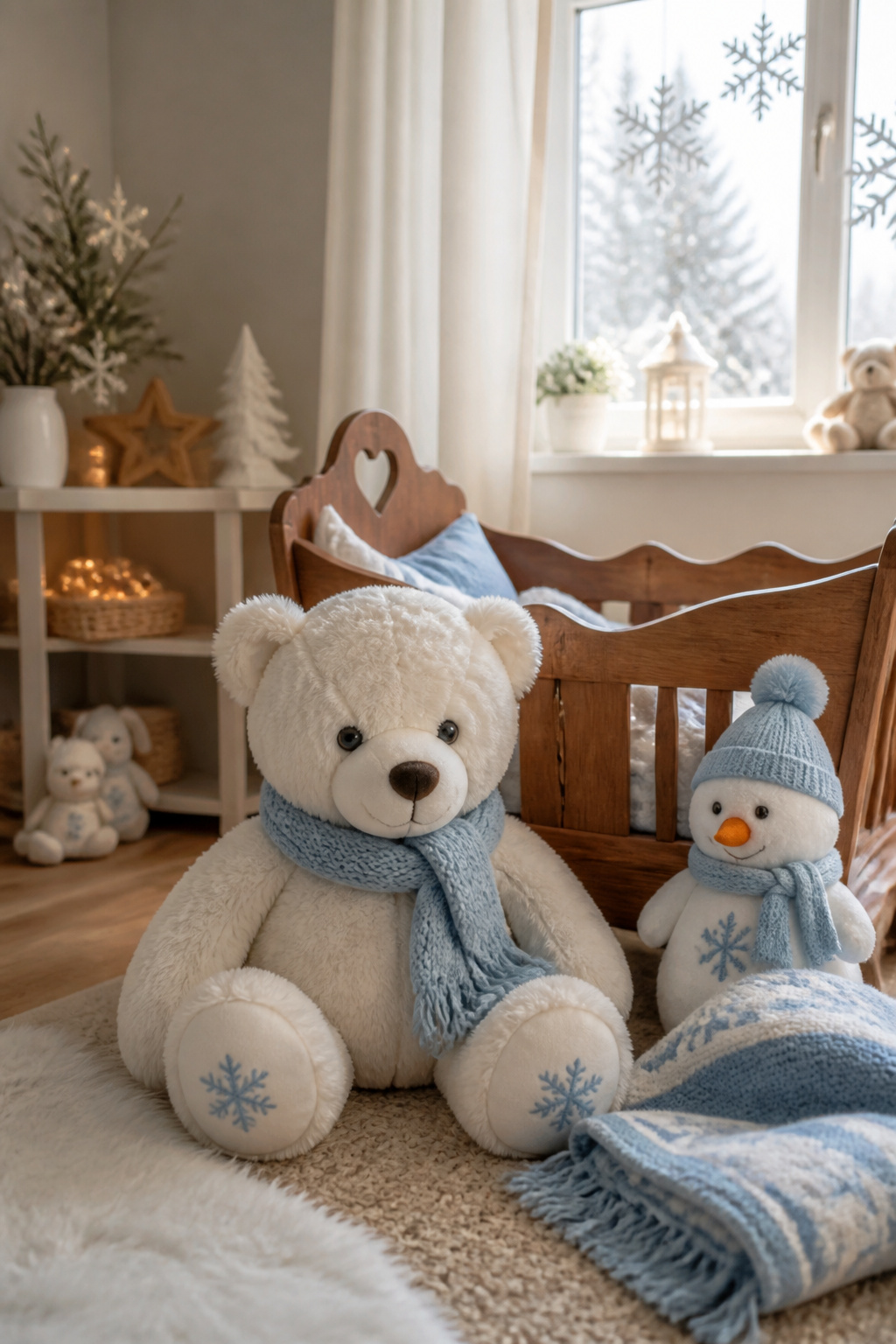
A teddy bear that arrives with the first snowfall carries a different weight in your hands than one unwrapped on the longest day of summer.
Seasonal names mark the moment, and they give the recipient a story to recite years later.
- Frosty suits a winter arrival, especially a pale plush that looks like it was packed in snow. The name pairs naturally with peppermint stick colors or a white fur that shows every fingerprint.
- Blossom opens the spring list. It works for pink-tinted bears, yellow ones the shade of daffodils, or any plush given when the trees are still bare and the promise matters more than the bloom.
- Spring runs longer than people think. April, Dewdrop, and Sprout all fit the window between late March and early June, when the light changes fast and a child’s new companion matches that fresh-start feeling.
- Summer bears lean into heat and water: Sandcastle, Splash, Wave, Aqua. These feel slightly less timeless, which is the trade. A bear named Flip-Flop will always read 2020s, for better or worse.
- Fall offers the coziest vocabulary. Maple, Rusty, Sweater, Flannel, and Bonfire all suggest the same indoor mood without repeating it. My preference runs to Acorn for a small bear, because the size match flatters both name and toy.
- Winter’s bench runs deepest. Snowflake, Crystal, Blizzard, and Icicle share Frosty’s territory, but North, Aurora, and Fireside split the difference between outdoor cold and the warmth you came inside to find.
The risk with seasonal names is dating. A bear named Tropicana or Popsicle will not age into a teenager’s dorm room the way a classic name might.
The win here is specificity: the name preserves exactly when it was given and what the air smelled like that day.
7. Personality-Based Names
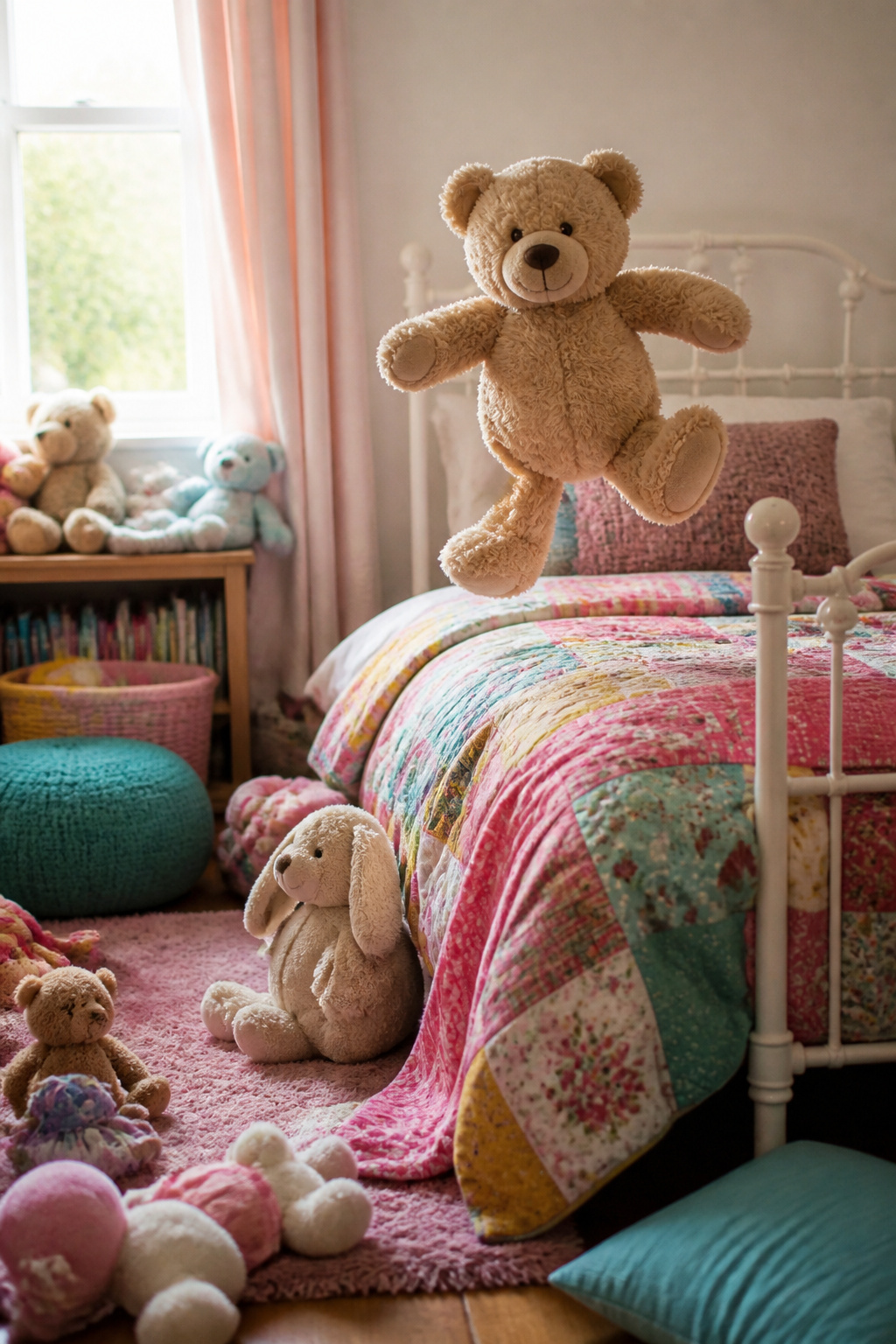
A bear that grins when you fluff it probably already has a name in mind. Wait two days before you commit.
The face changes once it has a spot on the bed.
- Joyful fits the one that bounces back upright after every toss and seems to beam even in dim light
- Sparky works for the bear that zips from the toy box to the pillow unprompted, joints clicking like a metronome
- Mischief belongs to the one you find wedged behind the radiator or wearing your sunglasses while you were out
Quiet bears earn gentler names, and some turn out to be downright dreamy once they settle in. The plushthis list runs from Cheer and Jubilant through Whisper and Mellow, but your bear will narrow the field for you.
Watch how it sits. A slouchy bear is not a Sparky.
A stiff-backed sentry will laugh at Mischief.
8. Names by Color
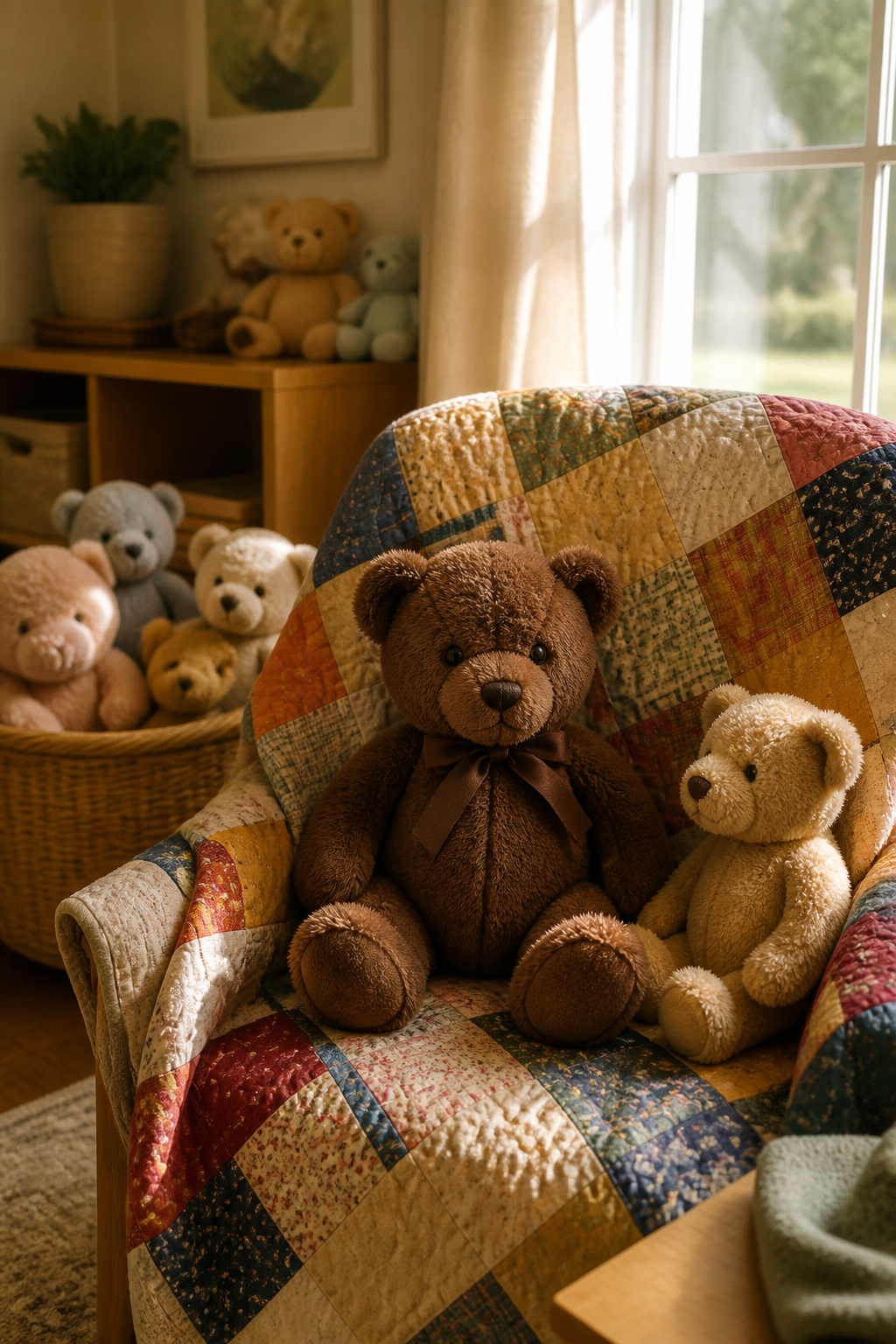
The fastest way to name a teddy bear is to look at what you are already holding. Color-first naming almost never misses, and it saves the whole ceremony of waiting for a personality to emerge.
- Brown bears carry Cocoa, Mocha, Cinnamon, Truffle, or Hazelnut straight off the shelf. A chocolate-toned plush practically arrives pre-named.
- White and cream bears answer to Snowball, Marshmallow, Pearl, or Ivory. Snowball versus Snowflake split the vote, so pick the one that matches the fluff density in front of you.
- Black bears sit comfortably with Midnight, Shadow, Onyx, or Ebony. Charcoal works if the fur catches light rather than swallowing it.
- Grey bears split two ways: Smokey, Silver, Slate, or Ash for medium tones; Cloud, Frost, or Feather if the gray reads as almost-white.
- Beige and golden bears ground themselves in Honey, Biscuit, Latte, Vanilla, Amber, or Caramel. The warmer the undertone, the better Honey or Amber fits.
- Less common colors work the same rule. Blue bears become Sky, Azure, or Blueberry; orange bears become Pumpkin, Ginger, or Ember; pink settles on Blush, Cotton, or Bubblegum.
The only risk is reaching too far for cleverness when the obvious name already suits the object in your hands.
9. Gender-Specific Names
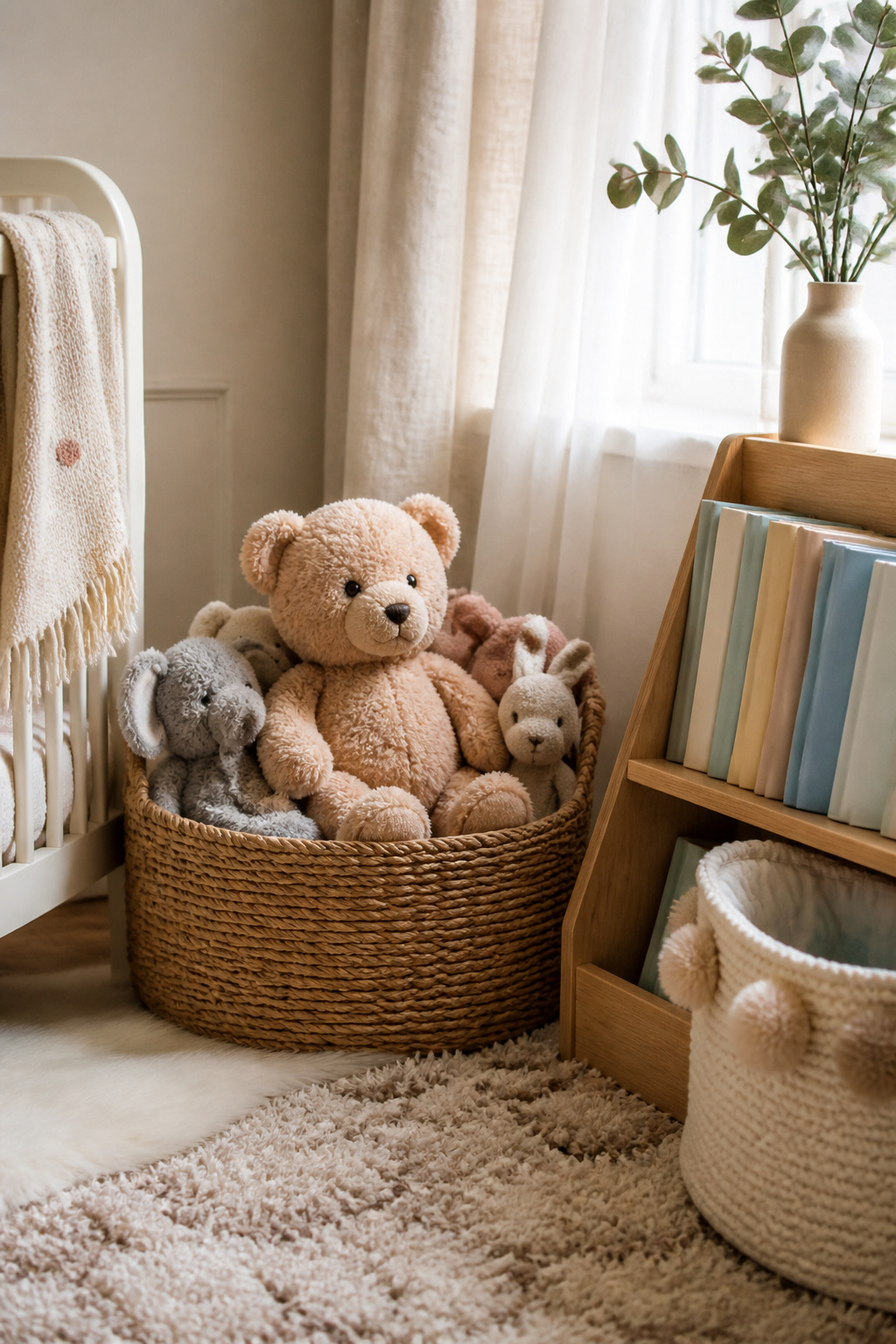
Traditional male and female names still land on teddy bears with reliable frequency, though the peak was closer to 2015 than to now.
Back then, Oliver and Bella showed up on almost every shower registry where the parents already knew the gender. The bear became a stand-in for the baby itself.
- Oliver still reads as the safe choice for a boy bear: two syllables, easy for a toddler to say, familiar without being everywhere. I see it less on birth certificates now, but it hangs on in plush form because it was the default for so long.
- Bella occupies the same space for girls. It was the name you picked when you wanted something recognizably feminine without going frilly. The Twilight wave helped, then outlasted itself, and now it is simply what a lot of thirty-somethings default to for a niece’s pink-themed nursery.
The rest of the list from that era holds up similarly: Theo, Milo, Rosie, Luna. All human names first, bear names second.
The difference is the context. A Bella bought today is almost always a gift with a known recipient in mind, not a bear waiting for a child to name it.
That distinction matters if you are shopping. A gender-neutral option lets the kid decide later; Oliver or Bella commits early, which is either thoughtful or presumptuous depending on who is wrapping it.
How to Choose a Name
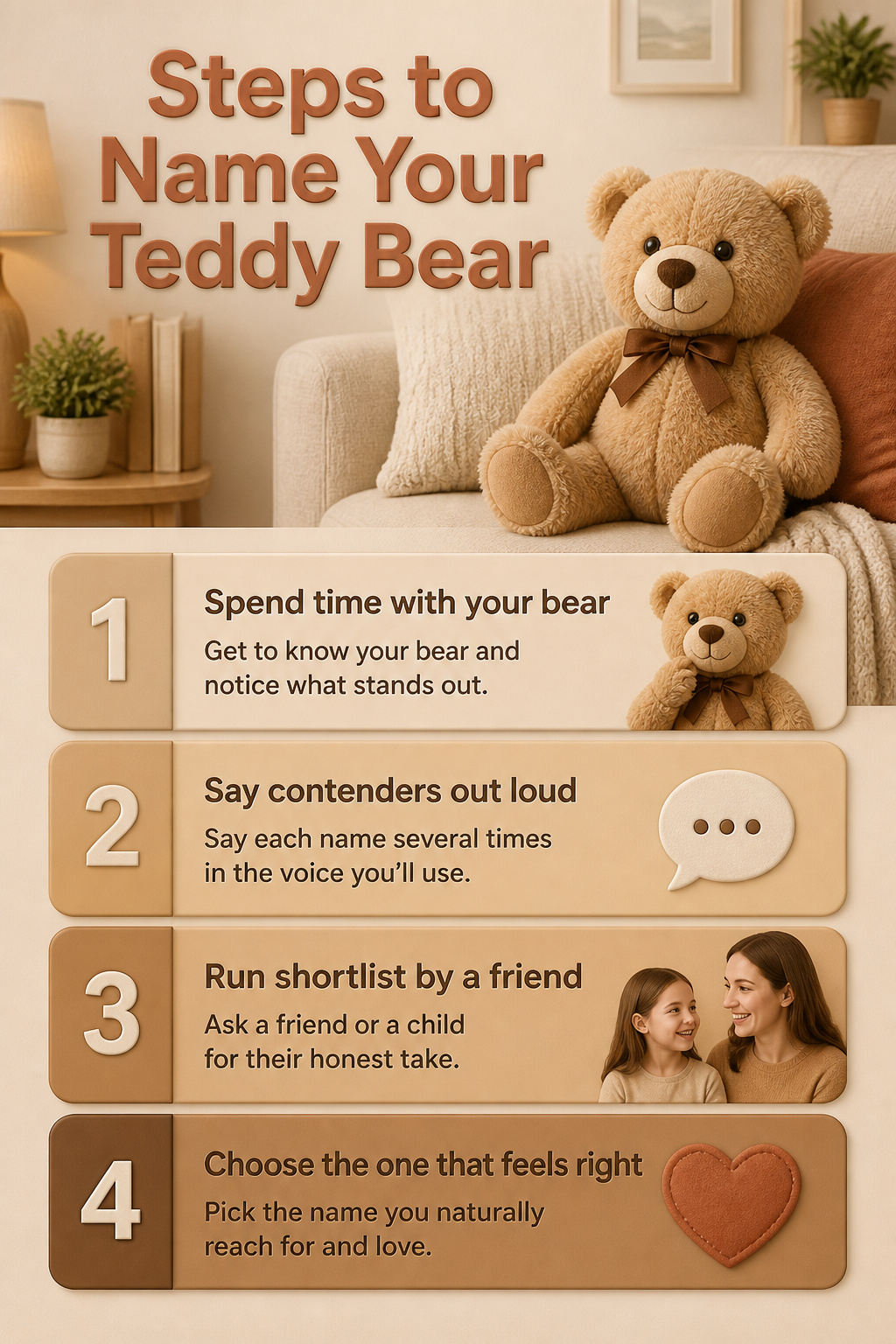
The best names announce themselves after a few days of living together.
Spend an evening with the bear in your lap and notice what surfaces: a cream-colored cub might read as "Butter" or "Biscuit," while a lopsided grin could steer you toward "Wonky" or "Skeeter."
The color matters, but so does the expression, the weight, the way it slumps against your shoulder.
Say each contender out loud, several times, in the voice you’ll actually use. A name that feels clever on paper can turn clumsy in your mouth.
I once cycled through four names for a velvet rabbit before "Moss" stuck, because it was the only one I didn’t start shortening or avoiding after day three.
If nothing settles, run a shortlist past a friend or a child in the house. Outside ears catch what yours miss: a rhyme you didn’t notice, a mouthful you were forgiving.
Some bears even carry two names, a formal one for the tag and a nickname for bedtime.
The right fit is the one you reach for without thinking, the one that makes you smile when you spot the bear on the pillow.
Naming Trends Now

The naming cycle for plush toys runs about three years behind pet naming, which means the old money wave now hitting teddy bears, full of Arthurs and Theodores and Winstons, already spent its first lap on Instagram cat accounts and neighborhood dog parks.
That lag is useful: by the time a name idea filters down to stuffed animals, it has been road-tested enough that you know it will not sound dated by next Christmas.
Food-inspired names are moving on a faster track. Matcha and Chai and Bagel arrived straight from the café aesthetic that has dominated home décor and nursery design for the past two seasons, skipping the pet-name detour almost entirely.
The difference is texture: an old money name like Beatrice or Gerald borrows dignity, while a food name like Mochi or Biscotti borrows warmth, and buyers right now are choosing which register they want their bear to carry.
Where these two trends overlap is in the deliberate mismatch. A plush croissant named Winston, or a distinguished brown bear called Bagel, is the joke people are actually buying.
The irony works because the categories are established enough to break against.
Where Teddy Came From
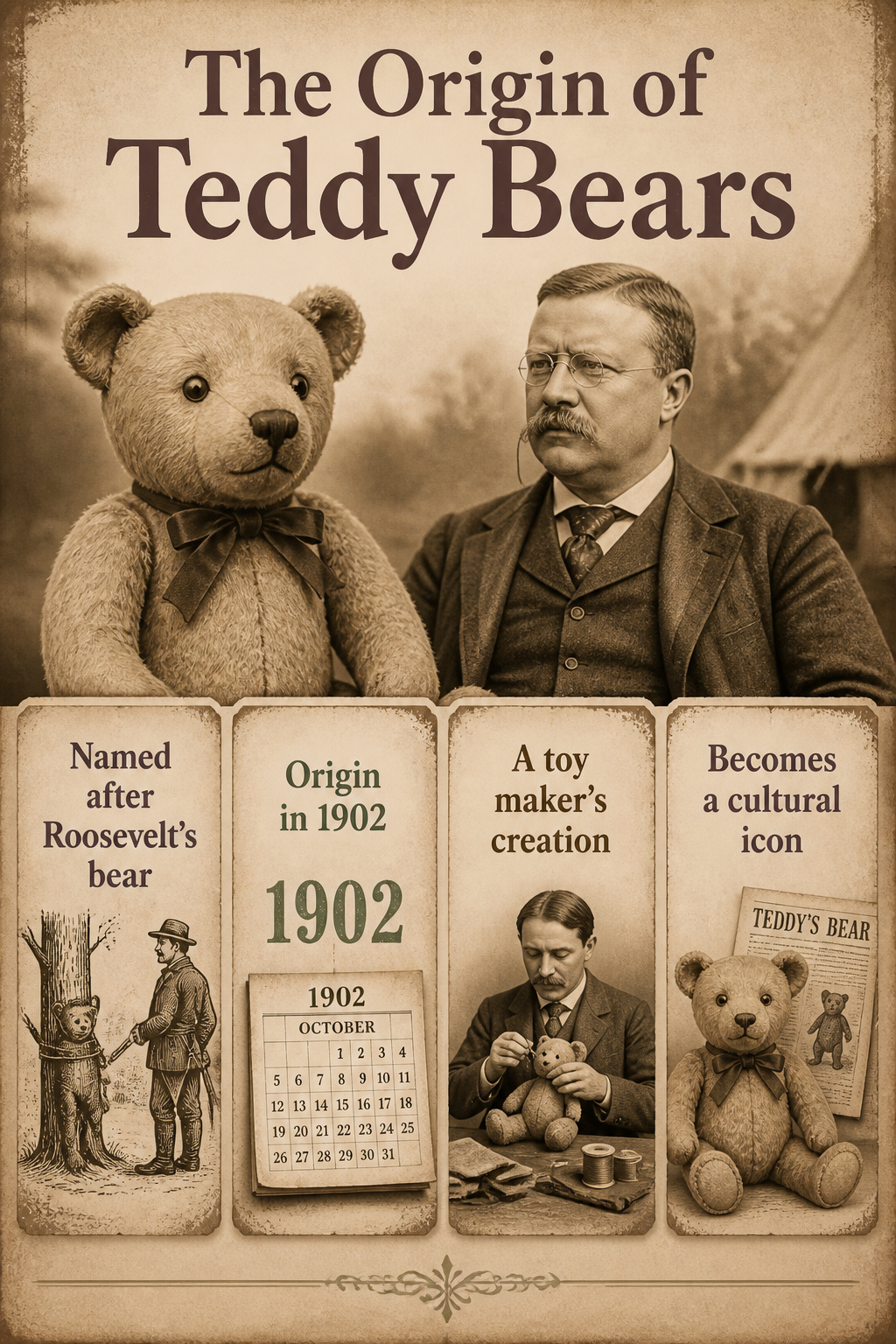
The name landed in 1902 because Theodore Roosevelt, then president, refused to shoot a bear cub someone had tied to a tree for his hunting party.
A political cartoonist latched onto the moment, and a Brooklyn toy maker named Morris Michtom stitched a stuffed bear he called "Teddy’s Bear." The name stuck fast enough that "teddy bear" became the generic term within a few years.
That origin matters when you’re standing in a nursery at 2 a.m. naming your third bear. These aren’t just stuffed animals; they’re heirlooms and gifts with stories attached, and the naming carries that weight.
Roosevelt’s moment of reluctance gave the whole category its warmth, which is why the names we choose still lean classic and lasting rather than disposable. The toy outlasts the headlines, but the name keeps the connection.
Frequently Asked Questions
How do I choose a timeless name for my teddy bear?
Pick a classic name that describes how the bear feels in your arms, like Teddy, Honey, or Cuddles. These names bypass trends because they name texture and warmth rather than a moment in pop culture.
A timeless name still sounds right decades after you pick it.
Can I mix different name categories?
Yes, and the overlap is where some of the best names live right now. A plush croissant named Winston or a distinguished brown bear called Bagel works because the deliberate mismatch has become its own style.
Just make sure both categories are established enough in your head that the joke lands cleanly.
Should my teddy bear’s name match its appearance?
Color-first naming almost never misses, but it is not the only path. A cream-colored cub might read as Butter or Biscuit, while a lopsided grin could steer you toward Wonky or Skeeter.
Spend a few days with the bear before you commit; the face changes once it has a spot on the bed.
What is a cute nickname for a bear?
Shortened classics and food names dominate the cute lane right now. Biscuit, Mochi, Muffin, and Cocoa all borrow warmth rather than dignity, and kids tend to keep saying them.
The best cute names are the ones a two-year-old can pronounce without help.
What are some funny names for a teddy bear?
The funniest names start as jokes and survive because the kid keeps repeating them. Beary Potter, Sir Hugs-a-Lot, Toastlord, and Captain Snugglepants all work when the giver commits fully.
The risk is outlasting the humor, so pick one the child will still want to say after the first week.
What are some creative names for a bear?
Creative names right now come from two directions: the old money wave of Arthurs, Theodores, and Winstons, and the café aesthetic of Matcha, Chai, and Bagel.
The freshest approach is the deliberate mismatch between them, like a plush croissant named Winston or a distinguished bear called Bagel.