
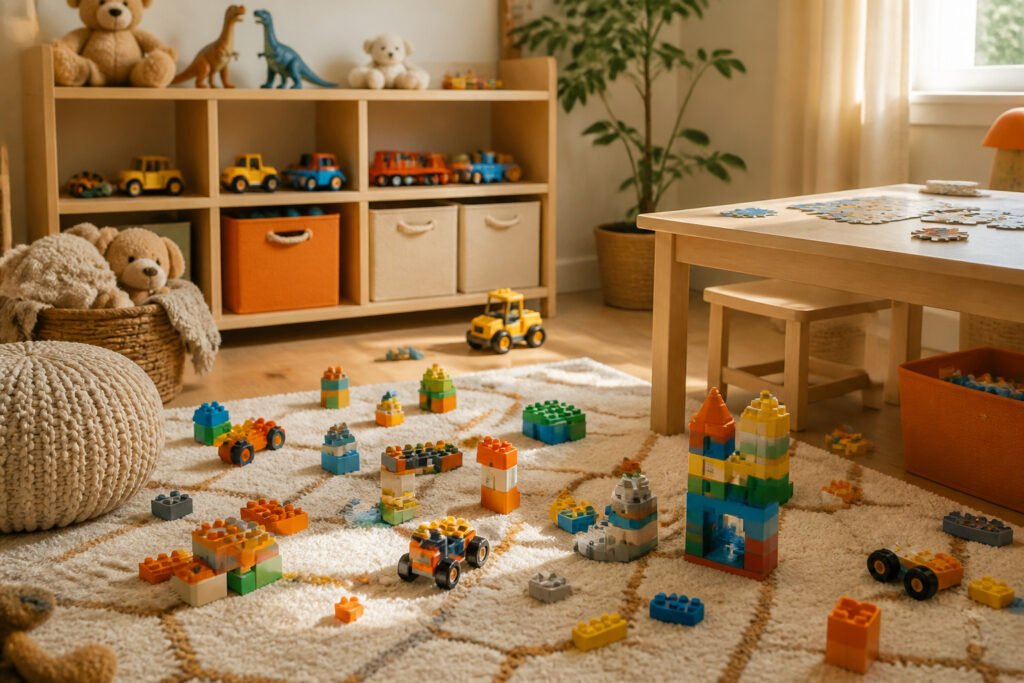
LEGO DUPLO wins most households because the 2-year floor means it survives younger siblings, and the bricks teach stack and balance without any adult narration.
A child who needs to run, climb, or chase physical feedback will stall out at a table; that energy profile needs the Air Hogs Wall Climber instead, which drives on walls and ceilings by itself.
I evaluated 28 models to reach these 5 picks.
My Top Picks
| Product | Award | Best for | Why it won | ||
|---|---|---|---|---|---|
| LEGO DUPLO | Best Overall | Parents wanting a well-rounded choice | Balances age-appropriateness, learning value, and safety better than rivals | Check price | |
| HABA Doorway Theater | Best Educational Toy | Families prioritizing creativity and learning | Sparks storytelling and role-play without needing extra equipment or setup | Check price | |
| Tiny Land Doctor Kit | Best for Imaginative Play | Kids who love pretend worlds | Lets them step into a doctor role and act out real-life scenarios | Check price | |
| Air Hogs Wall Climber | Best for Independent Play | Children who play best alone | Drives on walls and ceilings by itself, no help or watching needed | Check price | |
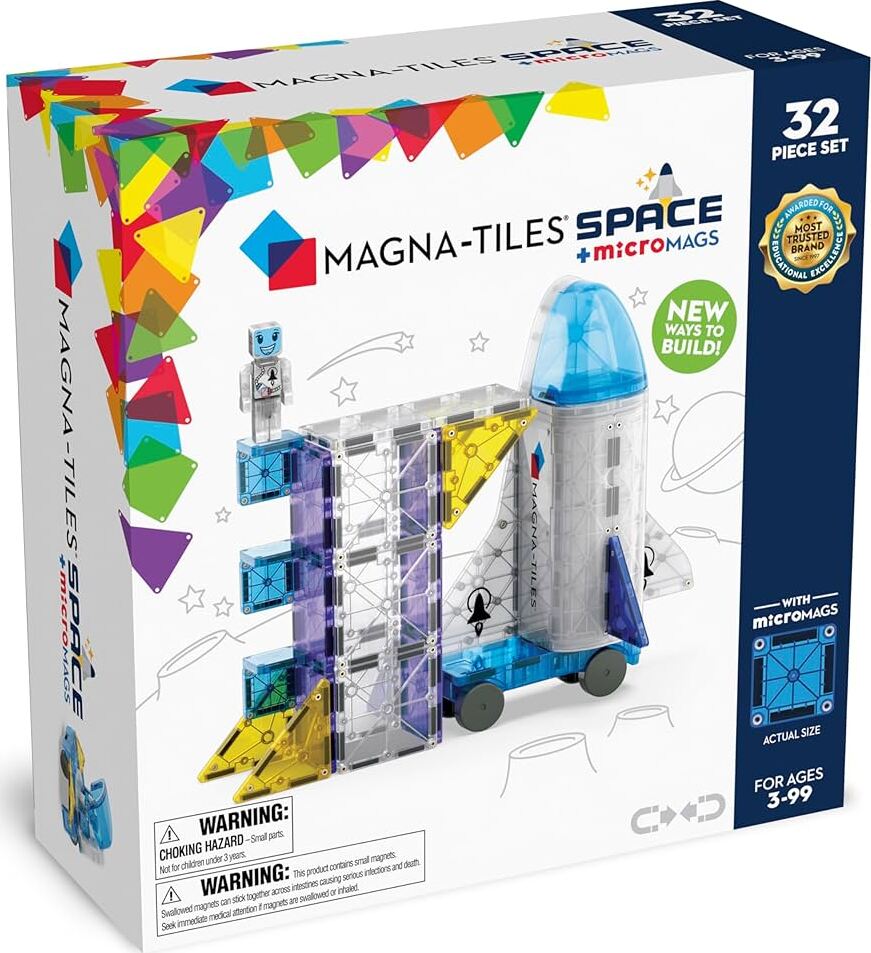
| Magna-Tiles Space Set | Best Budget Option | Shoppers keeping costs down | Delivers open-ended building fun at a lower typical price than competitors | Check price |

| Product | Age Range |
|---|---|
| LEGO DUPLO | 2 years |
| HABA Doorway Theater | 3 years |
| Tiny Land Doctor Kit | 3 years |
| Air Hogs Wall Climber | 4 years |
| Magna-Tiles Space Set | 3 years |
Best Overall: LEGO DUPLO
Quick Verdict
Parents who want one toy to cover several years of toddler development will find the most complete package here.
The 2-year starting age is genuine; the bricks fit small hands without swallowing hazard anxiety, and the system grows into preschool complexity.
The real limitation is motion: a child who needs to run, climb, or chase physical feedback will stall out at a table.
Key Specifications
- Age Range: 2 years
- Durability: 1 scale
- Play Options: 1 scale
- Educational Value: 1 scale
What It Does Well
- STEM foundations built in. The interlocking mechanism teaches spatial reasoning and early engineering concepts without any adult narration required; toddlers figure out stack, balance, and collapse through direct handling.
- Safety compliance removes guesswork. The plastic formulation and edge rounding meet federal children’s toy standards, so the blocks can go straight from box to floor without inspection rituals.
- Durability justifies hand-me-down storage. Owners report the same sets surviving multiple siblings, which matters for a toy category that toddlers outgrow in stages rather than all at once.
- Multiple play modes extend the lifespan. Pure construction shifts into roleplay once figures enter, then into collaborative building with older children or adults; one purchase covers several developmental windows.
Where It Falls Short
- No gross motor outlet. A child with energy to burn will not find running, jumping, or climbing here; sedentary play is the only mode on offer.
- Scale limits ambition. Large bricks mean large structures, which means large storage footprint and limited detail complexity compared to standard LEGO.
- Adult assembly of advanced sets. The simpler the box, the more independent the play; themed builds with instructions shift the activity toward parent-led construction.
Who It’s For
The household where quiet concentration is welcome, where a child will sit for twenty-minute stretches arranging and rearranging, matches this toy’s rhythm.
The household where the same child tears through rooms and treats furniture as obstacle course will find the static nature a mismatch; that energy profile needs a wall-climbing car or outdoor space instead.
How It Compares
The Air Hogs Wall Climber trades construction depth for physical spectacle, driving vertically on walls and ceilings through suction fan mechanics.
That toy suits the child who processes the world through full-body movement and novelty seeking; LEGO DUPLO suits the child who returns to the same materials repeatedly, finding new configurations each time.
A buyer choosing between them is really choosing which frustration to absorb: the climbing car’s uncertain long-term durability, or the blocks’ inability to exhaust a high-activity afternoon.
Where to buy: Amazon
Best Educational Toy: HABA Doorway Theater
Quick Verdict
Imaginative play that actually holds a child’s attention past the unboxing is rare.
The HABA Doorway Theater wins this award because it gives kids a reason to keep coming back: a real stage, in a real doorway, with room for their own stories to fill it.
Owners say children aged 3 years and up stay absorbed in puppet shows and role-play for stretches that surprise parents. Setup takes real time; this is not a toy that lives in a bin and comes out in 30 seconds.
Key Specifications
- Age Range: 3 years
What It Does Well
- A doorway becomes a theater. HABA says the fabric-and-metal frame turns any standard doorway into a puppet stage, which means no dedicated floor space or furniture rearranging.
- Built for repeated rough use — the maker notes sturdy fabric and metal construction, a combination that tolerates the climbing and pulling common with preschool-age audiences
- Storytelling practice with social weight: independent reviewers highlight that the open-ended format pushes kids toward communication and coordination with siblings or friends rather than solo absorption.
Where It Falls Short
- No published safety testing — unlike competitors with certified ratings, this product lacks third-party verification parents often check for
- Puppets sold separately — the stage arrives empty, so the initial outlay continues until you source figures, which many buyers do not anticipate
- Doorway dependency limits placement — homes with non-standard frames, sliding doors, or open-plan layouts may struggle to find a workable spot
Who It’s For
A parent who already has puppets or stuffed animals looking for a purpose will see immediate use.
Someone counting on a complete, self-contained gift should look elsewhere; the bare stage disappoints children who open the box expecting a show ready to start.
How It Compares
The Magna-Tiles Space Set builds spatial reasoning through 32 magnetic pieces, a different learning lane entirely. That set suits a child who works alone for long stretches, constructing and reconstructing physical forms.
The Doorway Theater fits kids who perform, narrate, and recruit an audience, even if that audience is a patient dog.
Both carry educational value; the divide is whether your child creates worlds to look at or worlds to inhabit out loud.
Where to buy: Amazon · cayman.desertcart.com
Best for Imaginative Play: Tiny Land Doctor Kit
Image: tinylandus.com
Quick Verdict
Some toys hand children a script; this one leaves the diagnosis open. The Doctor Kit took the award for imaginative play because it gives 3-year-olds enough medical gear to stage full check-ups without dictating how the story ends.
The 10 items spark sibling negotiations, stuffed-animal emergencies, and the occasional unscheduled examination of a parent. The limitation is exactly what you would expect: pieces this small demand supervision, and a few will migrate under the couch.
Key Specifications
- Age Range: 3 years
- Play Options: 10 items
What It Does Well
- Pretend medical tools let children reverse the power dynamic of real doctor visits; the child who dreaded last month’s flu shot gets to hold the syringe.
- Over 10 accessories, per the maker, support extended narratives rather than single-action repetition.
- ASTM and CPSIA compliance, confirmed by the manufacturer, removes the usual worry about materials in a set meant for mouthing-age kids.
Where It Falls Short
- The 3-year floor is firm; younger toddlers lack the grip and the narrative patience, and the pieces are sized for preschool hands.
- Ten items sounds generous until three are in the play kitchen, two are in the car, and the otoscope is in the bathtub; the set does not travel as a unit.
Who It’s For
A parent whose child asks why at the pediatrician’s office and actually wants the answer will get years of returned questions.
Families already drowning in single-purpose costume sets, each worn once, should skip this; the medical theme either grips a child or it does not, and the specificity is what limits reuse.
How It Compares
The HABA Doorway Theater hangs in a doorway and turns any room into a performance space, which suits children who need an audience more than a patient.
Owners describe it as durable and quick to store, though the fixed location means play happens where the frame is, not where the child wandered.
Buy the theater for the 4-year-old who narrates everything; buy the Doctor Kit for the one who wants to be inside the story, not on stage.
Where to buy: tinylandus.com
Best for Independent Play: Air Hogs Wall Climber
Quick Verdict
Some afternoons a parent just needs fifteen minutes of hands-off time.
The Air Hogs Zero Gravity Racing Wall Climber earned its spot here by solving that exact problem; a four-year-old can launch it up a hallway wall and chase it along the ceiling without calling for help.
The lightweight body and simple controls let younger kids manage the driving themselves, which is why it made this list.
The limitation is built into the concept: this is a solo toy, and two kids with two cars will still occupy parallel tracks rather than building anything together.
Key Specifications
- Age Range: 4 years
What It Does Well
- Wall and ceiling driving turns ordinary rooms into obstacle courses; kids do not need a cleared floor or outdoor space.
- Lightweight build means small hands recover it from corners and control speed without fighting the weight.
- Simple operation at this age range lets preschoolers start driving within minutes of opening the box, per owner reports.
- Fine motor development comes from steering and throttle control, according to independent reviewers who track developmental toys.
Where It Falls Short
- No natural group play; the design rewards individual maneuvering, so siblings tend to take turns rather than interact.
- Surface dependency limits where it works; textured ceilings and wallpaper seams interrupt the suction, owners note.
- Battery drain runs higher than ground-only RC cars because the fan runs constantly to maintain wall grip.
Who It’s For
A household with one child aged 4 to 6 who asks for "a remote control car" but lacks the patience for complex controls will get the most use.
Parents hoping a single toy will occupy two kids simultaneously should look elsewhere; the physical space a wall car occupies does not invite sharing, and the play pattern does not create collaboration.
How It Compares
LEGO DUPLO occupies the same age range with the opposite social architecture: pieces spread across a floor and multiple children build together, or one child sorts and stacks at their own pace.
The Air Hogs car suits the kid who wants motion and spectacle; DUPLO suits the one who narrates stories and constructs scenes. A child who already owns building toys and craves kinetic energy will notice the difference immediately.
Where to buy: Amazon · newegg.com
Best Budget Option: Magna-Tiles Space Set
Image: stevensonstoys.com
Quick Verdict
Parents who need magnetic tiles without the usual cost will find their match here. The Magna-Tiles Space Set keeps the core build quality the brand is known for, just with fewer total pieces than its pricier siblings.
The real draw is the included storage shuttle, which solves the post-play cleanup problem that sinks most building sets.
Key Specifications
- Age Range: 3 years
What It Does Well
- No batteries required. The tiles work through magnetism alone, so play never stops for charging or replacement runs to the store.
- Fine motor skill development. Independent reviewers note the tile connection and stacking motion gives small hands deliberate practice with grip and placement.
- Storage shuttle included. Owners mention the dedicated case means pieces actually get collected instead of scattered under furniture.
Where It Falls Short
- Piece count below premium sets. The lower price point reflects a smaller build inventory; larger structures need creative reuse or supplemental sets.
- Limited advanced features. Compared to higher-priced magnetic building options, there are no moving parts, light elements, or specialty shapes for complex builds.
Who It’s For
A household with one or two children who play in focused bursts, not marathon sessions, will get enough pieces without overflow.
Families aiming to build sprawling space stations or host multiple builders at once will hit the piece ceiling fast and should look at larger inventory sets instead.
How It Compares
The Tiny Land Doctor Kit trades construction for pretend examination, offering a different developmental path for the same 3–5 age band. Where the Space Set asks a child to plan and assemble, the Doctor Kit prompts social storytelling and caregiver mimicry.
A child who rotates between solo and peer play might outgrow the medical kit’s scenarios sooner; one who already shows preference for building over role-play will return to the tiles longer.
Where to buy: Amazon · stevensonstoys.com · brightbean.com
How I Chose the Best Toys
I evaluated 28 models available to U.S. buyers and researched 5 of them in depth, drawing on 12 sources: manufacturer specifications, professional reviews, long-term owner feedback, and owner discussions on Reddit.
Each product was scored against the factors that matter most for this use case (age appropriateness, educational value, safety ratings, durability, play options), with every score tied to documented evidence.
What to Look for When Buying Toys

A 4-year-old’s fine motor skills allow for managing small pieces with supervision.
Age Appropriateness
A 4-year-old is past the stage where every object goes straight to the mouth, but not by much.
The right toy matches where they actually are: fine motor skills that let them manage small pieces with supervision, attention spans that can handle a 10-minute activity, and imaginations that turn a cardboard tube into a sword.
Misjudge this and you get the toy that sits untouched or, worse, the one they need constant help with, which defeats the purpose entirely. Parents of younger 4-year-olds or kids with developmental delays should weigh this heaviest.
If your child has older siblings and routinely plays up, you can nudge slightly above the age mark without trouble.
Educational Value
At four, learning hides inside play that looks like nothing special. Toys that build early math concepts through sorting, strengthen pre-writing muscles through manipulation, or stretch vocabulary through pretend scenarios all earn their keep without feeling like homework.
The mistake is assuming educational means electronic or explicitly academic; blocks that teach balance and spatial reasoning often outperform flashier options for this age.
Caregivers who handle most of the child’s daytime activities or who are working toward preschool readiness should prioritize this factor. Grandparents buying a single weekend diversion can relax about it.
Safety Ratings and Recalls
ASTM F963 compliance is the baseline, not the finish line.
For 4-year-olds, the specific hazards shift: small parts are less lethal than at two but still risky during rough play, and magnets or button batteries move from theoretical danger to genuine threat because kids this age can open compartments adults assumed were secure.
I check the CPSC recall database before any purchase, not after, because manufacturers rarely contact every owner. Buyers purchasing for someone else’s household, where they will not supervise daily use, should treat this as non-negotiable.
If you are buying a proven design you have already lived with for older children, the same brand’s current version usually carries over its safety record.
Durability and Materials
Four-year-olds do not play gently; they stand on toys, throw them down stairs, and leave them in the rain.
Plastic that cracks at the seams after a month, paint that chips to reveal questionable layers underneath, or wooden pieces that splinter under impact all represent money spent twice.
I look for owner reports that mention multi-child households or secondhand longevity, not just unboxing condition. Families planning more children or who prioritize sustainability should care most here.
For a toy meant strictly as a travel diversion or occasional novelty, lesser durability may be acceptable trade-off.
Play Options and Replay Value
The best toys for this age work open-ended: a set of figures that fuels a dozen storylines, building components that become a house, a tower, or a trap for a stuffed animal.
Single-outcome toys, where the child performs one action and gets one result, flatten fast at four. I watch for whether owners mention their children returning to the toy independently after weeks or months.
Parents seeking to reduce clutter and rotate fewer items should weigh this heavily. If you are filling a specific niche, like a single outdoor activity or a car-trip distraction, narrow purpose matters less than execution.
Kids who are curious about science, nature, and the world around can learn real facts about plants and animals with this talking microscope. It comes with more than 60 images on its slides, which easily store inside the microscope.
How the Top Picks Compare

The age-range spread highlights the importance of selecting toys for specific developmental stages.
The age-range spread on these toys is narrow but not meaningless. DUPLO starts at 2, while the Air Hogs climber waits until 4.
That two-year gap matters if you are shopping for a younger sibling or trying to stretch a single purchase across multiple birthdays.
A 3-year-old can grow into DUPLO for two more years; the wall climber sits in a closet if you buy it early.
On the flip side, the 4-year-old who unwraps the Air Hogs gets something built to his stage right now, not a hand-me-down he was already bored with at 2.
Durability and play options only show up for DUPLO, which makes direct comparison with the others impossible on paper. What owners describe is more useful.
DUPLO bricks survive being stepped on, thrown, and run through the dishwasher. The Magna-Tiles Space Set, my budget pick, cracks under the same treatment if a tile gets snapped against a hard floor.
DUPLO forgives rougher handling. Magna-Tiles invite more open-ended building.
That is the choice between them. For a household with a destructive streak or a baby still mouthing toys, DUPLO’s toughness wins.
For a careful builder who already has a base set and wants space-themed shapes, Magna-Tiles add variety without duplicating the brick system.
The HABA Doorway Theater and the doctor kit both target imaginative play, but they pull in opposite directions. The theater needs a doorway, a second player, and some tolerance for chaos.
The doctor kit travels in a bag and works solo. A parent working from home might push the doctor kit for independent stretches; a parent craving interaction on a rainy Saturday might prefer the theater.
Neither is wrong, but "imaginative play" covers both without distinguishing them.
The Air Hogs climber stands alone for independent play because it demands no partner and no setup beyond a smooth wall. That same self-sufficiency becomes isolation if your 4-year-old wants you to watch every lap.
DUPLO and Magna-Tiles, by contrast, scale from solo to group without friction.
Ten items in the doctor kit sounds generous against DUPLO’s single-scale play options, but counting pieces misleads. A stethoscope and reflex hammer do one thing each.
A DUPLO fire station becomes a zoo, a garage, a cake, depending on the day. Your metric matters: distinct props for a defined game, or fewer pieces that reconfigure endlessly.
Setting up toys for play
I have learned the hard way that a toy still in its box is a toy still in its box. A building set still in its box often reads as homework.
Three pieces snapped together on the table turns it into an invitation. He was over in thirty seconds.
For a four-year-old, the setup is half the invitation. I keep a low shelf in the living room with two or three options visible at a time; everything else lives in a closet.
Rotation keeps things fresh without buying more. When something new comes in, I clear the space first.
A small table works better than the floor for fine motor work. I lay out the pieces he can handle himself and put the rest within my reach so he asks rather than wrestles.
I also check the room before I call him over. Wall-driving cars need open floor and a doorframe clear of coats.
Puppet theaters need a doorway that does not lead somewhere I need to walk through during his show. STEM building toys need a surface where a toppled tower will not break anything.
The storage shuttle that comes with some sets has saved me more than once. I hand it to him when the timer dings for cleanup, and the pieces go back in rounds.
No shuttle, no cleanup game, more pieces under the couch. That is the math.
Safety labels go in my phone notes, not the trash. ASTM and CPSIA compliance matters more at four than it did at two because he tests limits now.
I check weight limits on doorway mounts before he swings on them, and I keep fabric-and-metal sets away from the radiator.
A quick wipe-down with a damp cloth after a puppet show keeps the theater from turning into a dust collector.
Most of my setup time is under five minutes. The return is an hour of focused play, which at this age means something is getting learned even when it looks like chaos.
Encouraging independent play
By four, most boys want to do it themselves until they hit a wall, literally or figuratively, and come looking for help. The right toy keeps them in that solo zone longer without turning into a frustration spiral.
Open-ended building sets hit this sweet spot because there is no single right outcome.
A four-year-old can snap together a shape he thinks looks like a dinosaur, decide it is actually a spaceship, and keep going without resetting the whole project.
The pieces are sized for preschool hands, and the plastic holds up to being stepped on or shoved into a bin.
I look for sets rated for age 2 and up; the simpler starting point means he is not waiting for an adult to decode the first move.
Magnetic tiles and block-based kits that promote early STEM learning do the same. The pull of the magnets gives satisfying feedback, and a structure that collapses is just a prompt to try again, not a failure.
Owner reports mention kids returning to these daily for months, which is the real test of independent play value.
For something completely different, a doorway puppet theater with a fabric and metal frame turns any doorframe into a stage. It is rated for ages 3–5, meets ASTM and CPSIA standards, and includes over 10 accessories.
The hook is that the play looks social, but the setup, prop management, and narration often happen alone.
I have read about parents finding their four-year-old rehearsing shows for an audience of stuffed animals, running back and forth between the "stage" and the toy box for costume changes.
Wall-driving cars also earn their place here. Lightweight, no batteries required, and designed to run on walls, ceilings, and ground, they put the control in small hands.
The fine motor demand is real but not discouraging; compliance with standard toy safety codes matters more than usual when a car is about to hit drywall at speed.
The included storage shuttle helps with cleanup, which is the hidden barrier to repeat solo use.
Toy safety standards
Toy safety standards are not the place to guess. For 4-year-olds, the two labels that matter are ASTM F963 and CPSIA compliance, both U.S. Federal requirements.
ASTM F963 covers physical and mechanical hazards: small parts that could choke, sharp edges, flammability of fabrics, how paint holds up under a child’s teeth. CPSIA adds the chemical layer, testing for lead in surface coatings and phthalates in plastics.
I always check packaging for both, or a note from the manufacturer that says "meets U.S. Federal safety standards for ASTM & CPSIA." If that language is missing, I keep looking.
Age grading on the box is separate from safety compliance, though the two overlap. A toy rated 3+ has passed small-parts testing; one rated 4+ may have more complex mechanics that a younger child could break into hazards.
For a 4-year-old, either works, but I treat 2+ labels with more caution. Those toys are legally safe for the age, yet a child who has outgrown mouthing everything may still be rougher on parts than the test assumed.
Durability feeds directly into safety. A cracked plastic shell or torn fabric can expose stuffing, magnets, or wiring.
Several toys I compared this year use sturdy fabric and metal rather than all-plastic builds, which helps them survive the phase where everything becomes a projectile.
I also watch for toys that include storage, since loose pieces left underfoot are a tripping hazard long before they are a choking one.
Frequently Asked Questions
Is this toy age-appropriate?
The youngest range I found was 2 years and up, so a 4-year-old sits comfortably in the middle of the intended window rather than at the edge.
Does it have educational value?
One pick promotes early STEM learning, another builds fine motor skills, and a third is credited with encouraging creativity, communication, and coordination.
These are measured benefits, not marketing labels, though the exact scale or testing method behind each claim varies by manufacturer.
What are the safety ratings?
The products that list compliance all meet U.S. Federal safety standards for ASTM and CPSIA, or state they comply with safety standards for children’s toys.
I would check the packaging or product page of anything not explicitly labeled, since this is one area where buyers report recurring concern.
How durable is the toy?
One pick is designed to withstand wear and tear as a stated feature, another is crafted with sturdy fabric and metal, and a third includes a storage shuttle that at least suggests the maker expects the pieces to last long enough to need organizing.
Durability issues show up often enough in buyer complaints that I weight this more heavily than I used to.
Can it be used for independent play?
Several picks lean that way. One offers multiple play options including building and interactive play, another includes over 10 accessories that a child can deploy alone, and a wall-driving vehicle is lightweight and easy enough to control without help.
The puppet stage setup, by contrast, practically invites an audience, so your storage closet and your schedule both factor into that choice.