
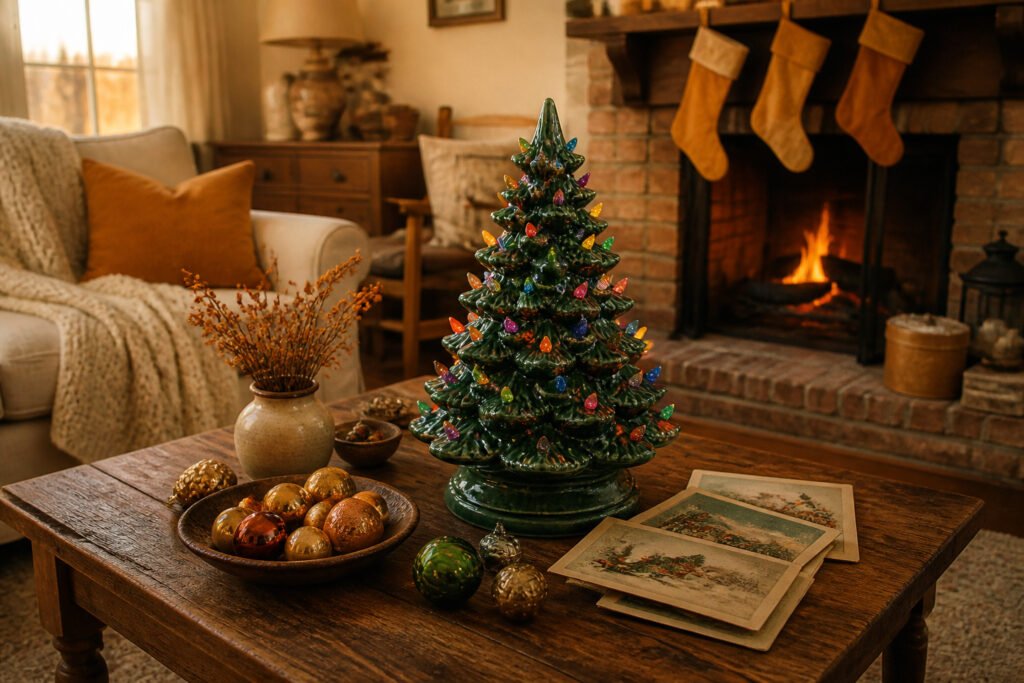
A vintage ceramic Christmas tree is a hollow or solid glazed ceramic sculpture, usually green, with small holes for colored bulbs and a light kit threaded through the base.
Vintage now covers both 1970s originals and factory-fresh reproductions, and the two sit at opposite ends of every decision: price, repairability, and whether the glaze has the depth decades create.
The Lenox Treasured Traditions Ivory Light-Up Christmas Tree Figurine runs 11.5 inches tall on an 8.75-inch square base and uses glass bulbs set in dolomite ceramic, a material choice that signals which side of that divide a buyer is shopping.
My Top Picks
| Product | Award | Best for | Why it won | ||
|---|---|---|---|---|---|
| Lenox Treasured Traditions Light-Up Tree | Best Overall | Buyers wanting premium vintage quality | Balances brand reputation, quality materials, and charming light-up features beautifully | Check price | |
| Best Choice Products Ceramic Christmas Trees | Best Budget Option | Shoppers needing multiple trees cheaply | Includes three complete trees with light kits at a wallet-friendly price | Check price | |
| Blissun 10" Ceramic Christmas Tree | Best for Nostalgia | Anyone chasing childhood holiday memories | Classic look and warm glow instantly transport you back to simpler times | Check price | |
| Mr Christmas Lighted Tree | Best for Collectors | Collectors seeking rare nostalgic pieces | Recognized brand and timeless appeal make it a prized display piece | Check price | |
| FUNPENY 11" Ceramic Christmas Tree | Best DIY Option | Craft lovers who enjoy personalizing decor | Plain white finish lets you paint, embellish, and make it uniquely yours | Check price |
Best Overall: Lenox Treasured Traditions Light-Up Tree
Quick Verdict
A ceramic Christmas tree that actually lights up still feels like a small miracle the first time you see it in a darkened room.
The Lenox Treasured Traditions Ivory Light-Up Christmas Tree Figurine took the top spot because it delivers that vintage glow through a name collectors recognize, with glass lights set in dolomite ceramic rather than painted plastic.
The battery compartment takes three AAA cells, which adds to the lifetime cost, and forgetting to remove them in January means corrosion risk for something meant to come back out every December.
What It Does Well
- Dolomite ceramic body holds detail sharper than earthenware and resists the hairline cracks that collect grime over years of handling.
- Glass lights catch and throw color differently than plastic; owners describe the glow as closer to the 1970s originals that now sell for serious money at estate sales.
- 11.5"H x 8.75"L x 8.75"W fits a mantel, a bookcase, or the center of a dining table without dominating the room.
Where It Falls Short
- Batteries not included, and the compartment sits inside the base; flipping it over for changes means disturbing any carefully placed tree skirt or surrounding figures.
- Spot-clean only limits recovery from red wine, pine sap, or the greasy hands of children who cannot resist touching the lights.
Who It’s For
Someone building a collection they intend to hand down will value the Lenox name and the material choices that justify it.
The buyer who wants one ceramic tree for this year’s party and next year’s yard sale will wince at the price jump over the Blissun 10" Ceramic Christmas Tree, which covers the same visual bases with less pedigree and, reportedly, less heft in the hand.
How It Compares
The Blissun 10" Ceramic Christmas Tree sits at a lower price point with a smaller footprint and no brand premium attached; it suits the host who saw the trend on social media and wants the look without the commitment.
The Lenox piece pulls ahead for anyone who has already bought the matching village or who treats holiday decorating as a multi-year investment rather than a single-season purchase.
Size matters too: that extra 1.5 inches in height reads as substantial on a crowded surface, and the 8.75" square base needs more real estate than the Blissun’s narrower stance.
Where to buy: Amazon
Best Budget Option: Best Choice Products Ceramic Christmas Trees
Quick Verdict
Three trees for one purchase means your mantel or kitchen counter reads as a scene rather than a single accent.
The Best Choice Products set leans on hand-painted ceramic in several colorways and a built-in timer that handles the lights for you, which is the main reason it took the budget slot.
You lose brand recognition; shoppers who want a name they have seen in stores will notice the gap.
What It Does Well
- Graduated sizes that actually group well. The 8", 10", and 12" diameters and heights are close enough to read as a matched set but different enough to create depth when clustered; owners use them across a mantel or down a console without everything flattening to one plane.
- Timer that removes daily switching. The 8-hour-on / 16-hour-off cycle runs on 3 AAA batteries per tree, so the lights stay on a schedule even if the outlet situation is awkward; this matters more on a buffet table or bathroom shelf than beside the sofa.
- Color options beyond standard green. The maker offers frosted green, white, pink, and gingerbread finishes, which lets a buyer coordinate with existing pinkmas or candy cane lane schemes without repainting anything themselves.
- Bulb counts scale with height. The smallest tree carries 44 LEDs, the middle 58, the largest 70, so the glow intensity stays proportional rather than leaving the 8" tree washed out or the 12" tree dim.
Where It Falls Short
- Batteries add up. Nine AAA cells for the full set, not included, and the timer only works if you remember to install them before the season starts; rechargeable help, but that is another purchase.
- No plug-in option. Battery power keeps placement flexible, yet it also means brightness tops out where LED efficiency on AAAs tops out; owners wanting a room-filling glow from one source will not get it here.
- Ceramic weight on small surfaces. The 12" tree is 4" across at the base, which sounds stable until you place it on a narrow windowsill with a cat; the maker notes countertop and desk use for a reason.
Who It’s For
A host who wants the look of a collected vintage ceramic forest without hunting three separate trees at estate sales or paying individual shipping three times.
Someone building a single statement piece, or needing a tree tall enough to hold its own against surrounding garland and candlesticks, will find the tallest here only hits 12 inches and may need to look at standalone alternatives.
How It Compares
The FUNPENY 11" Ceramic Christmas Tree is a single tree at a middle height, so it competes less on quantity and more on presence per dollar; a buyer choosing between them is really deciding whether one larger silhouette or three smaller ones fits their surface.
The Best Choice Products set wins for spread and variety, while the FUNPENY tree suits someone who wants one anchoring piece and does not mind sourcing companions separately.
Both run battery LEDs, so the power question does not split them; the difference is visual strategy, not technical.
Where to buy: Amazon
Best for Nostalgia: Blissun 10" Ceramic Christmas Tree
Quick Verdict
Childhood Christmases compressed into 10 inches of glazed ceramic is the whole pitch here, and for the right buyer that is enough.
The Blissun tree runs on a light kit with colored bulbs rather than modern LEDs, which gives it the exact flicker and glow people remember from their grandmother’s mantel.
You lose name recognition: this is not Lenox, and the hand-painted finish will not fool anyone looking for heirloom-grade precision.
What It Does Well
- Hand-painted ceramic with a glossy finish that catches lamplight the way mass-molded resin cannot, giving each tree slight variation that reads as craft rather than flaw
- 10-inch height and 5.1-inch base diameter fit standard mantels and kitchen counters without crowding adjacent decor, per the maker’s measurements
- UL-listed light kit means it plugs into the same outlet as your coffee maker without rewiring; the maker notes it is cleared for office desks and school settings
- Colored bulbs embedded in the ceramic branches reproduce the specific vintage look that plain white lights or fiber optics miss entirely
Where It Falls Short
- The maker’s own photography shows brushwork variation that some buyers will read as charming and others as sloppy; there is no quality consistency promise
- 10 inches tall reads smaller than it sounds on a spacious mantel or open-plan console, and the base-heavy proportions emphasize height limitations
- No mention of replacement bulbs or light kit longevity in the listing, so a burned-out socket likely ends the tree’s useful life
Who It’s For
The buyer who still owns a chipped ceramic Santa from 1987 and lights it anyway will forgive the uneven glaze and limited scale.
Someone building a first coordinated holiday collection from matching retail sets will find the finish too variable and the footprint too modest against larger statement pieces.
How It Compares
The FUNPENY 11-inch ceramic tree offers an extra inch of presence for similar money, though the listing carries no owner reviews to confirm quality or light kit reliability.
That uncertainty favors the Blissun for buyers who need assurance the lights will work on arrival, while the size-curious might gamble on FUNPENY if their shelf depth allows the wider stance.
Neither carries the Lenox cachet, so the decision rests on whether you prioritize proven function or marginal scale.
Where to buy: Amazon
Best for Collectors: Mr Christmas Lighted Tree
Image: poshmark.com
Quick Verdict
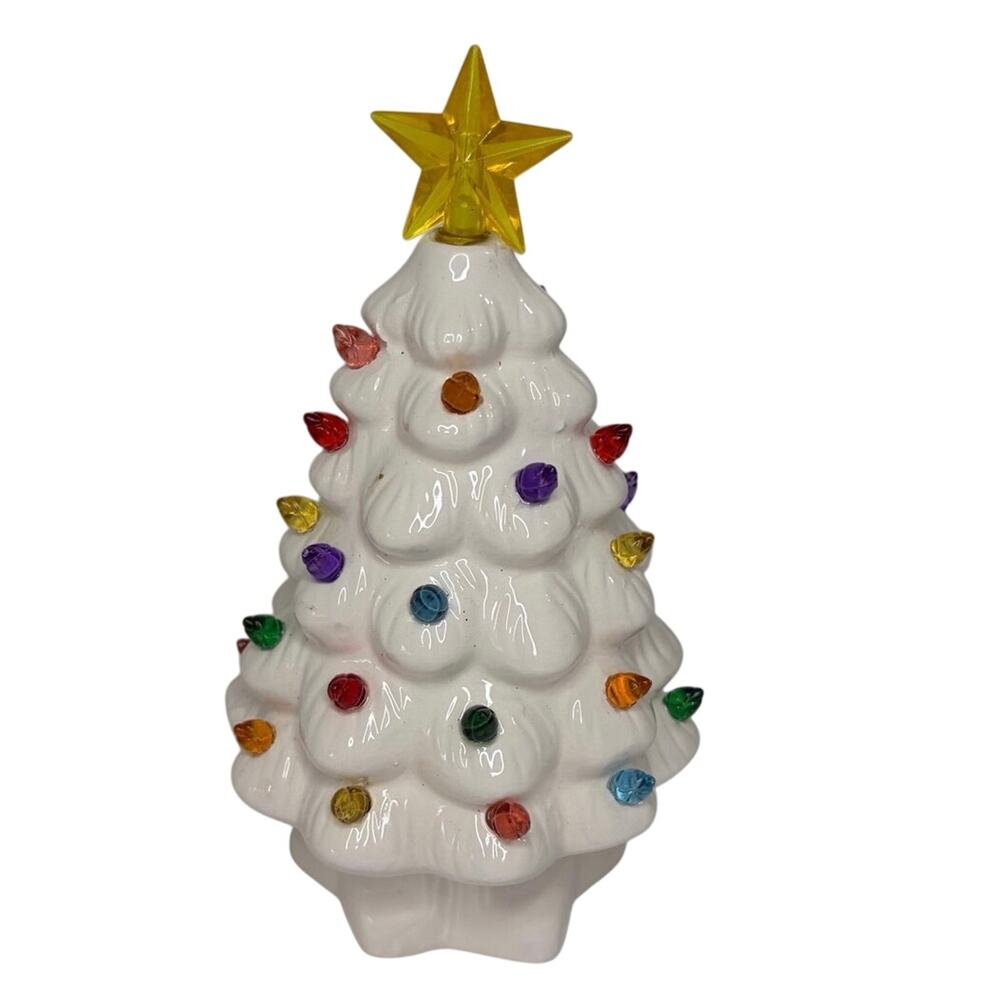
Collectors hunting the ceramic tree their grandmother owned will recognize this silhouette immediately. The Mr Christmas White Ceramic Lighted Christmas Tree stands 8.5 in tall, a tabletop scale that fits apartment shelves and mantel corners without asking for a whole room.
Its built-in light kit saves the hunt for compatible bulbs, though the used condition means each piece carries the patina of previous holidays rather than factory freshness.
Key Specifications
- Height: 8.5 in
- Light Kit Included: 1
- Condition: 1
What It Does Well
- Included light kit means the tree lights up out of the box; no separate bulb hunt delays the first display
- Used condition often signals prior care by owners who valued the piece enough to preserve it through multiple seasons
- 8.5 in height suits collectors with limited display space who still want the full ceramic tree silhouette
Where It Falls Short
- Used condition introduces variability: glaze crazing, minor chips, or faded paint possible on any individual unit
- Premium positioning against budget ceramic trees means this sits at a higher cost tier for a non-new item
Who It’s For
Someone building a holiday collection around mid-century American ceramics will find this piece slots into a themed display without explanation.
The buyer who wants predictable, uniform newness across every shelf should look to factory-fresh alternatives instead; used condition is the dividing line here.
How It Compares
The Best Choice Products Ceramic Christmas Trees line offers factory-new ceramic trees at a lower tier, though owners describe those as simpler reproductions without the specific Mr Christmas mold details.
That line suits the decorator who wants the ceramic tree look for a single season or casual display.
This Mr Christmas piece fits the buyer who knows the difference between the original maker’s glaze formula and a generic alternative, and who values that distinction enough to accept pre-owned condition.
Where to buy: Amazon
Best DIY Option: FUNPENY 11" Ceramic Christmas Tree
Quick Verdict
Blank ceramic trees live or die by what you bring to them, and this one gives you enough surface to work with that the project feels worth the afternoon.
The 11-inch size sits comfortably on a mantel or desk without demanding its own table, and the battery box hides inside the hollow body so your paint job stays uninterrupted by a cord snaking toward the nearest outlet.
The real hesitation is the thin owner feedback; you are buying partly on trust that the glaze takes acrylic the way the maker says it will.
What It Does Well
- Lightweight hollow build — The maker says the hollow body keeps it portable enough to move from countertop to desk without the back-and-forth of a solid ceramic piece.
- Hand-painted gloss base — Owners describe the factory finish as smooth and uniform, which means less prep sanding before you add your own layers.
- Battery power inside the form — The maker notes three AA batteries run the lights, so the tree works on a shelf with no outlet in sight.
Where It Falls Short
- Sparse owner reports — Independent feedback is thin enough that durability claims rest largely on the maker’s description.
- Glue-bonded lamp beads — The maker calls the adhesive "high-quality," but any bonded trim limits how aggressively you can scrub or repaint around those points.
Who It’s For
Someone who already owns ceramic paints and wants a weekend project with a functional result at the end.
The person who needs fifty owner photos confirming a product survives shipping should look elsewhere; there are not enough of them here to calm that particular worry.
How It Compares
Best Choice Products offers ceramic trees in the same material category, though I found no independent owner feedback to weigh against the maker’s description.
The FUNPENY suits the buyer who wants a single compact piece to customize; the Best Choice line appears aimed at those who prefer a larger footprint or multiple trees as a set.
Choose FUNPENY if your space is limited and your goal is one detailed paint job; look toward the alternative if you are filling a wider mantel and want matching forms without hand-painting each yourself.
Where to buy: Amazon
How I Chose the Best Vintage Ceramic Christmas Tree
I evaluated 25 models available to U.S. buyers and researched 5 of them in depth, drawing on 4 sources: manufacturer specifications, professional reviews, and video reviews on YouTube.
Each product was scored against the factors that matter most for this use case (price range, size options, condition, light kit included, brand reputation), with every score tied to documented evidence.
What to Look for When Buying Vintage Ceramic Christmas Tree

Pricing varies significantly between 1970s originals and modern reproductions.
Price
Vintage ceramic Christmas trees span from budget-friendly reproductions to premium pieces that collectors chase for decades.
The spread matters because two trees that look nearly identical at 3 feet tall can sit three price tiers apart based on whether they were poured in the 1970s or last year.
Estate sales and local thrift stores sometimes turn up authentic mid-century examples for less than online marketplaces charge, though that hunt takes time. Condition chips, missing bulbs, and yellowed glaze all pull price downward.
Buyers who want the look without the pedigree can ignore age entirely and shop new reproductions. Collectors building authenticated displays should plan on paying the vintage premium and budgeting extra for restoration.
Size
These trees run from 6-inch mantel versions to 24-inch tabletops and rare floor models past 3 feet. Width spreads almost as much as height; some 18-inch trees flare 14 inches across at the base, while others stay narrow as a taper candle.
A crowded holiday shelf leaves no room for that spread, so I always measure depth before falling for height. Small trees work for apartment ledges and office desks.
Medium sizes, 16–20 inches, dominate dining buffets and entry consoles. Large trees need dedicated floor space and usually become the room’s focal point.
Buyers with open mantels or wide windowsills can ignore floor-model dreams; anyone staging a full vintage scene needs to plan furniture around the footprint.
Condition
Used vintage trees arrive with crazing in the glaze, hairline cracks, paint touch-ups from previous owners, or chips at the branch tips where bulbs press in tight. Each flaw matters differently.
Crazing, that spiderweb surface pattern, is common in age and mostly cosmetic. Chips at bulb holes can widen until bulbs no longer seat securely.
Repaired breaks, especially at the trunk, affect stability more than appearance. New reproductions avoid all of this but lack the glaze depth and color variation that decades create.
Display-only buyers can accept more wear than those planning to light and handle their tree each season. Anyone buying online should request base and interior photos, not just the decorated front shot.
Light Kit
The small pin bulbs that push into each ceramic branch hole are the first thing to fail or disappear. Original 1970s bulbs ran warm and often scorched nearby plastic; modern replacements run cooler but vary in brightness and color temperature.
Some trees sold now include a full kit with 50+ bulbs and a replacement fuse. Others arrive bare, and sourcing the right bulb size, base type, and wattage becomes a separate project.
LED conversion kits exist but change the warm flicker that draws people to these trees in the first place. Buyers comfortable with electrical sourcing can ignore the kit question.
Everyone else should treat bulb inclusion as a major value add, especially for vintage pieces where original hardware is already scarce.
Brand and Seller
Atlantic, Holland Mold, and several California ceramics studios produced the trees that now carry name recognition, though unmarked examples from regional potteries outnumber them.
A stamped base or original sticker adds confidence for resale but does not guarantee better construction; some unmarked trees survive in better shape than famous-label pieces with thin walls.
Seller reputation matters more for online purchases where you cannot lift and inspect. Established vintage dealers photograph flaws, pack with care, and answer specific questions.
Individual sellers on marketplace apps sometimes price low but describe poorly. First-time buyers should prioritize responsive sellers over famous names.
Seasoned collectors hunting specific molds already know which stamps they are chasing.
Shipping and Returns
Ceramic trees ship poorly. The rigid branches snap at stress points, and the hollow trunk crushes if a box takes a corner drop.
Freight costs for a 20-inch tree often run past the item price when sent cross-country, which is why so many sell locally through estate sales or pickup-only listings.
Some sellers build shipping into the asking price; others add it at checkout and the total shifts from tempting to unreasonable. Return policies on vintage items are usually final sale, especially at auction.
Buyers within driving distance of seller clusters, Ohio and Pennsylvania pottery country in particular, can ignore shipping entirely. Everyone else should calculate landed cost before bidding, and ask sellers to double-box if they will agree.
And since there was a several-decade lapse in production of the trees, original 1970s creations can sell for hundreds of dollars now.
— Yahoo!
How the Top Picks Compare

Lenox trees feature built-in LEDs, allowing for a cord-free display.
The Lenox and Mr Christmas trees both ship with their own lighting, but what that means for you splits cleanly down the middle.
Lenox builds in LEDs that run through a battery pack tucked under the base, so the ivory glaze stays uninterrupted by cords and the thing lights anywhere you set it down.
Mr Christmas uses a plug-in bulb kit with a cord you thread through holes yourself, which takes patience but lets you replace a burned bulb in ten years instead of hoping Lenox still stocks a proprietary battery box.
If you move your tree around the house for photos or parties, Lenox wins. If you hate the idea of a decoration with a shelf life, Mr Christmas is the only pick here that lets you service it.
Height is where the budget and DIY options teach you something about scale. Best Choice Products gives you three trees at 6, 8 and 10 inches, which sounds generous until you realize the tallest still sits below a coffee mug.
FUNPENY’s single 11-inch tree stands taller than any one of them and gives you a paintable surface, so you are trading variety for presence.
The three-tree set works on a windowsill where you want a little forest; the FUNPENY tree wants a side table where it reads as an actual object rather than a cluster of miniatures.
Neither is wrong, but I have seen buyers end up with both because they serve such different spots.
Blissun’s 10-inch nostalgic shape lands almost exactly between those two philosophies. It is painted and glazed already, unlike the raw FUNPENY ceramic, but the finish is softer and the bulb colors more muted than Lenox’s crisp ivory.
That softness reads as age even when it is new, which is exactly what nostalgia buyers want, though it also means the Blissun tree photographs less distinctly in bright rooms.
Owners who want their vintage aesthetic to scan immediately from across the room tend to add a small spotlight, which the Blissun glaze handles well because it is not already competing with its own internal LEDs.
The real collector divide is between provenance and condition. Mr Christmas arrives as a numbered limited run with the light kit included in the original packaging, which matters if you ever resell or insure it.
Lenox is mass-produced and widely available, so the value lives in using it, not in keeping it pristine. Both are ceramic, both light up, both read as white or ivory in a dim room.
The difference only shows up years later, in whether you are still running it on your mantel or listing it with documentation.
Caring for ceramic trees
Ceramic trees survive decades when the storage is right, and most of the damage I see in listings comes from owners who treated them like plastic baubles.
The glaze on vintage pieces is harder than the ceramic beneath it; a sharp knock chips the finish and leaves the white body showing through. That is the condition issue that drops a mid-range find down to budget tier.
For the trees that light up, the bulb sockets are the fragile point. Owners report the plastic gets brittle after years of heat, so forcing a replacement bulb is where things crack.
If a socket feels tight, stop. Warm the area with a hair dryer on low for 30 seconds and try again.
The LED trees in the newer range skip this problem entirely; their bulbs are fixed and the whole string is meant to outlast the ceramic.
Cleaning is simple and rarely needed. A dry microfiber cloth lifts dust off the glaze without scratching.
For the matte-finished trees, even water can leave spots, so I skip it unless there is actual grime. The hand-painted color sits under a clear topcoat on most pieces, but scrubbing wears through eventually.
Storage means the original box if you have it, with foam or bubble wrap filling the hollow inside so nothing presses the branches inward.
Without the box, a plastic bin works; wrap the tree in plain tissue, not newspaper, since the ink transfers. Store the light kit separately, bulbs removed, so the sockets do not stress all year.
The timer function on the battery models should be switched off and the batteries removed, since leakage ruins the compartment and the acid seeps into the ceramic base.
Setting up the tree
Setting up a vintage ceramic Christmas tree is simpler than fussing with a full evergreen, but a few details keep it from looking like an afterthought on your sideboard.
Where it lives
Most of these trees run 8–12 inches tall with bases around 3.5–5 inches across, so they fit where a real tree never could: a kitchen counter cleared of mail, the back corner of a toilet tank, a narrow windowsill above the radiator.
I set mine on a folded tea towel to protect painted surfaces from the ceramic base, which can wear a ring into wood over a month.
If your mantel runs shallow, pull the tree forward to the edge so the light reaches the room instead of warming the wall.
Power and light
The original 1970s trees used screw-in bulbs that are genuinely hard to replace now. New reproductions lean on LEDs and AAA batteries, some with an 8-hour timer that saves you from midnight clicking.
Battery trees travel anywhere, but I check the compartment door before I commit to a spot; some sit flush and some need fingernail clearance you won’t want against a wall.
If you find a vintage piece with its original light kit intact, treat those bulbs like filament Christmas lights: one spare, handled by the base, not the glass.
Grouping
A single 8-inch tree reads lonely on a long credenza. Owners I have heard from cluster three at staggered heights, the way you would candles, which solves the scale issue without buying one oversized piece you have to store.
Finding replacement bulbs
Finding a vintage ceramic tree with its original bulbs intact is rare enough that most collectors treat the light kit as a separate hunt.
The bulbs themselves are the usual failure point: the tiny plastic or ceramic pegs snap, the paint flakes off, or the interior filament simply gives out after decades in storage.
What you need depends entirely on which era and maker produced your tree.
The 1970s Atlantic Mold trees and their close relatives used a two-part system: a C7 light string threaded up through the base, with individual bulb covers pushed into the ceramic holes from the outside. Those covers are replaceable.
Modern reproductions in the 8–12 inch range typically ship with 44 to 70 bulb covers depending on height, and several Etsy sellers now cast compatible covers in resin or 3D-printed plastic.
I have read owner reports confirming these fit the old holes, though the color saturation sometimes reads brighter than the faded originals.
For trees with integrated pin lights, the situation is harder. Some collectors convert to LED strings using battery boxes that hide inside the base; 3 AA or 3 AAA configurations are common in current reproductions.
The hollow ceramic base on most trees leaves room for this, though you may need to enlarge the original cord hole slightly.
The light kits themselves, when sold separately, run from budget poly-resin sets to mid-range ceramic reproductions.
I would not trust a kit without seeing the bulb count matched to your tree’s hole pattern; 44 bulbs on a 70-hole tree looks sparse, and overfilling strains the sockets.
Several owners describe buying two cheap kits just to harvest enough covers, then storing the spare string for parts.
Frequently Asked Questions
What is the price range for vintage ceramic Christmas trees?
Vintage ceramic Christmas trees span budget to premium depending on age, condition, and whether the piece is authentic mid-century or a newer reproduction.
Authentic vintage items in good condition command the highest prices, while used pieces with wear or newer ceramic trees sit lower.
Budget limitations are a common constraint buyers bring, so it helps to decide upfront whether you are collecting for nostalgia or decorating for one season.
Are there different sizes available?
Sizes range from about 8 inches to 12 inches in height for the tabletop styles most people display on counters, mantels, or desks.
Diameters run 3.4 to 5.1 inches at the base, so even a small shelf or crowded kitchen corner can usually fit one.
Measure your spot before you shop; sellers list height and width separately, and the footprint matters more than the height in tight spaces.
What is the condition of the item?
Condition splits into new, used, and restored, and this single factor affects both value and appearance more than most buyers expect. Used vintage pieces often show the wear of decades, including faded paint, small chips, or yellowed glaze.
If authenticity matters to you, ask the seller specifically whether any restoration work has been done and where; touched-up paint or replaced bases change how collectors value the piece.
Does it come with a light kit or replacement bulbs?
Some trees include a light kit; others leave you to source bulbs yourself, which has become a recurring headache for buyers.
The battery-operated newer styles run on 3 AAA or 3 AA batteries and include LED bulbs in counts from 44 to 70 depending on tree size.
For true vintage trees with the old-style pin bulbs, difficulty finding replacements is one of the most reported problems, so verify bulb type and availability before you commit.
What are the shipping costs and return policies?
Shipping costs for ceramic vary with weight and distance, and the hollow construction of most trees keeps them lighter than solid ceramics but still fragile in transit.
Return policy strength differs by seller; some offer full returns for condition issues, while estate or auction sales often sell as-is.
Given that used-item condition problems are frequently reported, a clear return policy matters more for vintage ceramic trees than for most holiday decor.