
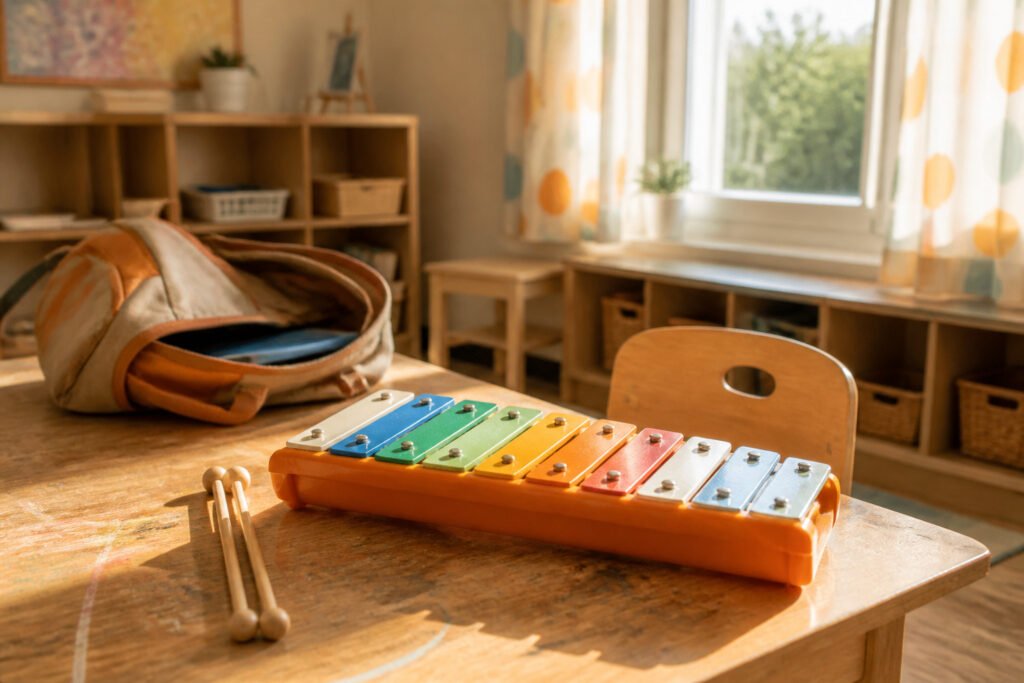
Show and tell for the letter X asks a child to present an object whose name starts with one of the least common starting letters in English.
The real challenge is not finding any X word, but finding one the child can explain and, if needed, carry in a backpack.
A toy xylophone fits both needs: light enough for a kindergartener to haul, and the bars that shrink as the notes rise give the child something to demonstrate instead of just describe.
1. Xylophone

A xylophone works for letter X show and tell because the name itself carries the sound, and most kids already know the word from music class or toys at home.
The instrument gives a child something to do instead of just describe: they can strike the bars, name the colors, play a simple tune, and let classmates try a note or two.
The demonstration practically writes itself. A child can point out that the bars get shorter as the notes get higher, tap out the alphabet song or "Twinkle Twinkle," and pass two mallets to a friend.
That interaction fills the time and shows the teacher the child understands how the thing works.
For bringing one to school, the toy-grade xylophones sold for toddlers are the right size, light enough for a backpack, and cheap enough that a scuff in the classroom won’t matter.
The wooden frame models rattle less in transit than the plastic ones, and they stay in tune well enough for a kindergarten performance.
Leave the full-size orchestral instrument at home; it is heavy, fragile, and overkill for five minutes at the carpet.
2. X-Ray

An x-ray printout is one of the more straightforward letter X items to bring, and it tends to hold a classroom’s attention longer than you’d expect.
The image itself does most of the talking: a child can point out the skull, ribs, or hand bones and explain that the white patches show where the body is dense enough to block the x-ray beam.
Most kids land somewhere between fascinated and grossed out, which is about where you want them for show and tell.
The practical part is getting the image. Copies are often available from the doctor who took the original, sometimes on a disk you can print at home.
A standard sheet printed on regular paper works fine for holding up; the film version looks more authentic but is harder to replace if it gets bent or creased in a backpack.
If you’re using the actual film, slip it inside a report cover or between two pieces of cardboard. A five-year-old’s grip is not gentle, and a creased x-ray is a ruined x-ray.
One note on content: dental x-rays are small and harder for a group to see. Chest or limb images read better from the back row.
If the image shows anything identifying, cover that corner with a sticky note before it leaves the house.
3. X-Box

A gaming console is one of the few household items that starts with X and actually gets kids excited to talk. The name itself is the hook: Xbox, not "video game system."
That distinction matters when a teacher is checking off letters.
For the presentation, the child should lead with the hardware rather than the games.
The controller’s haptic feedback, the venting design on the Series X, or how the original 2001 console compared in size to the current one, these give a first grader something physical to pass around or describe.
Older kids might trace the brand back to Microsoft, which opens a quick angle on how companies name products.
The risk is the presentation becoming a wish list. I would set the rule at home: no mentioning games you want to buy.
Instead, the child can demo one feature, maybe the quick resume that switches between games, and explain what that saves in waiting time. A classmate will ask how much it costs.
A prepared answer, "About what my family spends on two months of streaming," keeps the focus on the object, not the price tag.
If the family does not own one, a borrowed controller and a printed timeline of console releases still fills two minutes.
The letter X is doing the heavy lifting here; the child mainly needs to show they thought about what the object does, not just what it plays.
4. X Marks the Spot

A folded paper map with a burned edge and coffee stain turns a regular Tuesday into a pirate story.
My daughter made one for her preschool show and tell last fall after I let her watch me age a prop for a murder mystery party, and the technique is simple enough that a kindergartener owns it.
Brown paper grocery bags torn open make the right color and weight. A candle held at arm’s length singes the edges uneven; too close and you lose a corner, which my kid did twice before she got the rhythm.
The coffee stain comes from steeping three bags in a bowl overnight, then brushing the liquid on with a foam brush so the river looks like it was drawn by someone who had never seen a real river, which adds to the charm.
For the X itself, a wax seal stamp from the craft drawer works, or a thumbprint in red paint if you are out of supplies on a Sunday night.
The presentation writes itself: the child buries a small box of chocolate coins in the classroom corner the night before, then during their two minutes they walk the class through the clues.
The map goes home, the candy gets shared, and every other kid in the room wants to know how to burn paper without setting off the sprinkler.
5. Xerophyte

A xerophyte is any plant built for drought, the kind that thrives where rain barely visits. Cacti, aloe, and jade plants all qualify, which makes this one of the easier X words to actually bring through the classroom door.
Most grocery stores and garden centers stock small succulents year-round for $3 to $8. A child can carry one in a plastic pot wrapped in a paper bag, no soil spills needed.
If the teacher prefers no living plants, a good photograph printed at home works; so does a pressed specimen dried between paper towels for a week.
The talking points write themselves. The thick, waxy skin seals water inside.
Leaves shrink to spines so less surface area dries out. Roots spread wide and shallow to grab any passing shower.
A kid can run a finger along the leaf, feel the gloss, and explain that this plant would die in wet soil faster than it dies in sand. That tactile moment usually wins the room.
One risk: overwatering the specimen before show and tell. A soggy cactus collapses fast, and a six-year-old holding a limp aloe loses some authority.
Let the soil stay dry for a week beforehand. The plant will look plumper, not worse.
Picking the Right Item

Most kids freeze at the front of the classroom, so the item matters less than the prep behind it. My youngest once brought a toy car for letter C and spent the full two minutes staring at his shoes.
The teacher had given a two-minute time limit, which he hit without finishing a sentence because we had not rehearsed at home.
Now we run through the whole presentation the night before. I set a timer on my phone, he holds the item, and he practices saying what it is, why he likes it, and one thing it does.
Speaking clearly gets easier with repetition, and the time limit feels less like a trap.
If your child is stuck on X, walk through the house category by category.
Animals, books, food or drinks real or pretend, TV or movie characters, even a family photo if the person’s name starts with X. When nothing turns up, a foam letter from bath toys or a wooden alphabet puzzle works.
You want something they can teach the class about, not something that fits the letter perfectly.
Sorting by Category

When I hit a wall with show and tell letter x, running through categories instead of random objects breaks the logjam faster than anything else.
Animals, books, food or drink real or pretend, TV and movie characters, family member names with a photo attached, the foam letter from bathtub toys, the wooden alphabet puzzle piece.
Each category lives somewhere in the house already, which matters when the announcement comes Sunday night and the backpack needs packing by morning.
The animal slot stays hardest for X, so that wooden letter or a printed photo of Uncle Xavier often wins. A pretend food works too, the toy taco or plastic apple standing in for anything starting with the right sound.
The system saves the scramble because the categories themselves do the searching, not your tired brain at 9 p.m.
Frequently Asked Questions
What are some show and tell ideas using the letter x?
A xylophone, x-ray printout, Xbox console, pirate map with X marks the spot, and a xerophyte plant like a cactus or aloe all work well.
Each gives the child something to demonstrate rather than just describe, which keeps a classroom engaged.
What to bring for show and tell letter X?
Bring something the child can interact with or demonstrate. A toy xylophone lets them play a tune, an x-ray gives a classmate-wow factor, and a small succulent lets them pass around a living thing.
If nothing starts with X, a foam bath letter or wooden puzzle piece still counts; the teacher usually wants participation, not perfection.
What begins with the letter x for kids?
Common kid-accessible X words include xylophone, x-ray, Xbox, xerophyte (desert plant), and names like Xavier.
For very young children, pretend items work too: a toy taco or plastic apple can stand in for X if you label it with the letter.
You want something the child can talk about for two minutes, not something that matches the dictionary definition.
What toy starts with the letter X?
A toy xylophone is the classic choice, light enough for a backpack and cheap enough that classroom scuffs do not matter. Wooden frame models rattle less than plastic ones in transit.
An Xbox controller also works if the family owns one; the child can demo haptic feedback or compare console sizes without turning the presentation into a game wish list.
What are objects that start with x?
Household objects include a xylophone, x-ray printout, Xbox or its controller, a pirate map marked with X, and xerophyte plants like jade or aloe.
If the deadline is Sunday night and the backpack needs packing by morning, walk through categories: animals, books, food real or pretend, TV characters, family photos, or alphabet puzzle pieces. Something always turns up.