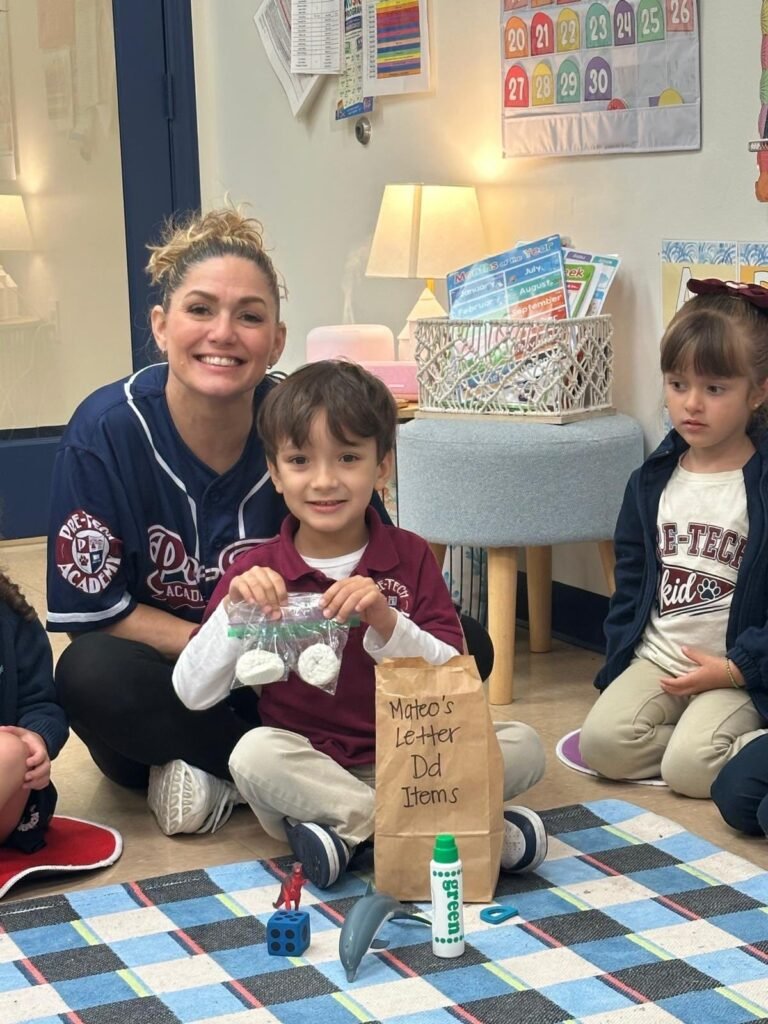
The nine letter D show and tell ideas on this list run from zero-prep to weekend-project, from pocket-sized to something you plug in.
What settles the choice is how many hours you have before the school bell rings and whether you want to send your kid in with a box of decorated monster donuts.
The electric doughnut maker alone needs an outlet close by and a teacher who said yes to a shared snack.
1. Doll

A doll gives a child something to hold up and talk about without rehearsing. I like that any doll works: baby doll, action figure, the one with the missing shoe from under the couch.
The child names it, points to the hair or the outfit, and the letter sound practically teaches itself. If the doll has a backstory the child invented, that fills the time even better.
This is the grab-and-go option for parents who remember show and tell the morning of. No prep, no mess, no rules to check.
2. Dolphin

Plastic dolphin toys turn up in bath sets, aquarium gift shops, and the bins at thrift stores. A dolphin toy with wheels and lights gives a kinetic kid something to demonstrate.
A child who freezes in front of the class can push it across a desk and let the toy do the work.
A dolphin picture book works too, especially if the child has seen the real animal at an aquarium. For the child with no dolphin on hand, print a photo and call it a dolphin postcard.
The teacher will not mind.
3. Dollhouse

A dollhouse turns show and tell into a tour. The child opens the front, points out the kitchen, moves a tiny chair, and the class leans in.
I find this works best when the child has added something: a scrap of fabric for a rug, a bead for a fruit bowl. That detail gives them ownership beyond "this is my toy."
The size matters. A dollhouse that folds flat fits in a backpack.
The sprawling wooden one stays home unless you drive to school. Send a photo of that one instead.
4. Decorated Monster Donuts

Decorated monster donuts sit in that gray zone between craft and snack. Purple icing, candy eyes, and candy corn teeth turn a plain donut into a character a child can present and the class can split.
Classroom rules vary: some schools allow food, some do not, and the ones that do often require store-bought packaging. Check before you pipe.
I would make these the night before. The icing sets, the candy sticks, and the child helps enough to claim credit without the before-school meltdown.
If food is banned, a photo of the monster donut works as a show-and-tell about a thing you made.
5. Stuffed Dog

A stuffed dog is the softest possible letter D. One small enough to fit in a cardboard box gives the child a prop to open like a present.
I have seen shy kids do better with a stuffed animal because they speak to it, not to the room.
Name the dog beforehand. "This is Brownie" is a stronger opening than "I brought a dog."
If the real family dog is the actual topic, a photo avoids the leash-and-cleanup problem, but the stuffed version travels alone and never barks at the wrong moment.
6. Diorama

A diorama is show and tell for the family that plans ahead. A farm scene diorama uses a shoebox, paper, and toy animals the child already owns.
I would start with a scene the child knows: their own backyard, a park, the route to grandma’s house. Familiarity gives them sentences when the teacher asks questions.
The time commitment is real. A rushed diorama looks rushed, and the child knows it.
Start early enough to finish without rushing, or choose a simpler idea. For the child who lives to build and glue, though, this is the one they remember at the end of the year.
7. Doughnut Maker

An electric doughnut maker turns the letter D into a hands-on kitchen demo, though it is the heaviest option on this list and needs an outlet close by.
Classroom rules on food vary, so I would check those first. Some teachers welcome a shared snack; others ban it outright.
A toy version, a paper craft doughnut, or even a printed picture of the appliance itself keeps the idea alive without the cleanup.
If the real machine gets a yes, the child can describe how the batter pours, the lid closes, and the light changes color when the batch is done.
That sequence gives them something to rehearse at home and repeat out loud.
For a no-food classroom, a toy doughnut maker from a play kitchen set travels light and still earns the letter D.
Show and Tell Tips
Most teachers have a short list of what cannot come through the door, so a quick email the night before saves a morning meltdown.
Schools have different rules on food, electronics, or items that make noise, and a quick email saves a morning disappointment.
Anything that goes to school should fit in a backpack or a small bag the child carries alone. A shoebox diorama or a stuffed dog in a cardboard box both work; the sprawling dollhouse stays home unless you drive.
Skip the fragile or valuable stuff. A doll with a missing shoe is fine; the porcelain one from grandma is not.
Run through the presentation at home. Have the child hold the item and answer: what color is it, what does it do, why do they like it.
That practice turns into confidence when the teacher calls their name.
Engagement Strategies
Let the child pick the item themselves. They own the letter D better when they chose it, even if you would have picked the dolphin over the doughnut maker.
The "drumroll" trick builds momentum for shy kids: pat the legs in a quick "d-d-d-d-d" before naming the item.
Ask "what does it do?" instead of just "what is it?" Adding a motion or a sound, like stomping feet for a dinosaur, buys a speaker thirty more seconds of eyes on them than just holding up the toy.
Interactive items carry the presentation. A drum, dominoes, or a doctor kit lets the child demonstrate instead of speechifying.
Less pressure, same participation.
Challenge them to double up on D words: "dancing dinosaur" or "my dog Daisy." It sneaks in extra sound practice without feeling like a lesson.
Safety Considerations
Nothing irreplaceable goes to school. The stuffed dog from a store rack travels easier than the one they have slept with since infancy.
Dangerous is obvious, but check the less obvious too: small beads on that diorama fruit bowl, loose batteries in a light-up dolphin, the hot plate on a real doughnut maker. If it could burn, choke, or spark, leave it home.
Food rules vary by classroom and by day. Ask first, pipe second.
A photo solves most problems. The real family dog, the oversized dollhouse, the donut you made at midnight: all of them flatten into a picture that travels safe and shows fine.
Learning Objectives
Show and tie letter D to the /d/ sound through objects the child handles, not symbols they memorize alone. A worksheet shows a d; a dolphin toy makes the sound mean something.
The activity builds vocabulary because the child needs words beyond the name. They describe what the doll wears, how the doughnut maker works, where the diorama scene happens.
Those sentences stretch language further than "this is a dog."
Public speaking starts small. Practicing the explanation on a stuffed animal first, then a parent, then the full class builds the same nerve in stages.
The letter D just gives them the topic.
Letter recognition runs both ways. Seeing uppercase D on the schedule and lowercase d on their item name connects the two shapes to one sound.
That is alphabet knowledge, not letter isolation.
Frequently Asked Questions
What starts with the letter D for show and tell?
Doll, dolphin, dollhouse, stuffed dog, and diorama are solid choices that most children already own or can make with household supplies.
A doll works with zero prep, a diorama rewards the family that starts early, and a stuffed dog helps shy kids because they speak to the toy instead of the room.
Most toy boxes already hold half a dozen D words without anyone trying.
What toy starts with the letter D?
Dolls, dinosaurs, dogs, dolphins, and drums are the toys children bring most often. A small stuffed dog fits in a cardboard box the child can open like a present, which builds a stronger opening than just holding the toy up.