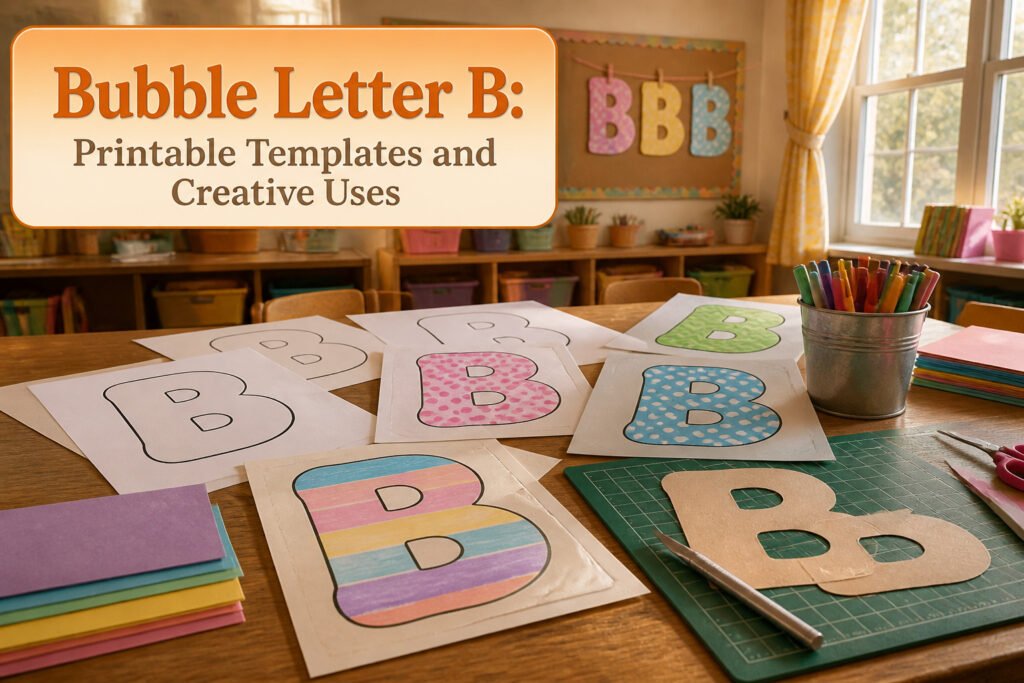
A bubble letter B is a rounded, oversized outline of the letter that exaggerates every curve so children can trace it, or so adults can fill it with color, pattern, or cut it into banners and room signs.
Not every printable works for every project: a full-page B printed on plain paper wilts into a curl within days if you string it into a banner, while the same shape on 65 lb cardstock holds its edge through a birthday party and the bedroom door after.
The two interior cutouts in a capital B are what separate a clean craft from a ragged one, and a craft knife on a cutting mat saves where scissors tear.
Teaching the Alphabet
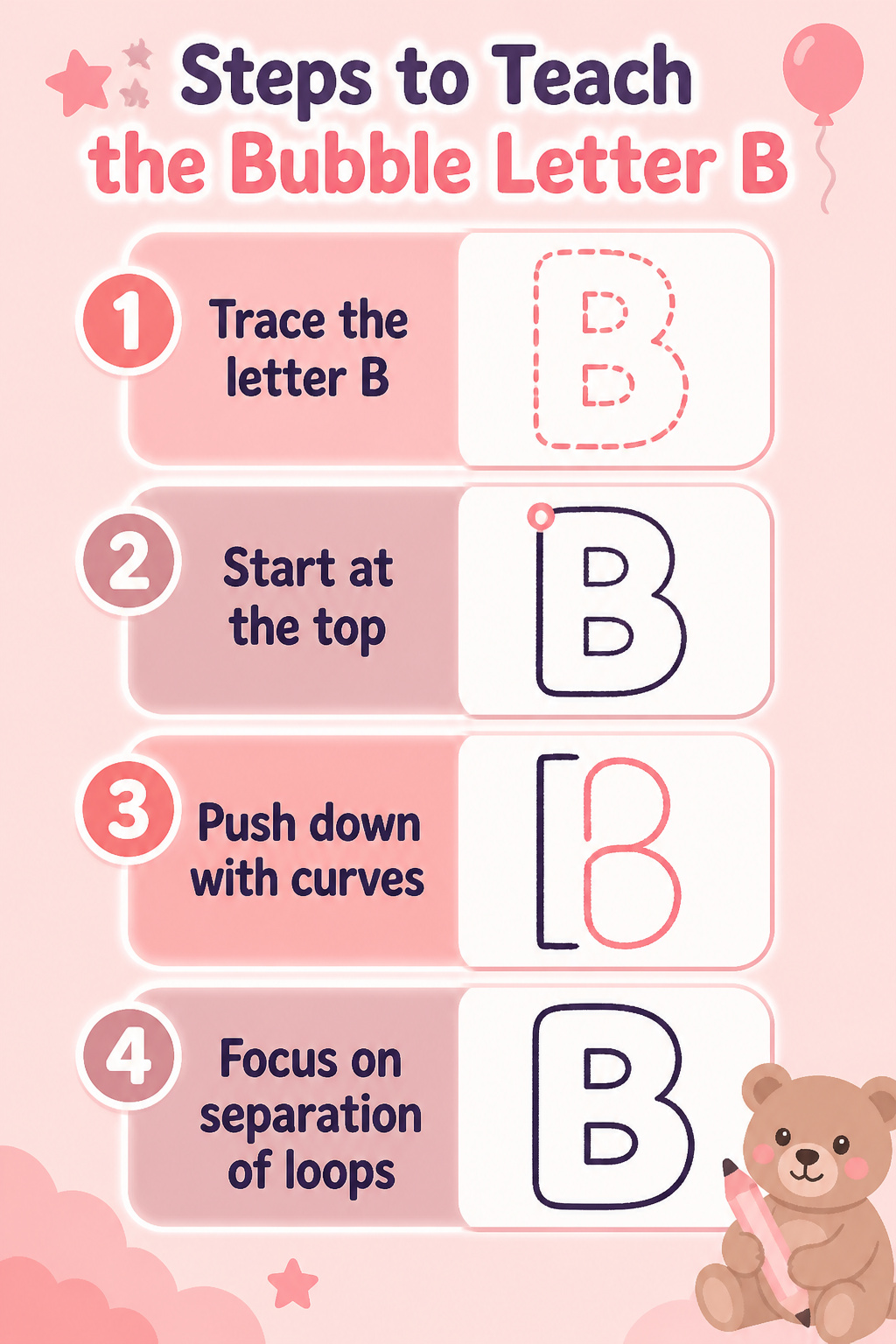
Rounded shapes are easier for small hands to trace, and a bubble letter B exaggerates every curve so children feel where the line goes.
The two stacked loops sit wide apart, which helps early writers see that the letter breaks into an up-and-back stroke first, then a second sweep beneath it.
That exaggerated form also solves a common recognition problem. B, D and P all share a vertical spine, and in standard print the difference can be subtle enough that new readers flip one into another.
The bubble style swells each loop outward, making the double-bowl silhouette unmistakable against D’s single bowl or P’s descender.
Both uppercase and lowercase printables are available free, so you can start a child on the capital with its clear separation of bowls, then move to the lowercase b where the ascender and single loop need tighter control.
Tracing either version builds the same motor pattern: start at the top, push down, then curve without lifting.
Coloring and Decorating for Kids
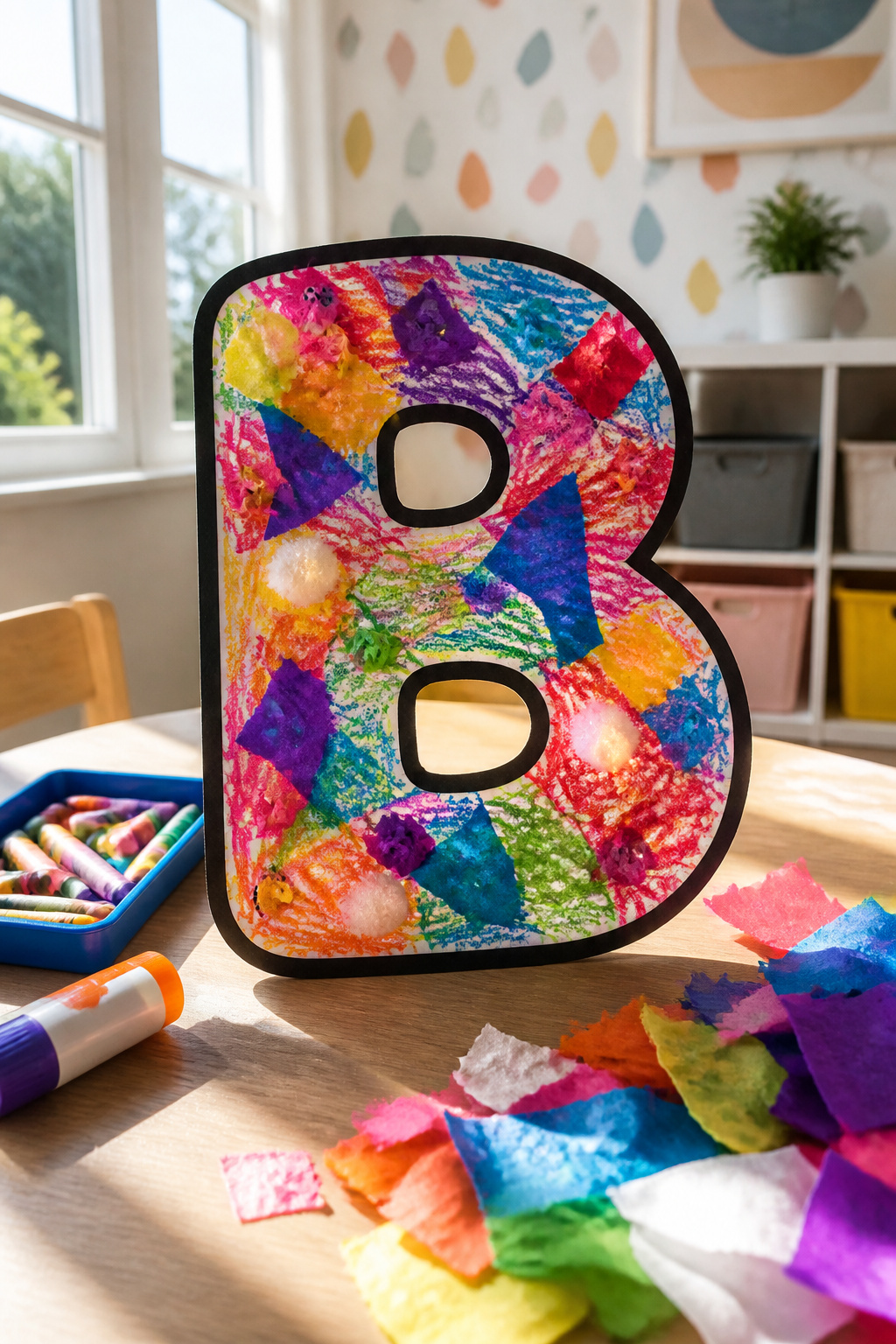
The thick black outline of a bubble letter B that fills the whole page is what most parents actually print.
That generous wall of line gives a preschooler something to stay inside, and the empty belly of the letter becomes its own small room for decoration.
Crayon meets the rounded edge differently than it meets a straight worksheet line.
The curve slows the hand, and the doubled back of the B’s lower loop creates a natural stopping point where a child can switch colors without bleeding into the next letter that isn’t there.
A single bubble B printed at 8.5 by 11 inches leaves maybe three square inches of interior space on the straight side, five or six on the curved, enough for a glue stick and a handful of tissue squares torn to size.
Markers work faster, but the raised wax of a crayon catches light and the outline still reads.
Sequins need a drier glue than you expect; wet glue slides down the slope of the upper curve and pools in the joint where the two loops meet.
Tissue paper benefits from being crumpled first, then flattened slightly, so it holds shadow. The outline stays crisp underneath whatever gets piled on, which matters when the finished piece is meant to be a gift or a door sign.
Custom Artwork
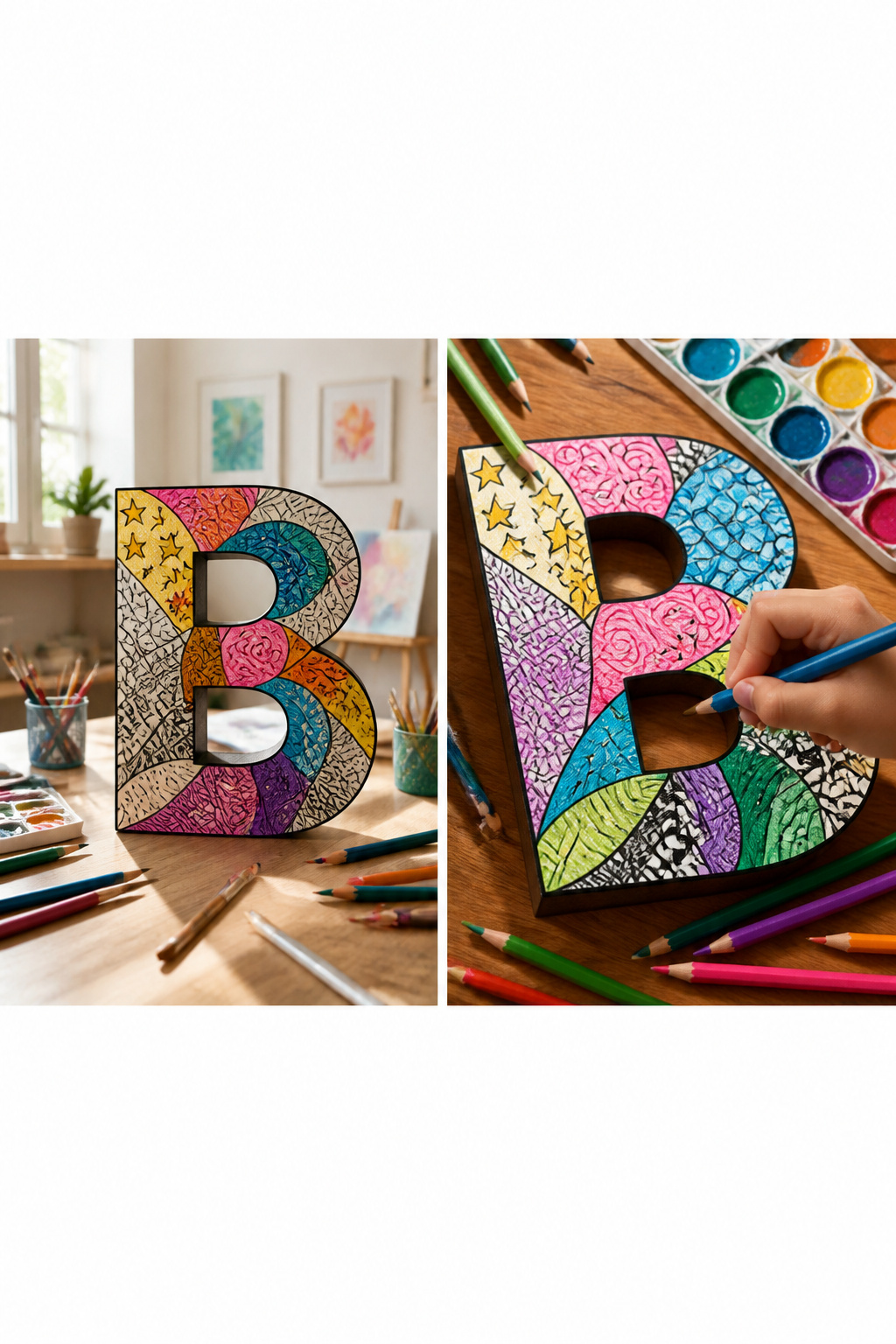
A bubble letter B gives you one continuous outline to work inside, and that boundary is what makes the project manageable instead of overwhelming.
I have seen kids spend an hour filling one with zentangle patterns because the edge tells them where to stop; without it, the same child will draw three lines and drift off to something else.
The letter becomes a frame that holds their attention.
Turning the shape into something recognizable works the same way.
A bear fits the bubble letter B almost naturally: the two loops become ears, the straight back becomes a snout, and the whole thing stays recognizable as both a letter and an animal.
Baseball and butterfly follow the same logic, with the curves suggesting wings or seams depending on which way you extend them. Let the original outline stay visible so the letter does not disappear completely.
Layering the cut-out over colored paper is the fastest route to something that looks finished.
A black outline against a bright ground reads as intentional design with almost no effort, and the negative space inside the loops becomes part of the composition.
Tissue paper layered behind the holes gives a stained-glass effect that works for window displays or cards.
Personalized Banners and Signs
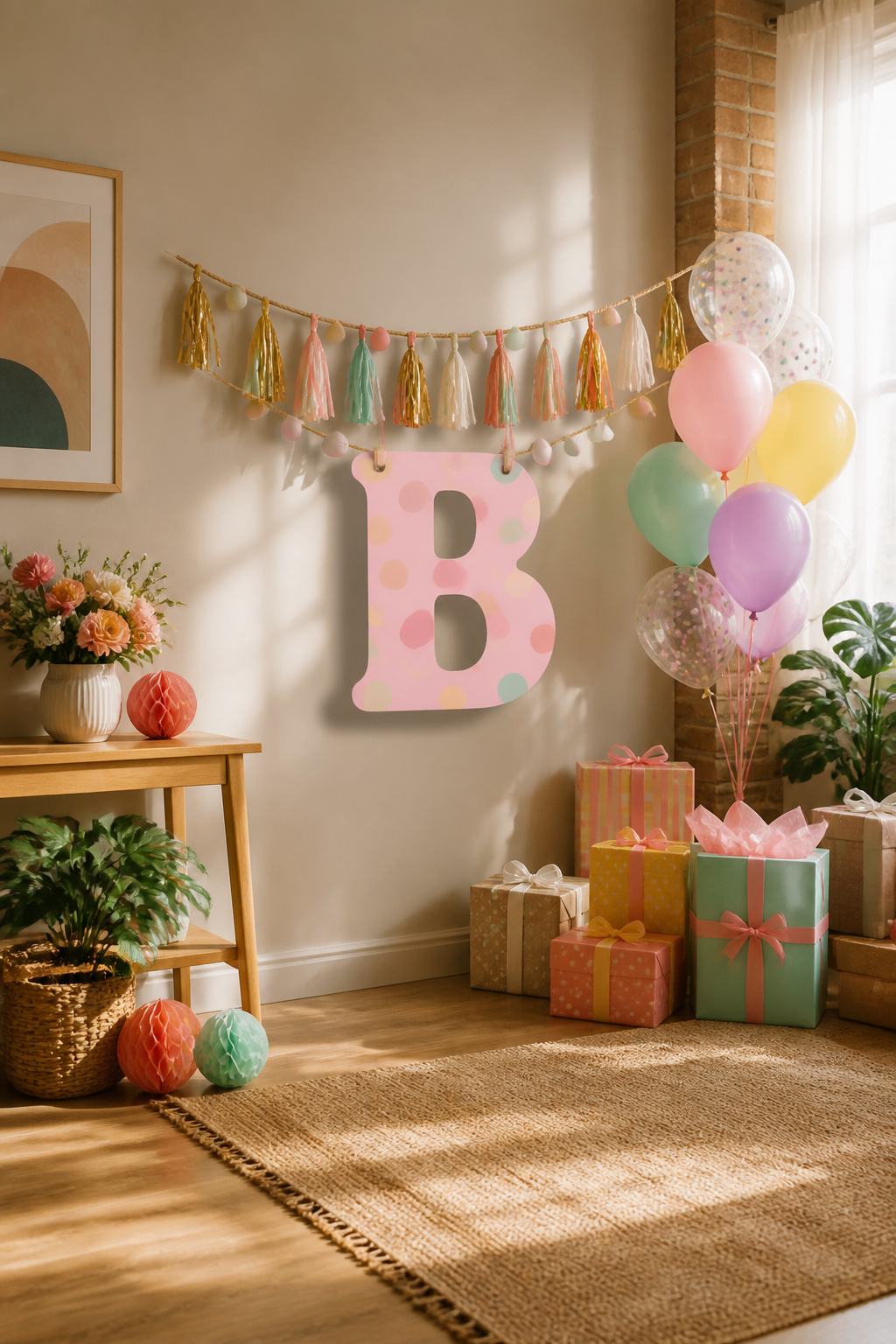
Print each bubble letter b at full page size and the impact is immediate, but the paper choice makes or breaks the finished banner.
Cardstock holds its shape once strung; plain printer paper wilts by the second day and the whole sign starts to curl like a ribbon.
I learned that the hard way on a birthday backdrop where the name sagged halfway through cake time.
Punch holes at the top corners of every letter, not the center, or the word tips forward and reads from the floor.
Ribbon works for indoor backdrops; twine holds up better on bedroom doors where the sign gets grazed a hundred times a week.
For baby showers, lowercase bubble letters spell out names more naturally than all-caps shouting, and the lowercase set from the same template collection threads on ribbon without looking like a billboard.
Leave a finger-width gap between letters when you string them; crowd them together and the word becomes one unreadable blob.
Scrapbooking Embellishments
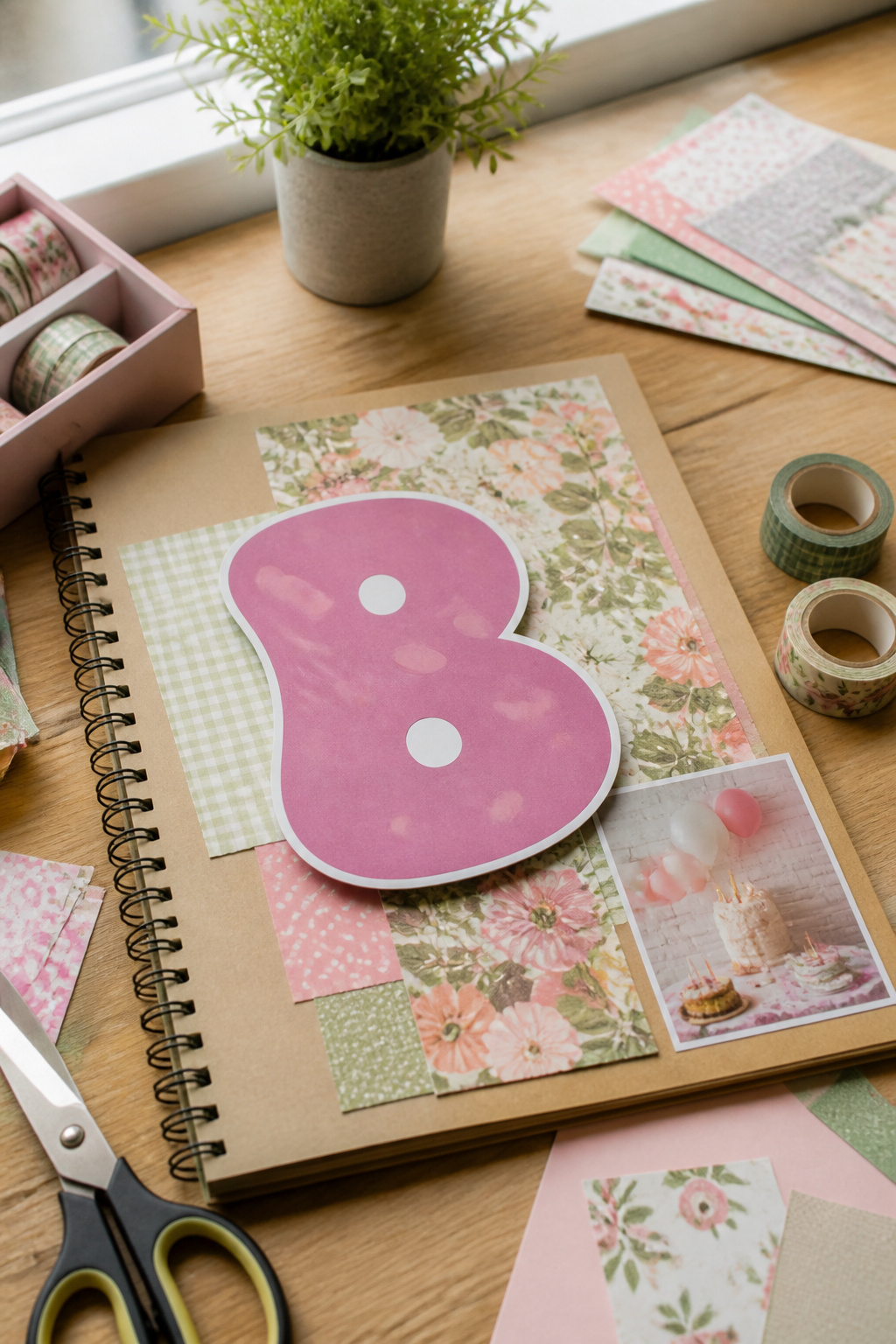
A full-page bubble letter B is too much real estate for a 12×12 album, so print at quarter or half page size and treat it as a shape rather than a headline.
The curve of the bowl does something block letters never manage: it catches the eye without starting a fight with busy patterned paper behind it.
I learned that the hard way on a birthday spread where everything else had angles, the photos, the washi, the journaling card, and the block B I tried first looked like it was shouting over the cake.
Switched to the bubble version at roughly 3 inches tall, backed it with a scrap of floral, and the page finally settled down.
Layering works best when the bubble outline sits slightly off-center so the shadow or the patterned ground shows unevenly, top-heavy or bottom-heavy, which reads as intentional rather than sloppy.
For a photo mat, cut the center out entirely and let the picture show through the negative space, the rounded frame softens a face the way a rectangle never does.
As a journaling spot, the inside of the B holds maybe three lines at half-page scale, enough for a date and a sentence, the curve forcing brevity that usually improves the entry anyway.
Nameplates for Doors and Rooms
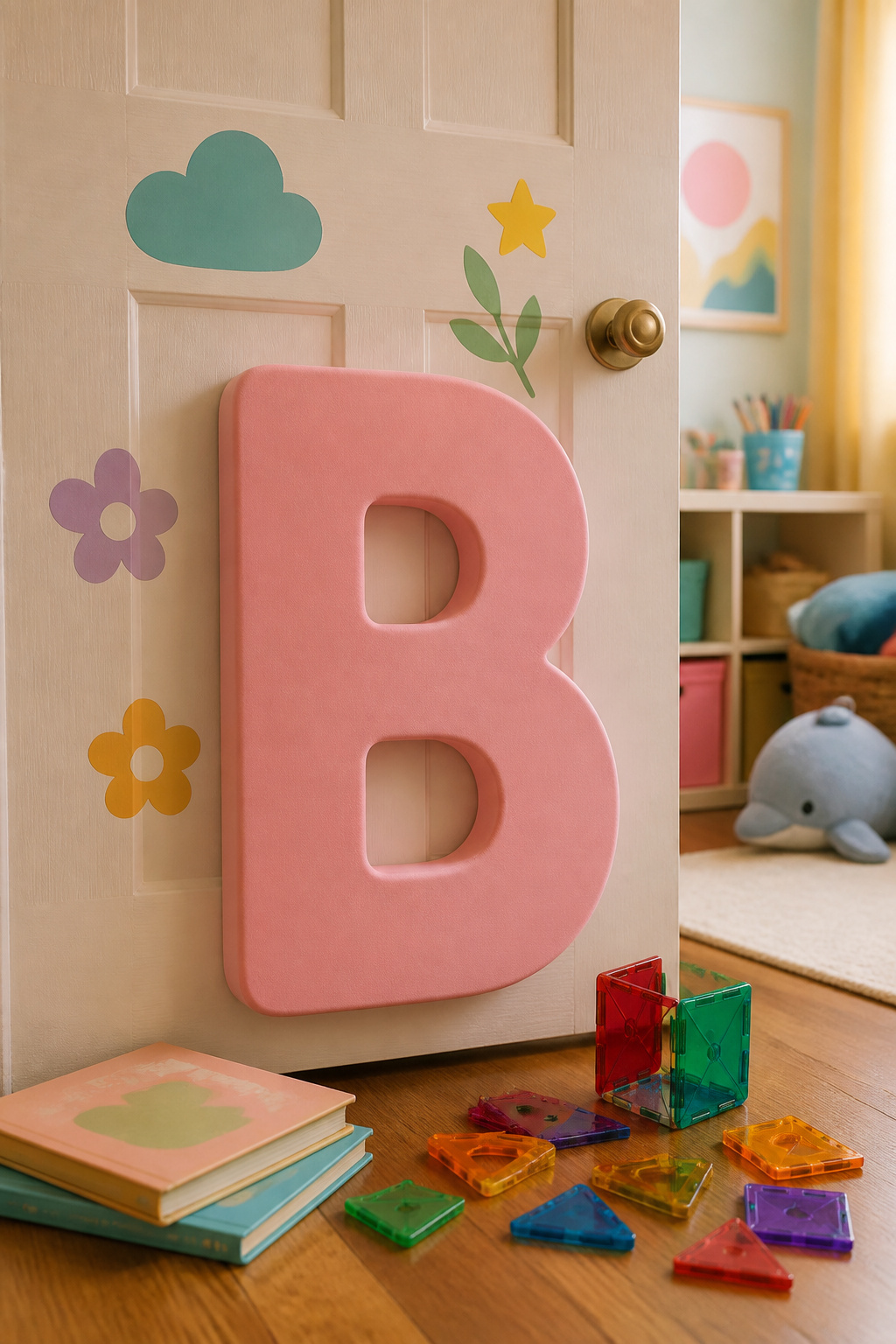
A single bubble letter B on a door reads differently than a whole name in block print.
The rounded shape lands somewhere between graffiti and a balloon animal, which is exactly why it works for a kid’s room without looking like a school corridor sign.
The simplest stand-up version starts with a printed template glued to foam board. Cut through both layers with a fresh blade, then score a second piece of foam board to fold into a triangle base.
Tape the hinge on the back, not the front; the seam catches light and reads as a crack if it faces outward. I skipped the scoring once and the base buckled inside a week.
Without the foam backing, paper alone wilts in humid bathrooms or dorms with bad ventilation.
The board adds about $2 and the bulk of a paperback book, but the letter holds its shape if someone brushes past it in a narrow hallway.
The stand-up construction also lets you move it.
A letter that lives on the desk during homework hours and migrates to the door for a sleepover feels more like a thing the kid owns than something the room was built around. That mobility is the point.
Institutional signage is bolted down; this leans.
Free Printable Formats
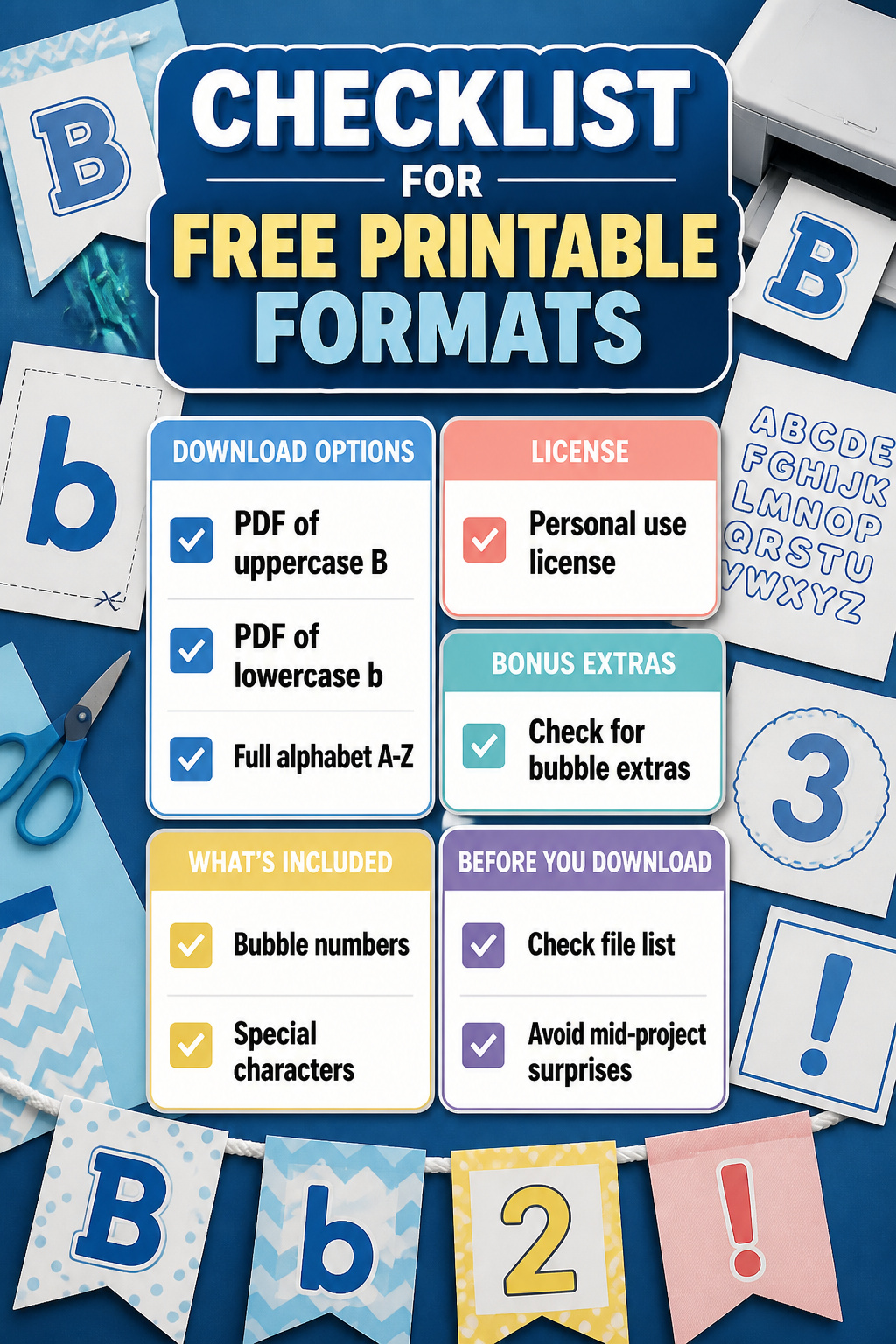
The downloads split cleanly into two lanes: individual uppercase and lowercase Bs as their own PDFs, or the full alphabet A–Z in one file if you know you’ll need the rest later.
Personal use is the only license included, which covers craft projects, classroom handouts, and anything you are making for yourself or your own household. Commercial resale or redistribution stays off the table unless you negotiate separate permission.
Some bundles also toss in bubble numbers and special characters, though those additions are spottier than the letter sets themselves.
If a project calls for a "B" with an age or an exclamation point beside it, check the file list before you commit to a download so you are not caught short mid-project.
Craft Tools That Help
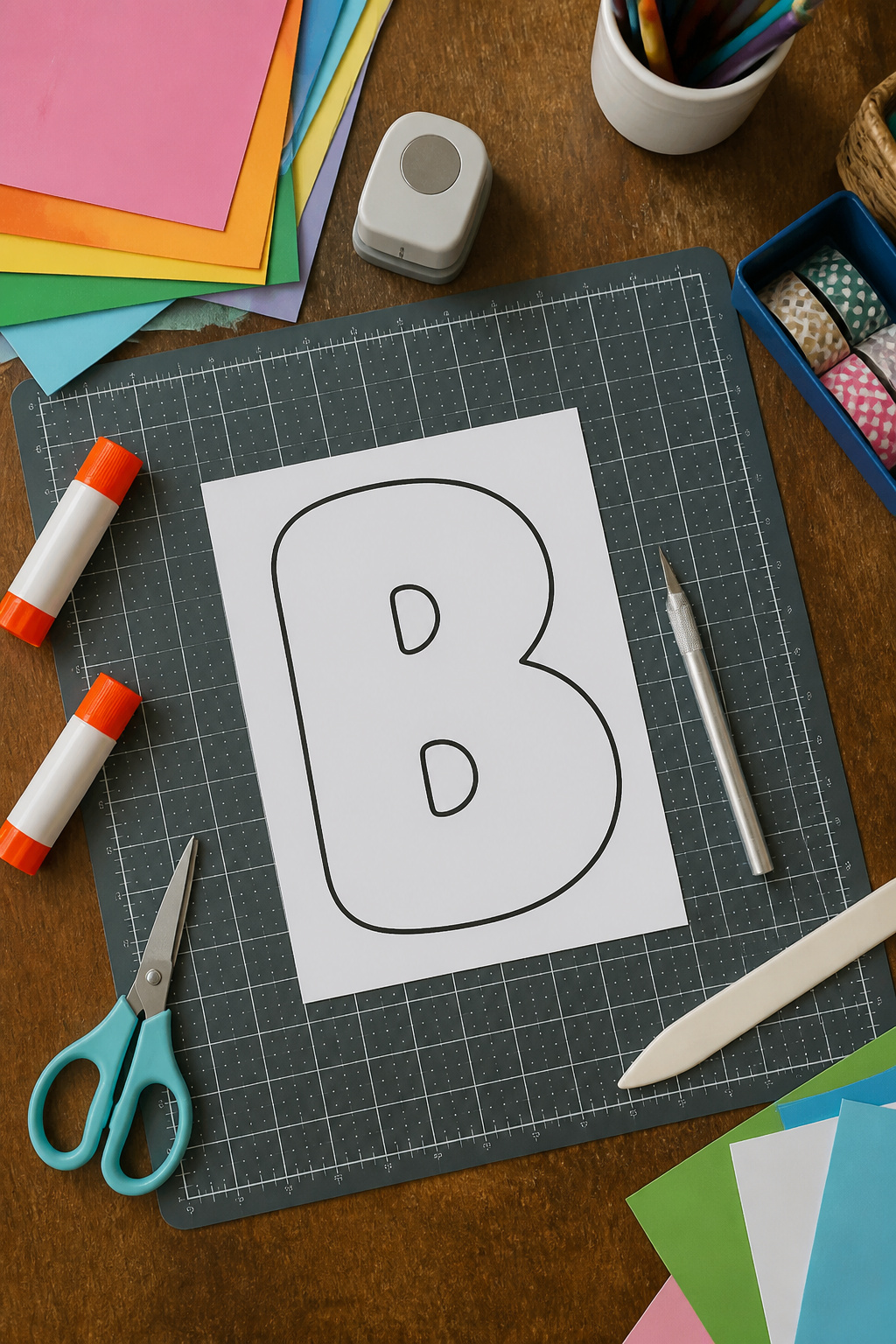
Cardstock at 65 lb or heavier keeps a bubble letter B from curling once you attach it to a banner or door sign. Lighter paper works for coloring sheets, but anything meant to stand up or layer needs the stiffness.
- Scissors handle the outer curves fine. For the two interior cutouts in a bubble B, a craft knife on a cutting mat saves the rounded shape from ragged edges. I have ruined enough letter centers with scissors to know the knife is worth the setup.
- Glue sticks hold paper layering neat and flat. Liquid glue warps the sheet underneath while it dries, and with bubble letters the raised outline matters most.
- A bone folder earns its drawer space if you turn the bubble B into a 3D stand-up. Run it along the fold line before you bend, and the cardstock creases sharp without cracking the printed surface.
Comic Style Variations
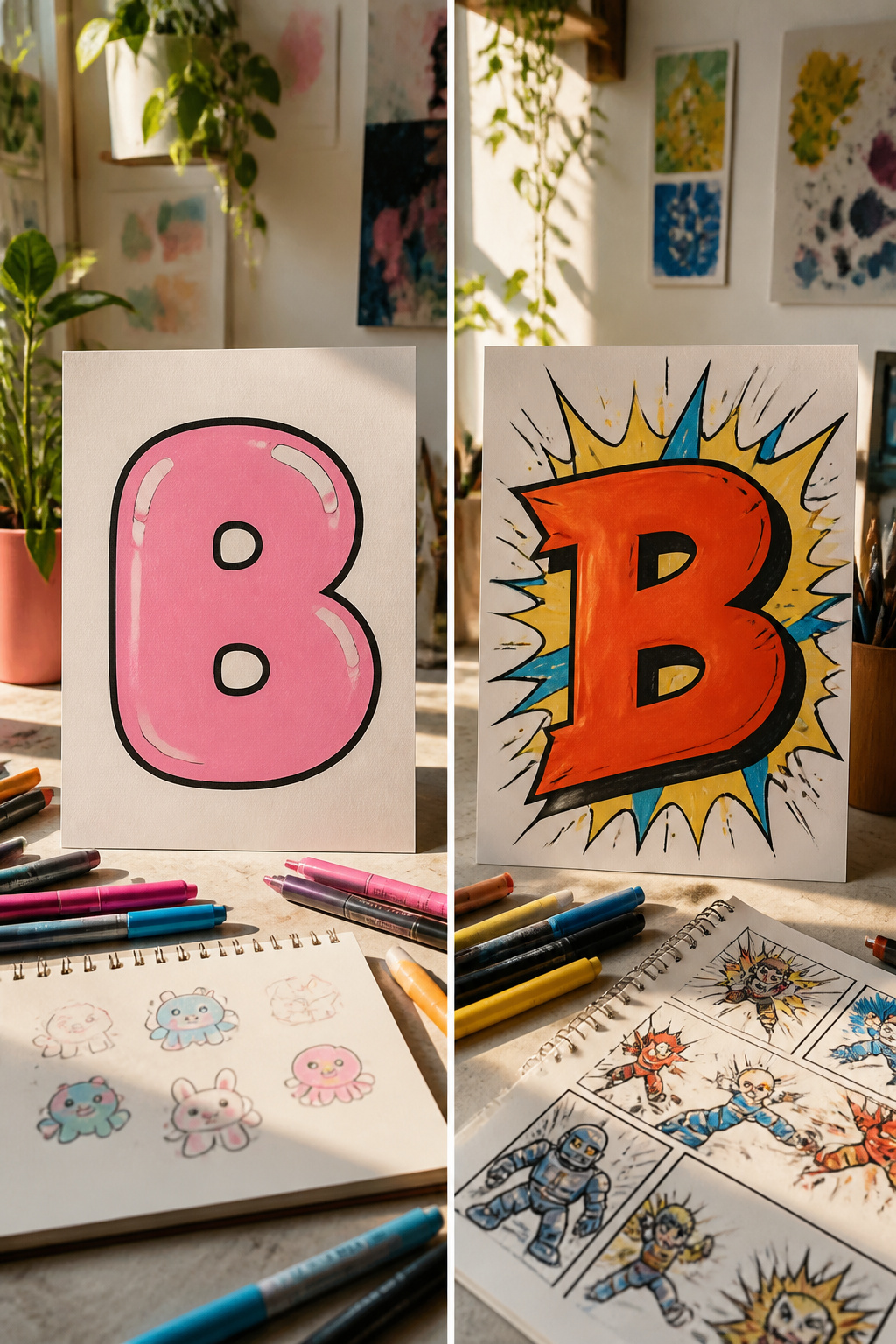
Standard rounded bubble letters and their comic-style cousins read as completely different tools once you place them side by side.
The classic rounded bubble letter b keeps every curve soft and continuous, which is why it works for tracing practice, alphabet posters, and any project where a four-year-old is still learning which direction the letter faces.
Nothing in its shape fights the reader.
Comic-style versions trade that softness for angles. A sharp corner at the base of the bowl, a flicked terminal, or a forced perspective turn the letter into motion.
Add drop shadows or speed lines and the letter stops being readable text and starts being scenery. That shift in function matters more than the extra drawing time.
I reach for the rounded version when I want recognition, the comic version when I want energy. A superhero party banner for a seven-year-old needs the slanted, shadowed treatment; the same child’s name on a kindergarten desk label does not.
The comic style also ages up the project in a way that matters to older kids who have outgrown the preschool look but still want their initials on a notebook cover or locker sign.
Standard bubble letters read as teaching tools; comic variations read as self-expression. The split is clean enough that mixing them in one project usually looks accidental rather than eclectic.
Frequently Asked Questions
What can I use bubble letter b printables for?
Use them for tracing practice with kids, custom artwork, personalized banners and signs, scrapbooking embellishments, and door nameplates. The rounded outline works especially well for teaching letter recognition because it exaggerates the curves that distinguish B from D and P.
Are bubble letter b printables free to download?
Yes, both uppercase and lowercase versions are available free. Most collections also offer the full A–Z alphabet in one file if you expect to need the rest later, plus occasional bonus sets with numbers and special characters.
Can I use bubble letter b printables for commercial projects?
No, the included license covers personal use only, such as craft projects, classroom handouts, and items you make for your own household. Commercial resale or redistribution requires separate permission.