
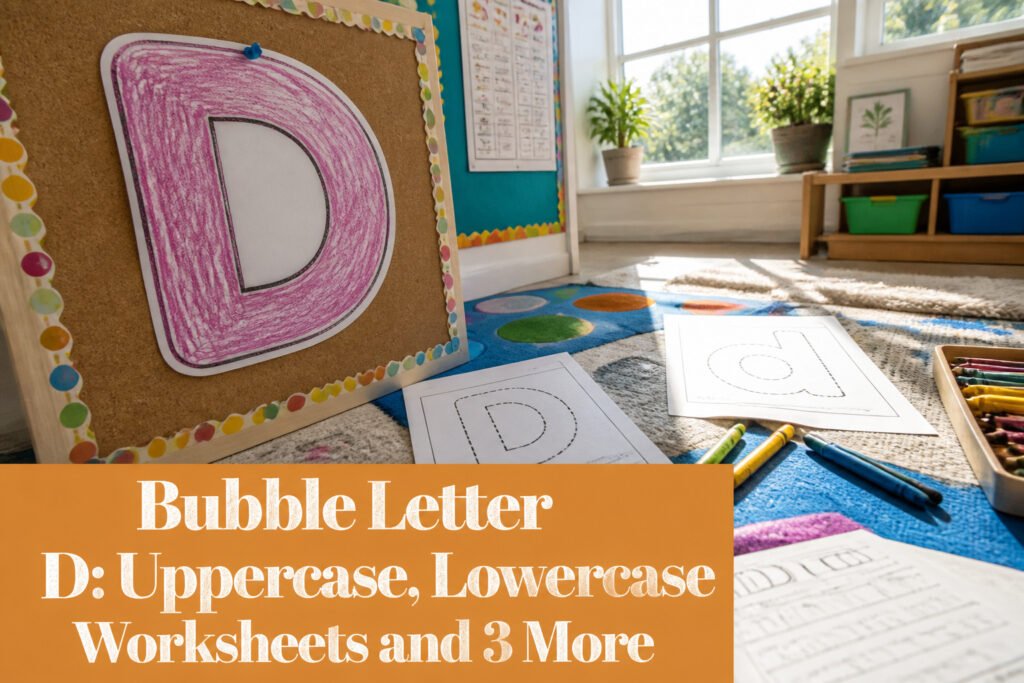
A bubble letter D is a rounded, balloon-style outline of the letter D built with thick, traceable walls rather than thin strokes.
The free printable templates come with a catch most worksheet sites ignore: they gate the second half of the alphabet behind a membership, while these uppercase and lowercase files stay unlocked for classroom copies without a login wall.
I have used the full-page uppercase D for birthday banners and the lowercase d for morning tracing sessions on cardstock; the heavy outline eats ink faster than a narrow font, but draft mode keeps the cost reasonable.
Uppercase Bubble Letter D
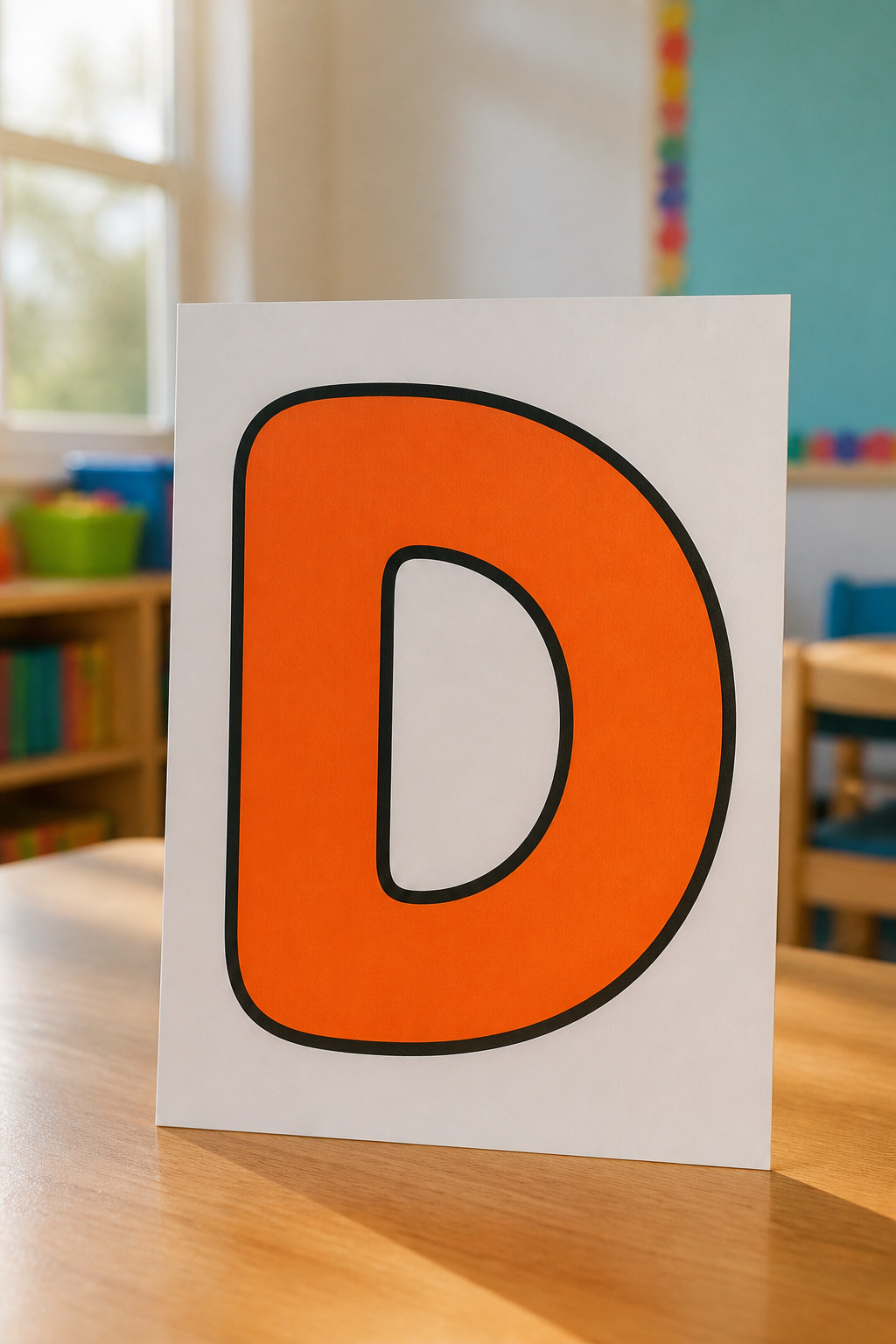
The uppercase bubble letter D template prints at full page size, which makes it easy to trace onto poster board or cut directly for alphabet displays.
I have used this style for classroom birthday banners and for labeling storage bins in a playroom, and the thick rounded lines hold up even when a preschooler is handling the scissors.
The file includes the single uppercase letter only, no lowercase pairing, so you need to print separate pages if you are building a complete set.
Personal use and classroom use are both covered under the standard terms, which means a teacher can run copies for twenty students without hunting down a separate license.
For handwriting practice the outline is wide enough that a marker stays inside the line, though the same thickness that makes it forgiving also means it eats through printer ink faster than a narrow worksheet font.
If you are printing more than a few letters, draft mode or a remanufactured cartridge keeps the cost reasonable.
Lowercase Bubble Letter d
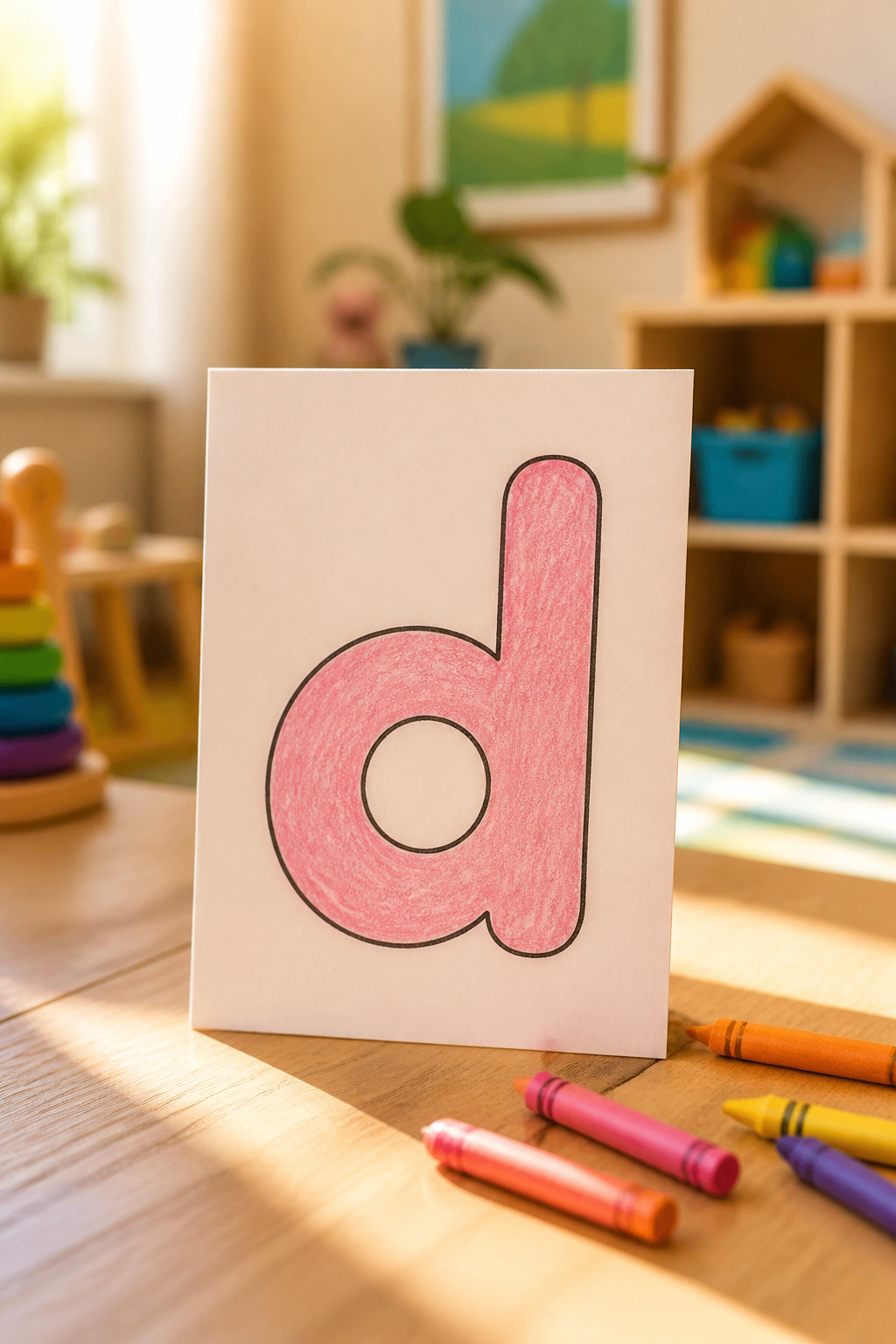
The lowercase bubble letter d is where most handwriting practice actually happens.
Kids trace the rounded bowl and the tall stem over and over, and the bubble shape gives them room to stay inside the lines without the precision a regular font demands.
I print the free lowercase template alongside the uppercase D for a simple reason: the visual pairing fixes the confusion between the big and little shapes faster than either one alone.
The uppercase D is a straight back with a curve; the lowercase d is that same curve flipped and given a stem that shoots up past the middle line. Seeing them on the same page makes the relationship click.
For name worksheets and letter-of-the-week activities, the lowercase d gets more mileage than its capital partner.
Most of a child’s name is lowercase after the first letter, and the bubble form lets them fill it in with crayon or marker before they ever touch a pencil.
The Cherry and Chewy fonts both keep the bowl wide enough that a preschooler’s wobbly line still reads as a letter, not a smudge.
I keep a stack of these printed on cardstock because regular paper tears after three dry-erase rounds; the heavier stock survives a full week of morning tracing sessions.
Printable Tracing and Coloring Worksheets
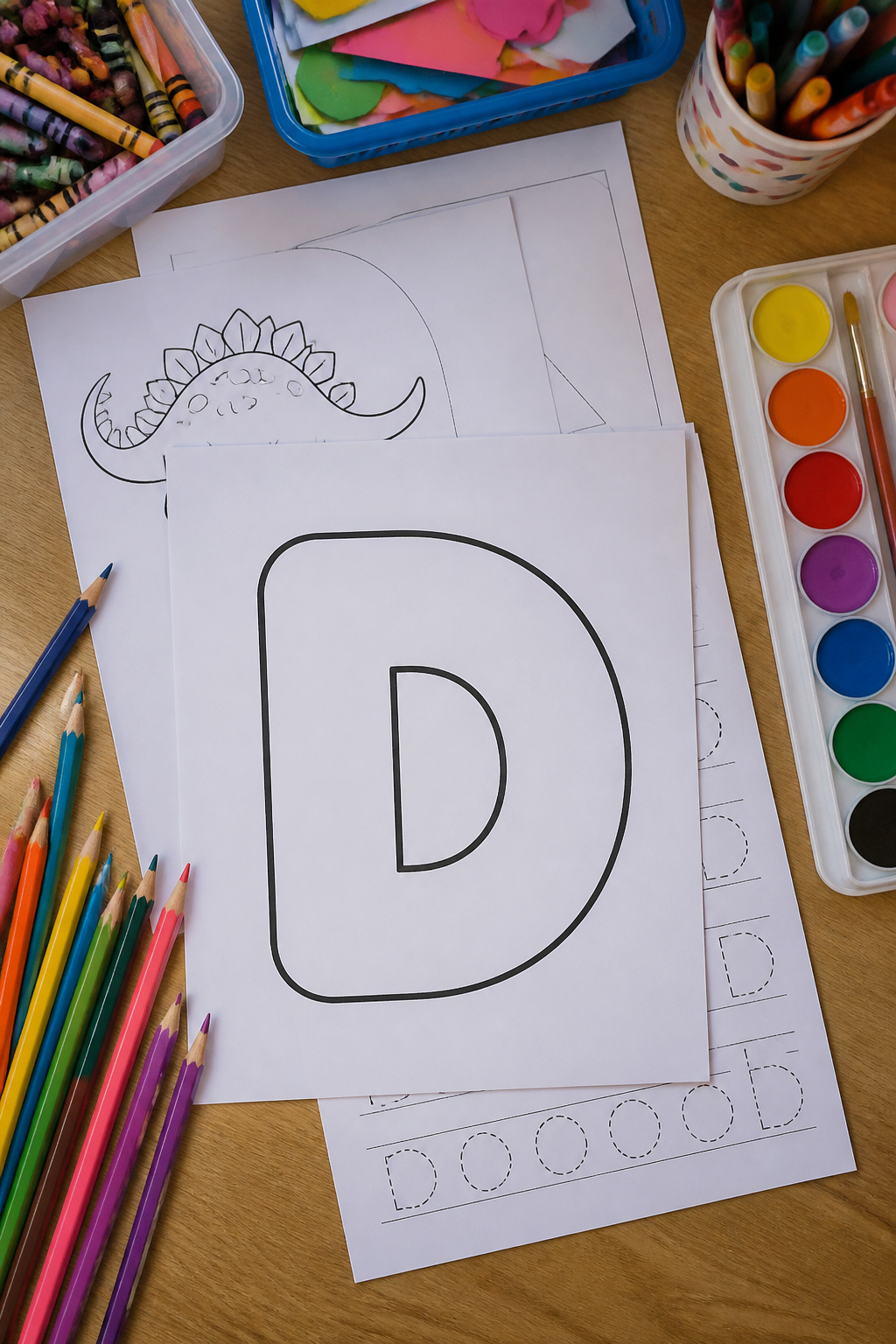
The uppercase and lowercase worksheets print clean on standard letter paper, which means no scaling fuss before a three-year-old loses patience.
Each page centers one bubble letter D large enough to trace with a crayon or a thick pencil grip, and the lowercase version leaves room below for freehand attempts once the outline feels familiar.
I like that these stay free to print. Some worksheet sites gate the second half of the alphabet behind a membership, but both the capital D and the small d come without that friction.
The uppercase sheet works better for first-timers still learning to follow a curve; the lowercase d, with its tall stem and loop, gives slightly older kids something closer to actual handwriting practice.
Coloring fills the leftover space once tracing finishes. The bubble walls are thick enough that marker bleed matters less than on thin lined paper, though standard copy paper still benefits from a scrap sheet underneath if a kid presses hard.
How to Draw a Bubble Letter D
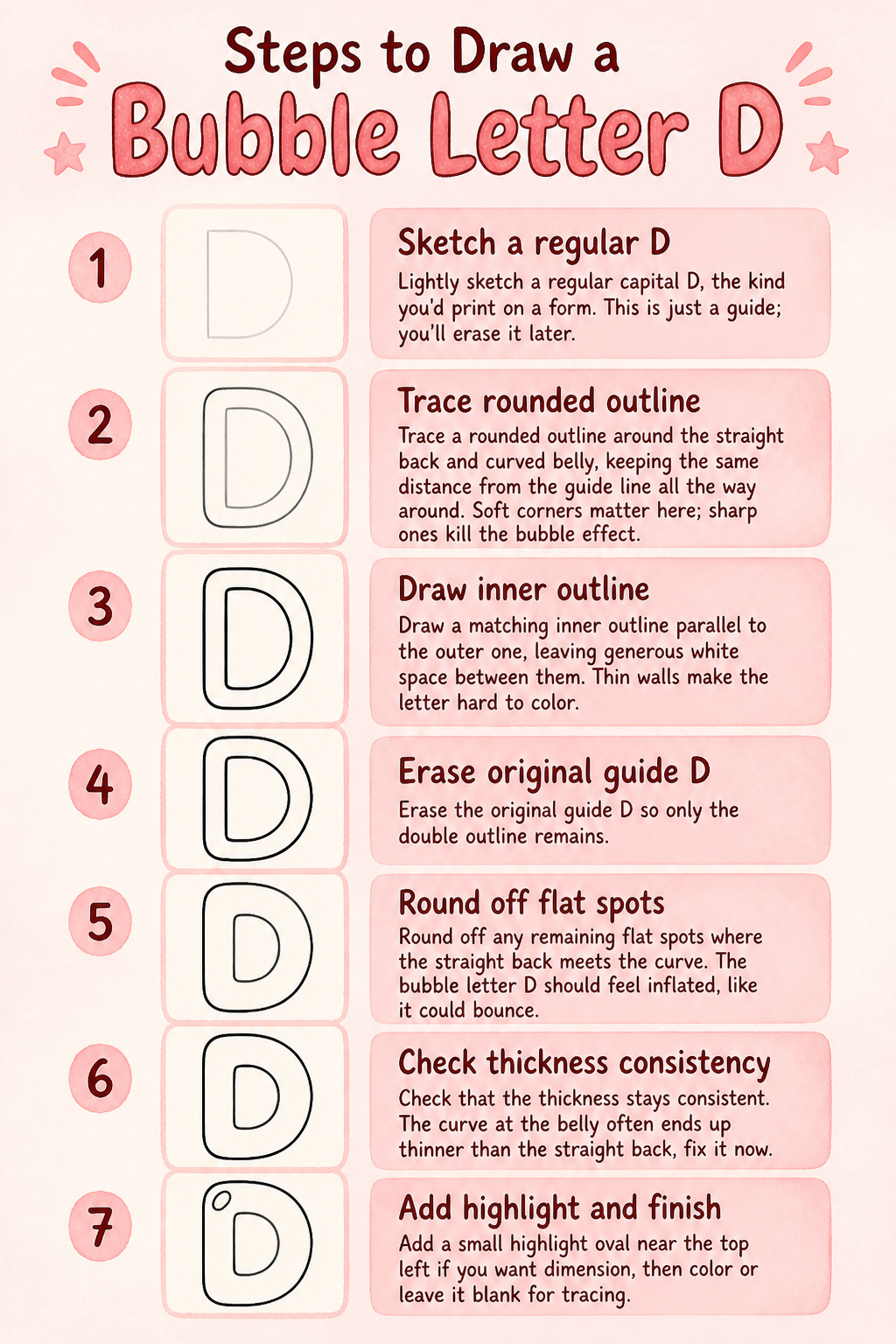
A bubble letter D looks simple until you try to make the curves even. These seven steps keep the shape balanced.
- Lightly sketch a regular capital D, the kind you’d print on a form. This is just a guide; you’ll erase it later.
- Trace a rounded outline around the straight back and curved belly, keeping the same distance from the guide line all the way around. Soft corners matter here; sharp ones kill the bubble effect.
- Draw a matching inner outline parallel to the outer one, leaving generous white space between them. Thin walls make the letter hard to color.
- Erase the original guide D so only the double outline remains.
- Round off any remaining flat spots where the straight back meets the curve. The bubble letter D should feel inflated, like it could bounce.
- Check that the thickness stays consistent. The curve at the belly often ends up thinner than the straight back; fix it now.
- Add a small highlight oval near the top left if you want dimension, then color or leave it blank for tracing.
Customizing Your Bubble Letter D
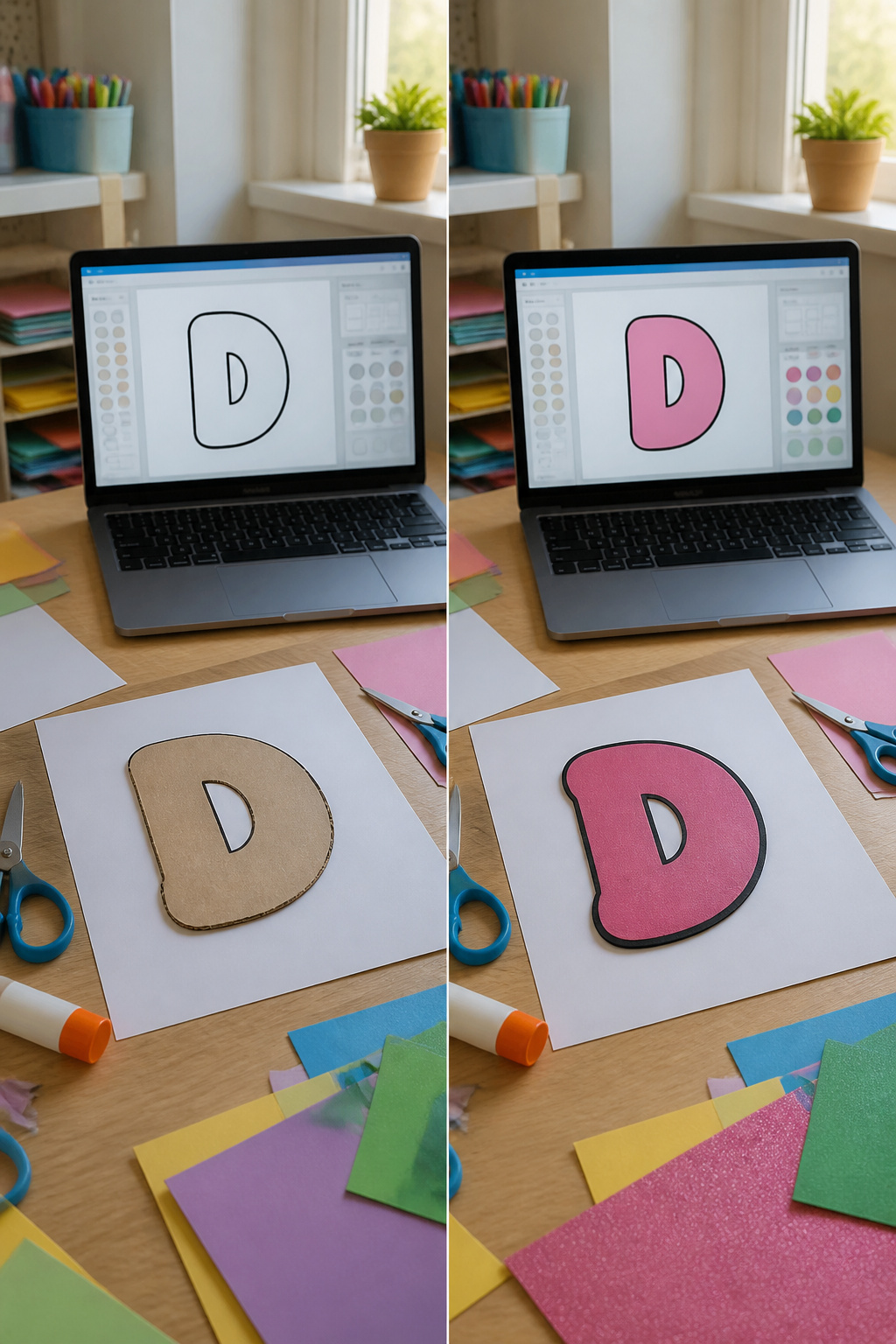
The generator on the page gives five levers to pull, and the first one that matters is font style.
Cherry and Chewy are the two named options, and the difference is real: Cherry runs rounder and softer, which reads better on a poster or a bedroom door, while Chewy carries more weight in the strokes and holds up when the letter shrinks.
Color comes next, and the tool lets you set the letter fill, the outline, and the background as three separate choices instead of one preset.
That matters if you are printing on colored cardstock and need the bubble letter D to still pop, or if you want a low-ink outline for tracing practice and nothing else.
Canvas size is the last control, and it is what keeps a lowercase d from turning fuzzy when you blow it up for a classroom sign or shrinks an uppercase D to fit a name worksheet without losing the bubble.
I have printed both ways, and the one mistake to avoid is picking a heavy fill color for a tracing sheet: the outline still works, but the thick interior wastes toner and distracts a kid who is supposed to follow the edge.
Classroom Signs, Crafts and Common Uses

Most bubble letter D printables sit idle after the first coloring session, which is a waste of thick cardstock. The templates hold up well enough to become permanent classroom fixtures if you treat them as blanks rather than finished pieces.
- Cut uppercase D and lowercase d from patterned scrapbook paper or wrapping paper remnants, then laminate for alphabet bulletin boards that survive the school year
- Trace the outline onto foam board for three-dimensional letter walls; the curved bowl of the D catches light better than block letters
- Print two sizes of the same template, the larger for hallway signs and the smaller for desk labels, so the letterform reads consistently across a room
- For phonics practice, have students fill the bubble shape with drawings of dog, doughnut, or doll, then mount the collection as a word-family display
- Party banners and scrapbook cutouts use the identical template; the only change is swapping school glue for double-sided tape when the destination is paper rather than wall
The worksheets themselves work best as tracing masters rather than single-use sheets. Run them through a laser printer onto watercolor paper, and the raised guideline survives repeated brush-lettering practice.
What Printable Templates Include
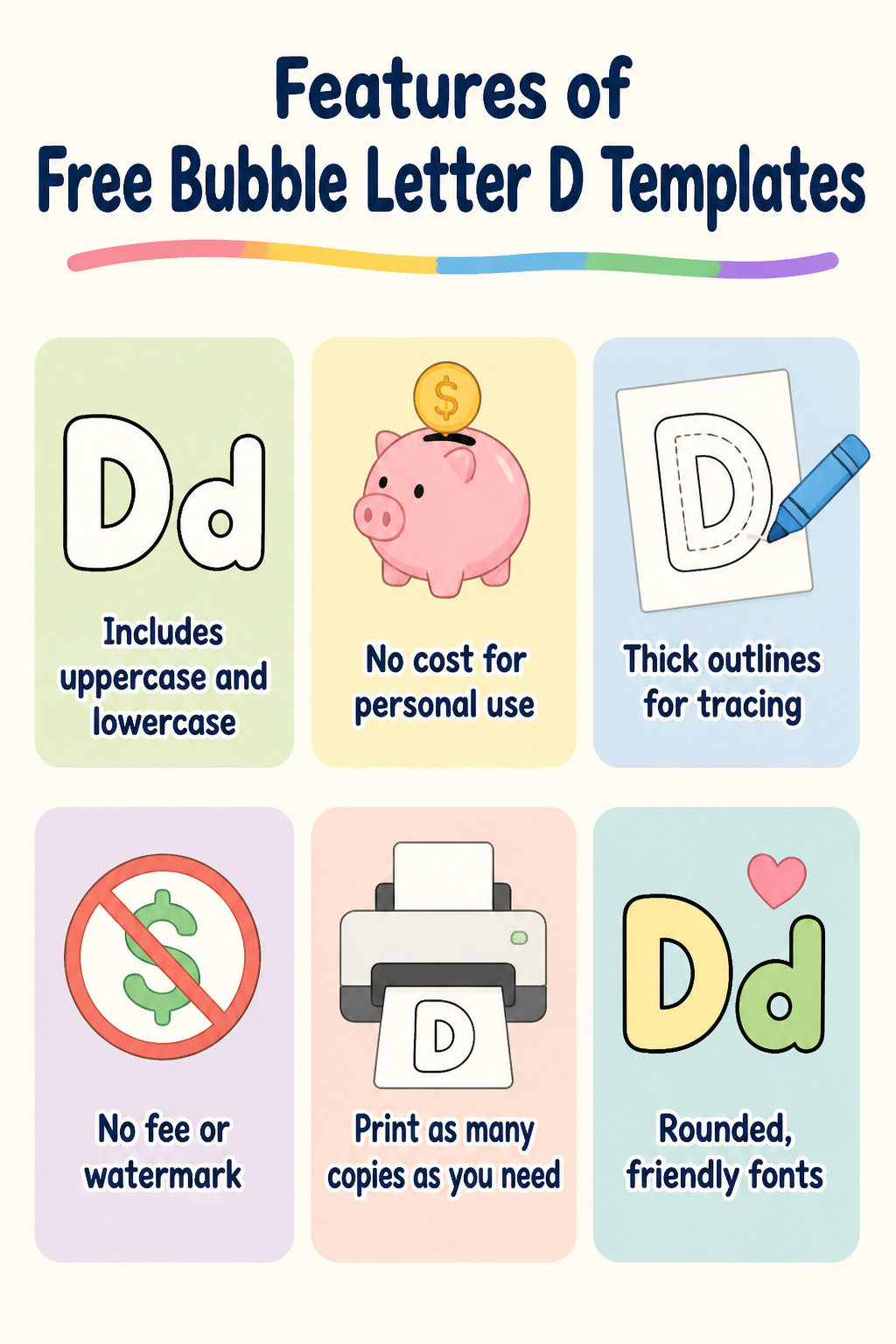
The free bubble letter D templates come as a set that covers both bases without making you hunt for a matching pair.
You get uppercase D and lowercase d in the same download, each sized so one does not dwarf the other on a worksheet or a classroom label.
The outlines are thick enough to trace with a crayon or a pencil, which is what most people printing these actually need them for.
Personal use is straightforward: print as many copies as you need for your own kids or your own project. Classroom use is covered too, so a teacher running off twenty sheets for letter-of-the-week practice is not stepping outside the terms.
No fee, no login wall, no watermark that ruins the tracing line.
The question I see most often is whether you can really just print and trace for free, and the answer is yes; that is exactly what the files are built for.
The fonts lean rounded and friendly, the kind that actually looks like a balloon instead of a block letter with a bubble forced around it.
Tracing Practice for Young Writers
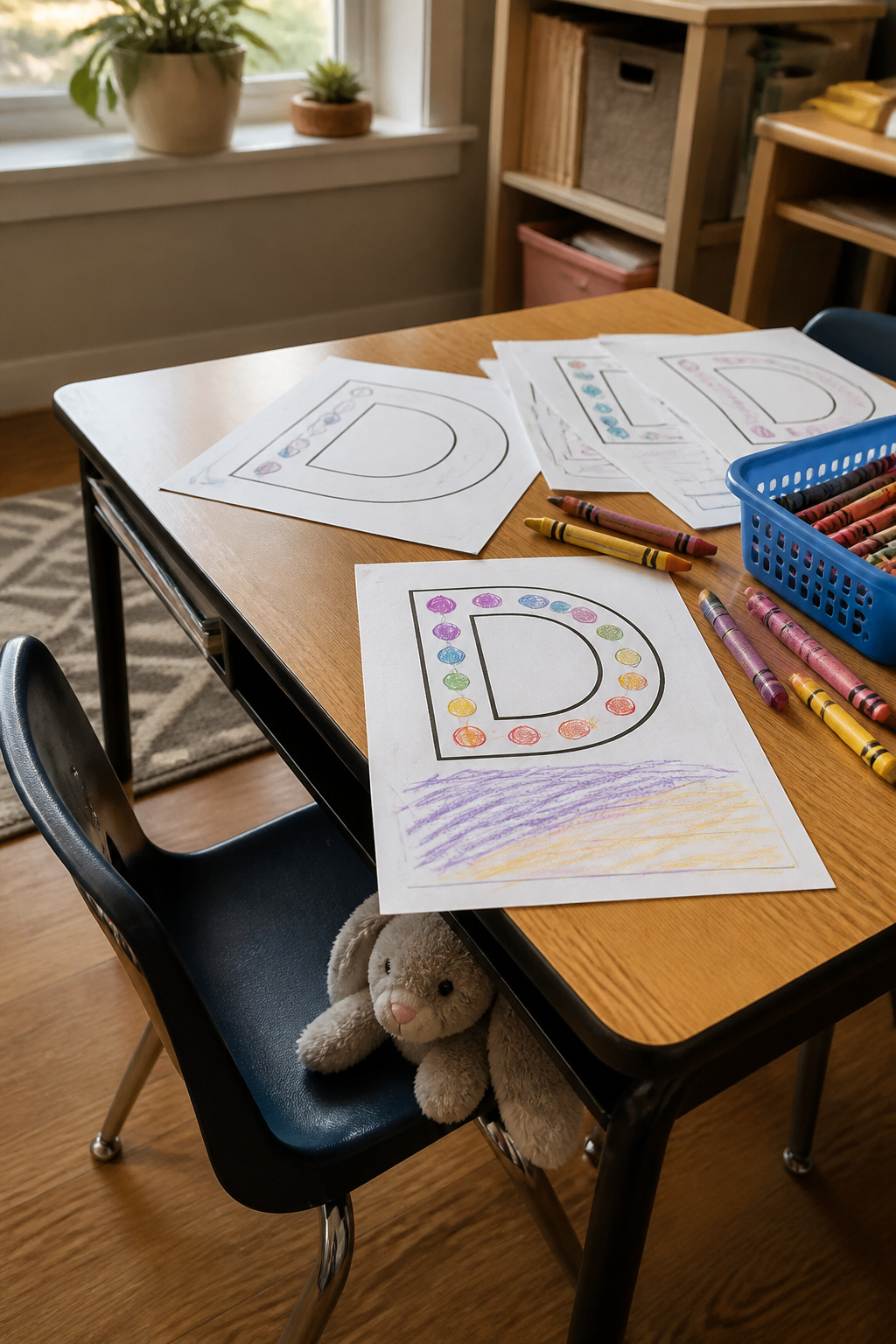
A clean traceable bubble letter D gives a child something their hand can actually follow.
The thick, rounded outline leaves room for error; a pencil wobbling inside the line still produces a letter that looks like a letter, which matters more than adults tend to realize.
When my own kids were in the thick of learning letters, the pages they reached for unprompted were always the ones with the wider stroke width, not the narrow school-font lines that turned every slight tremor into a failure.
Fine motor work happens in repetition, but only if the repetition gets repeated. A page the child finds frustrating ends up crumpled under the car seat.
The bubble format slows the motion down by design; there is more distance to travel, more decision about where to place the pencil next, more time for the hand to register what shape it is making.
Letter recognition builds the same way. Tracing the same form three mornings in a row, the child starts seeing the D in the dog on the cover of the book they already own, not just on the worksheet.
I keep the pages single-sided on purpose. The back becomes free drawing space once the front is done, and that transition, from guided tracing to whatever they want to scribble, is where the practice actually sticks.
Creative Ways to Use Bubble Letter D
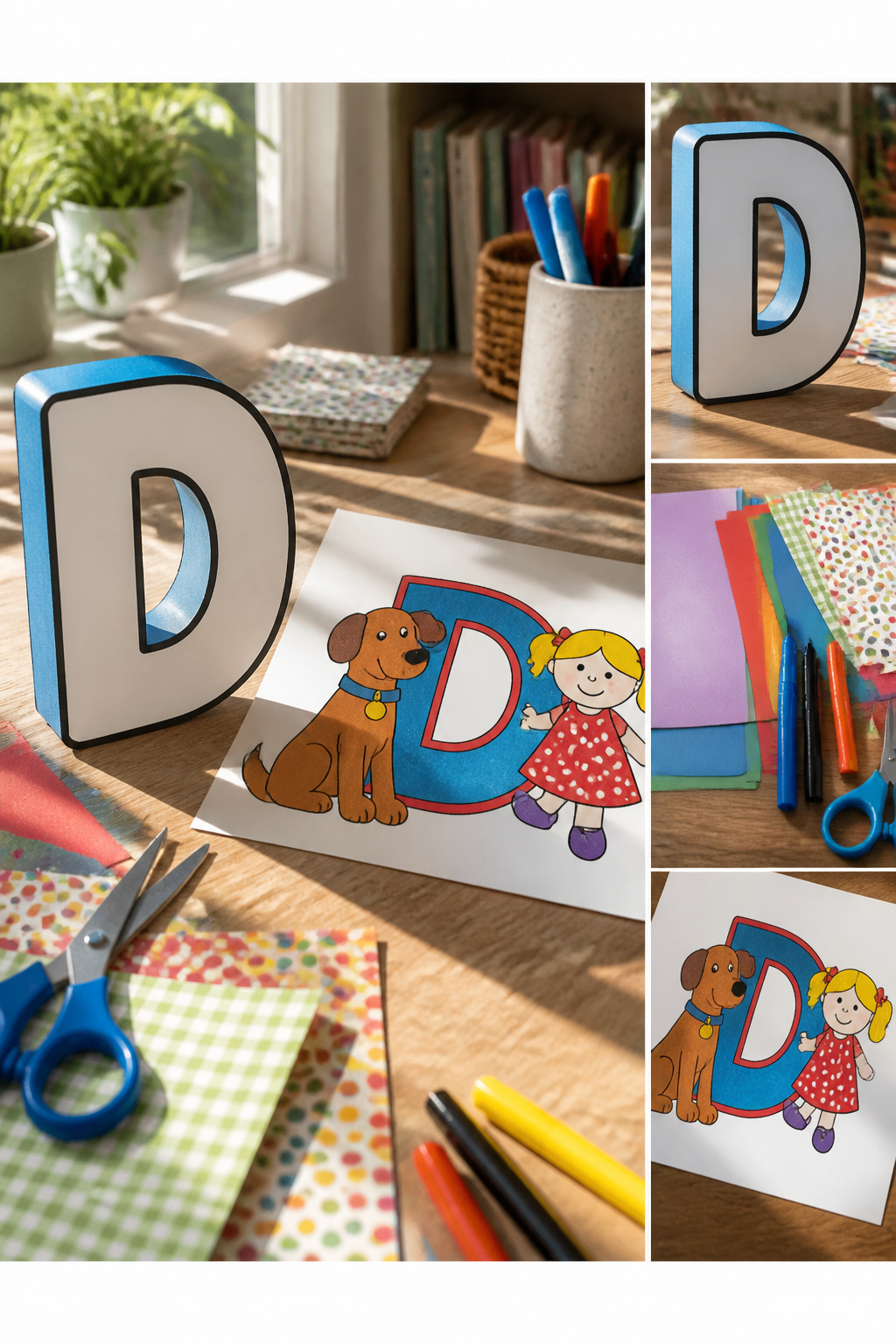
A bubble letter D is already playful, but the shape invites more than just coloring inside the lines. Here are a few ways to push the idea further.
- Build a word around it. Pick something that starts with D, dog, doughnut, or doll, and let the bubble letter be the first letter of the word. The rest of the letters can stay simple or match the bubble style, either way the D becomes the anchor.
- Draw the object next to the finished word. A puppy beside "dog" turns a single letter into a small scene, and the round belly of the bubble D echoes the curves of a lot of D-words naturally.
- Use the inner counter of the uppercase D as a frame. A small face, a window, or a slice of watermelon fits in that negative space and reads instantly from across the room.
- Layer two sizes of bubble D, slightly offset, for a quick shadow or 3D effect. No ruler needed; the wobble is part of the charm.
- Turn the lowercase d into a character. The ascender becomes a neck, the bowl becomes a head, and two dots for eyes complete a simple figure kids can replicate on their own.
Drawing Tips and Mistakes to Avoid
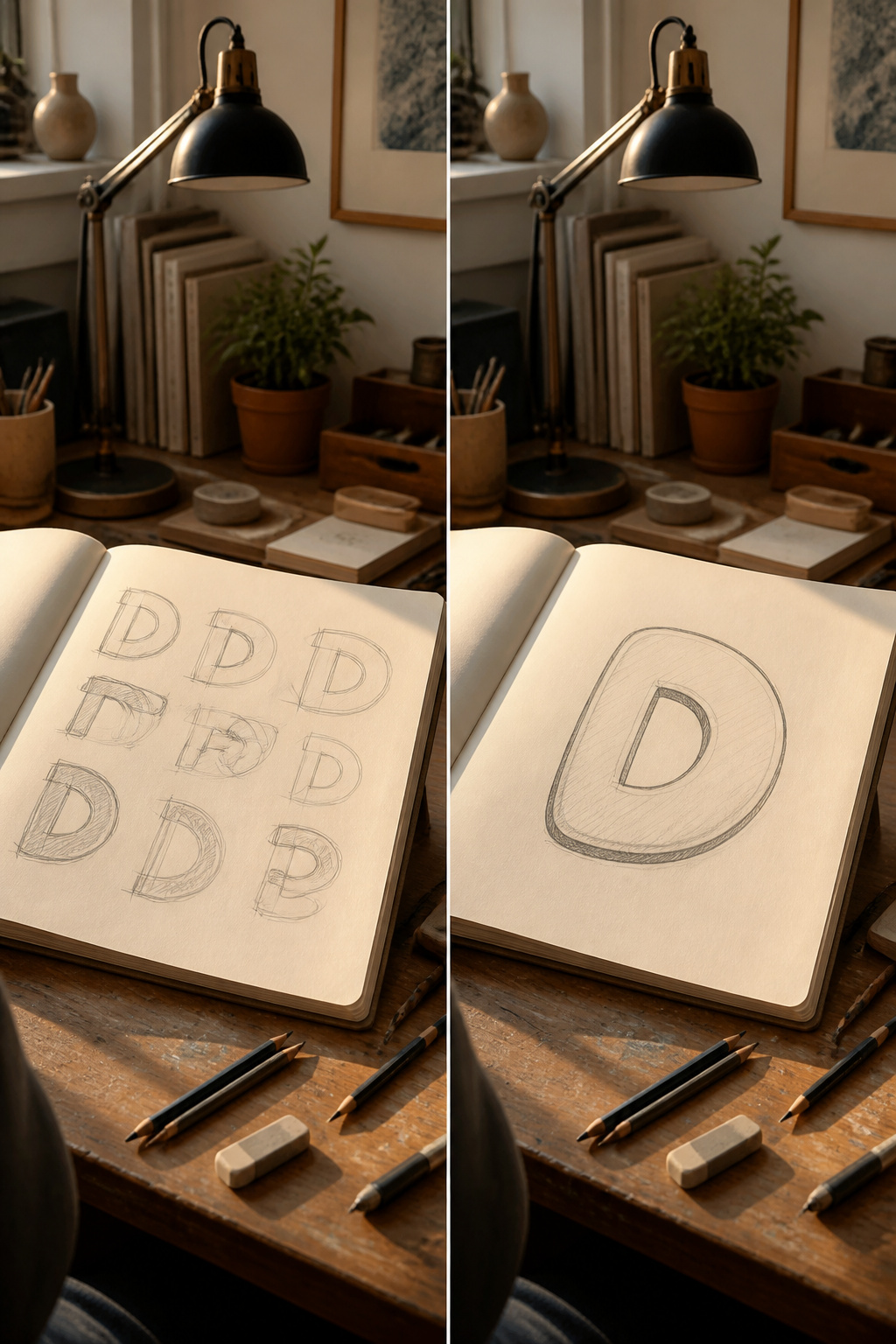
The capital D looks simple until you try to inflate it. Leave generous white space inside the letter so the bubble doesn’t collapse into a solid block.
Beginners often trace the original stroke too tightly, which leaves no room for the rounded outline to breathe.
The same thing happens with lowercase d: the ascender gets pinched because the upward stroke looks finished before the bubble wall goes around it.
Corners are where most drawings go flat. A bubble letter lives or dies on soft curves, so every point where the straight back meets the bowl needs rounding.
If the outline looks lumpy instead of plump, the thickness is probably uneven. One side reads as a shadow, the other as a mistake.
Coloring exposes the error. Thick outlines help, but only if the inner space stays open.
I have watched kids fill in a "bubble" that was 80 percent ink already, and the letter disappears. The fix is to sketch light first, check the negative space, then darken the wall.
Frequently Asked Questions
Can I print bubble letter D for free?
Yes. The templates download without a fee, login wall, or watermark, and the standard terms cover both personal and classroom use.
A teacher can run copies for twenty students without buying a separate license.
Does this page include lowercase bubble letter d?
Yes. Both uppercase D and lowercase d come in the same download, scaled so one does not dwarf the other on a worksheet or label.
The lowercase version gets more use in name worksheets and letter-of-the-week activities since most of a child’s name is lowercase after the first letter.
Can I trace bubble letter D?
Yes. The outline is thick enough that a marker or crayon stays inside the line, and the rounded walls leave room for a preschooler’s wobbly stroke to still read as a letter.
Print on cardstock rather than regular paper if you want the sheet to survive repeated dry-erase rounds.
Can I make a different style of bubble letter D?
Yes. The generator lets you switch between the Cherry font, rounder and softer for posters, and the Chewy font, heavier for smaller sizes.
You can also set fill color, outline color, and background separately, plus change the canvas size so the letter stays sharp whether you blow it up for a hallway sign or shrink it for a desk label.